Role of Hypnotherapy in Anxiety Relief for Expats

Over fifty percent of expatriates in Madrid face anxiety and burnout after international relocation. For American professionals and other English-speaking expats, daily stress can feel overwhelming and persistent, leaving little relief from constant worries. Many dismiss hypnotherapy based on common misconceptions, yet science shows its potential for rapid and lasting change. This guide clears up old myths, explains proven strategies, and helps you find effective solutions tailored to expatriate mental health challenges.
Table of Contents
Key Takeaways
Point | Details |
Hypnotherapy is a Therapeutic Technique | Unlike common misconceptions, hypnotherapy is a scientifically validated method that allows individuals to access subconscious thoughts without losing control. |
Personalized Treatment for Expatriates | Tailored approaches in hypnotherapy address specific cultural and personal challenges faced by expatriates struggling with anxiety. |
Integration with Other Therapies | Combining hypnotherapy with cognitive behavioral therapy enhances emotional regulation and provides a comprehensive treatment for anxiety. |
Cost-Effectiveness Compared to Medications | Hypnotherapy often presents a more sustainable option with minimal side effects compared to traditional anxiety medications, making it a preferable choice for many individuals. |
Hypnotherapy for Anxiety: Core Concepts and Misconceptions
Anxiety among expatriates is a complex psychological challenge, and hypnotherapy offers a nuanced approach to addressing its underlying mechanisms. Contrary to popular belief, hypnosis is not about mind control or losing personal agency, but rather a scientifically-grounded therapeutic technique that enables individuals to access deeper levels of mental processing. Myths about hypnosis have long obscured its genuine clinical potential, creating unnecessary skepticism about its effectiveness in treating psychological conditions.
At its core, hypnotherapy involves guiding individuals into a state of heightened focus and suggestibility, where the conscious mind’s typical defensive barriers are temporarily reduced. This allows therapeutic interventions to reach subconscious thought patterns more directly. Research demonstrates that hypnosis is not a form of unconsciousness, but a structured process involving increased awareness and concentration. Expats struggling with anxiety can benefit from this approach because it helps reframe negative thought patterns, reduce stress responses, and build emotional resilience in challenging cross-cultural transitions.
Many people misunderstand hypnotherapy as a form of entertainment or magical manipulation, when in reality, it is a scientifically validated therapeutic technique with measurable psychological benefits. Participants remain fully conscious and in control during hypnotic sessions, capable of rejecting suggestions that do not align with their personal values or comfort levels. The process works by accessing the subconscious mind, where deeply ingrained beliefs and emotional responses are stored, allowing for more profound and lasting therapeutic interventions compared to traditional talk therapies.
Pro tip: When exploring hypnotherapy for anxiety, always choose a licensed practitioner with specific experience working with expatriate populations and cross-cultural psychological challenges.
Types and Practical Techniques Used in Hypnotherapy
Hypnotherapy encompasses a diverse range of specialized techniques designed to address psychological challenges, particularly anxiety among expatriates. Modern clinical hypnosis incorporates multiple evidence-based strategies tailored to individual psychological needs, offering expats powerful tools for emotional regulation and stress management. The primary techniques include direct suggestion, guided imagery, regression methods, and relaxation protocols, each serving a unique therapeutic purpose in helping individuals reframe negative thought patterns and build emotional resilience.
Direct suggestion represents one of the most fundamental hypnotherapeutic approaches, where practitioners use carefully crafted verbal statements to reshape subconscious beliefs and behavioral patterns. Guided imagery techniques complement this method by helping clients visualize positive scenarios, effectively rewiring emotional responses to stressful situations. Regression methods allow practitioners to explore and address the root causes of anxiety by accessing deeper psychological memories and experiences, which is particularly beneficial for expatriates navigating complex cross-cultural transitions and emotional challenges.
The practical application of these techniques requires a nuanced understanding of individual psychological landscapes. Experienced hypnotherapists assess each client’s unique background, cultural context, and specific anxiety triggers to develop personalized treatment strategies. For expatriates, this might involve addressing language barriers, cultural adjustment stress, professional uncertainties, and personal identity challenges that often accompany international relocation. By combining multiple hypnotherapeutic techniques, practitioners can create comprehensive interventions that support holistic emotional healing and psychological adaptation.
Pro tip: When exploring hypnotherapy, request a detailed consultation that explores your specific expatriate experiences and anxiety manifestations to ensure the most targeted and effective treatment approach.
Here’s how the main hypnotherapeutic techniques compare:
Technique | Primary Benefit | Best For |
Direct Suggestion | Rapid habit change | Mild to moderate anxiety |
Guided Imagery | Emotional reframing | Stress management |
Regression Methods | Uncovering root causes | Deep-seated anxiety issues |
Relaxation Protocols | Reducing physical tension | Chronic stress symptoms |
How Hypnotherapy Addresses Anxiety and Its Effectiveness
Comprehensive research demonstrates strong scientific evidence for hypnotherapy’s effectiveness in treating anxiety, particularly among populations experiencing significant psychological transitions like expatriates. Hypnotherapy works by accessing the subconscious mind, enabling individuals to reframe negative thought patterns and develop more adaptive emotional responses. This approach goes beyond traditional talk therapies by directly engaging the deeper psychological mechanisms that drive anxiety, allowing for more profound and lasting interventions.
The therapeutic process involves systematically reducing anxiety through multiple interconnected mechanisms. Practitioners help clients develop enhanced emotional regulation skills, rewire automatic stress responses, and build psychological resilience. Meta-analytic studies consistently show moderate to large effect sizes in anxiety reduction, with particularly impressive outcomes when hypnotherapy is integrated with other psychological interventions. For expatriates navigating complex emotional landscapes, this approach offers a targeted strategy for managing the unique stressors associated with international transitions.

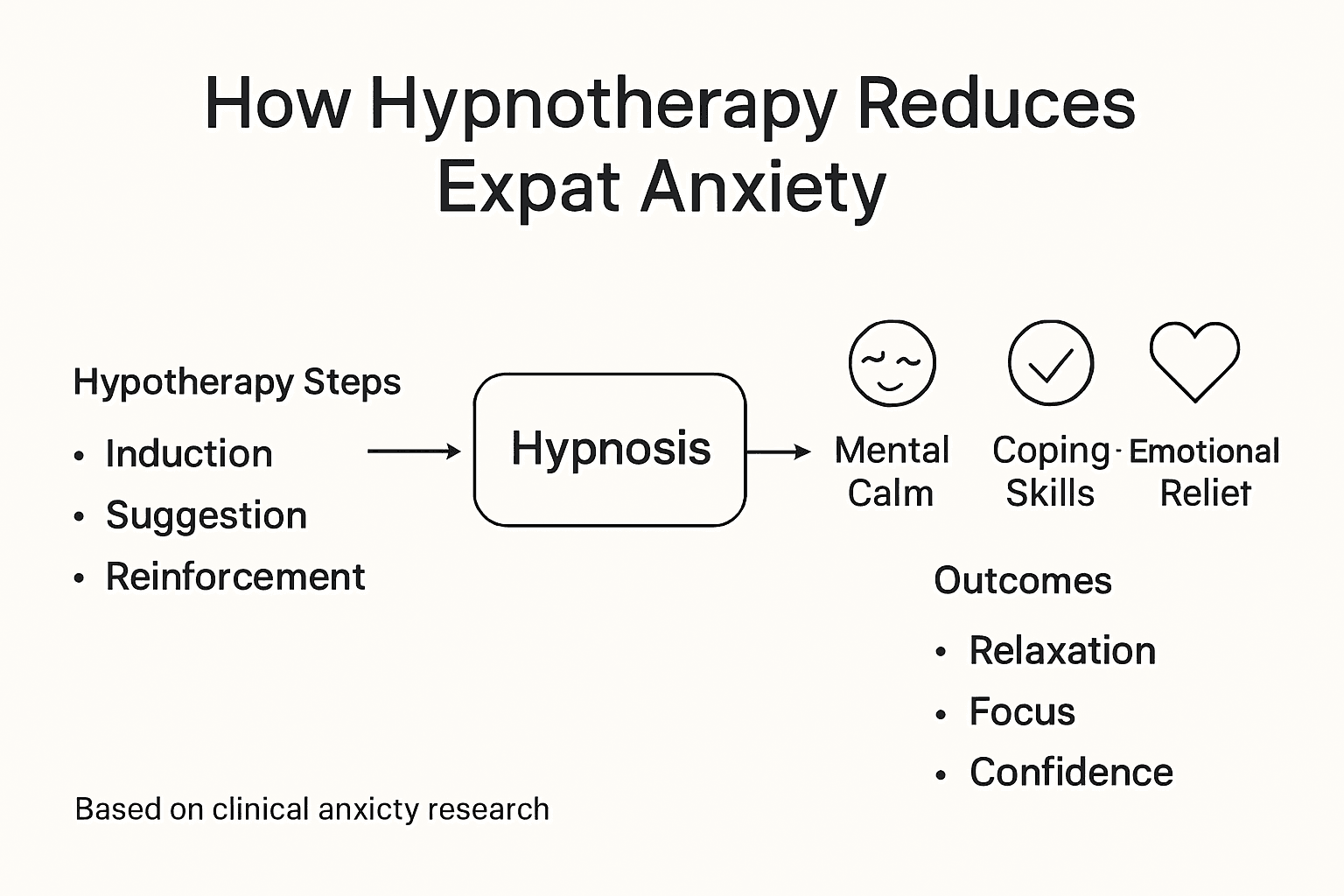
Clinical research reveals that hypnotherapy’s effectiveness stems from its ability to address anxiety at its neurological roots. By inducing a state of focused relaxation, practitioners can help clients access and reprocess traumatic memories, reduce physiological stress responses, and develop more constructive coping mechanisms. The technique is especially powerful for expatriates because it acknowledges the multifaceted nature of anxiety – addressing not just symptoms, but the underlying psychological and emotional challenges of cross-cultural adaptation.
Pro tip: Schedule an initial consultation that includes a comprehensive assessment of your specific expatriate experiences to develop a personalized hypnotherapy approach targeting your unique anxiety triggers.
Integrating Hypnotherapy With Other Therapies for Anxiety
Contemporary clinical research reveals powerful synergistic potential when integrating hypnotherapy with other therapeutic approaches, particularly for expatriates experiencing complex psychological challenges. Unlike traditional standalone treatments, integrated therapy models leverage the unique strengths of multiple therapeutic techniques to create more comprehensive and effective anxiety interventions. This approach recognizes that anxiety is a multifaceted experience requiring nuanced, personalized treatment strategies that address psychological, emotional, and physiological dimensions simultaneously.
Enhanced therapeutic integration introduces structured frameworks like the Enhanced Focused Empowering Techniques (EFET), which systematically combine cognitive behavioral therapy, mindfulness practices, and hypnotherapy. For expatriates, this means developing a more holistic treatment approach that acknowledges the unique stressors of international transitions. By blending techniques, practitioners can help clients develop more robust emotional regulation skills, reframe negative thought patterns, and build psychological resilience more effectively than single-modality treatments.
The integration process typically involves a collaborative approach where hypnotherapy complements other psychological interventions. Cognitive behavioral therapy can provide structured techniques for identifying and challenging anxiety triggers, while hypnotherapy helps rewire subconscious responses and develop more adaptive emotional mechanisms. This multilayered approach is particularly powerful for expatriates, who often face complex psychological challenges related to cultural adaptation, identity shifts, and ongoing stress management. The goal is not to replace existing therapeutic methods but to enhance their effectiveness by accessing deeper psychological processes and promoting more profound, lasting emotional healing.
Pro tip: Seek a therapist with demonstrated expertise in integrative approaches who can design a customized treatment plan that combines multiple therapeutic techniques specifically tailored to your expatriate experiences.
Potential Risks, Costs, and How It Compares to Other Treatments
Comprehensive comparative research reveals nuanced insights into hypnotherapy’s risk profile and cost-effectiveness within anxiety treatment modalities, presenting a balanced perspective for expatriates considering this therapeutic approach. While hypnotherapy offers promising outcomes, understanding its potential risks, financial implications, and comparative advantages is crucial for making informed treatment decisions. Unlike pharmaceutical interventions that often involve significant side effects and ongoing medication costs, hypnotherapy presents a more holistic and potentially more sustainable approach to managing anxiety.
Global healthcare assessments indicate that alternative anxiety treatments like hypnotherapy can offer cost-effective solutions with minimal adverse reactions, particularly for individuals experiencing situational or transition-related anxiety. Compared to traditional pharmacological treatments, hypnotherapy typically involves lower long-term expenses and reduces the risk of medication dependency. For expatriates navigating complex emotional landscapes, this approach provides a personalized intervention that addresses root psychological causes without introducing synthetic chemical interventions or risking potential pharmaceutical side effects.
The comparative analysis between hypnotherapy and other anxiety treatments reveals several critical distinctions. While cognitive behavioral therapy and medication remain standard approaches, hypnotherapy offers a unique mechanism for directly accessing and reprogramming subconscious thought patterns. This method differs fundamentally from purely symptom-management strategies, providing a more holistic intervention that empowers individuals to develop intrinsic emotional regulation skills. Potential risks are minimal and primarily psychological, such as temporary emotional discomfort during deep psychological exploration, which is carefully managed by trained professionals who prioritize client safety and emotional well-being.
Below is a comparison of hypnotherapy with other common anxiety treatments:
Treatment Type | Cost Effectiveness | Side Effect Risk | Core Mechanism |
Hypnotherapy | High long-term | Minimal, psychological | Accessing subconscious patterns |
Cognitive Behavioral | Moderate | Low | Thought restructuring |
Medication | Variable, ongoing | Physical, potential dependency | Biochemical symptom control |
Pro tip: Request a comprehensive initial consultation that includes a detailed risk assessment, cost breakdown, and personalized treatment plan tailored specifically to your individual anxiety profile and expatriate experiences.
Discover Effective Hypnotherapy Solutions for Expat Anxiety Relief
If you are an expat facing anxiety triggered by cultural transitions, language barriers, or identity challenges, hypnotherapy can offer profound support by accessing your subconscious mind to reframe stress responses and build emotional resilience. At Heske Therapy, we specialize in integrative methods combining hypnotherapy with Rapid Transformational Therapy, EMDR, and CBT to deliver rapid and lasting results tailored specifically to the unique challenges expatriates face. Our compassionate, multicultural team in Madrid understands the complexity of cross-cultural anxiety and helps you overcome negative thought patterns and physical symptoms like IBS or migraines with personalized, client-focused care.
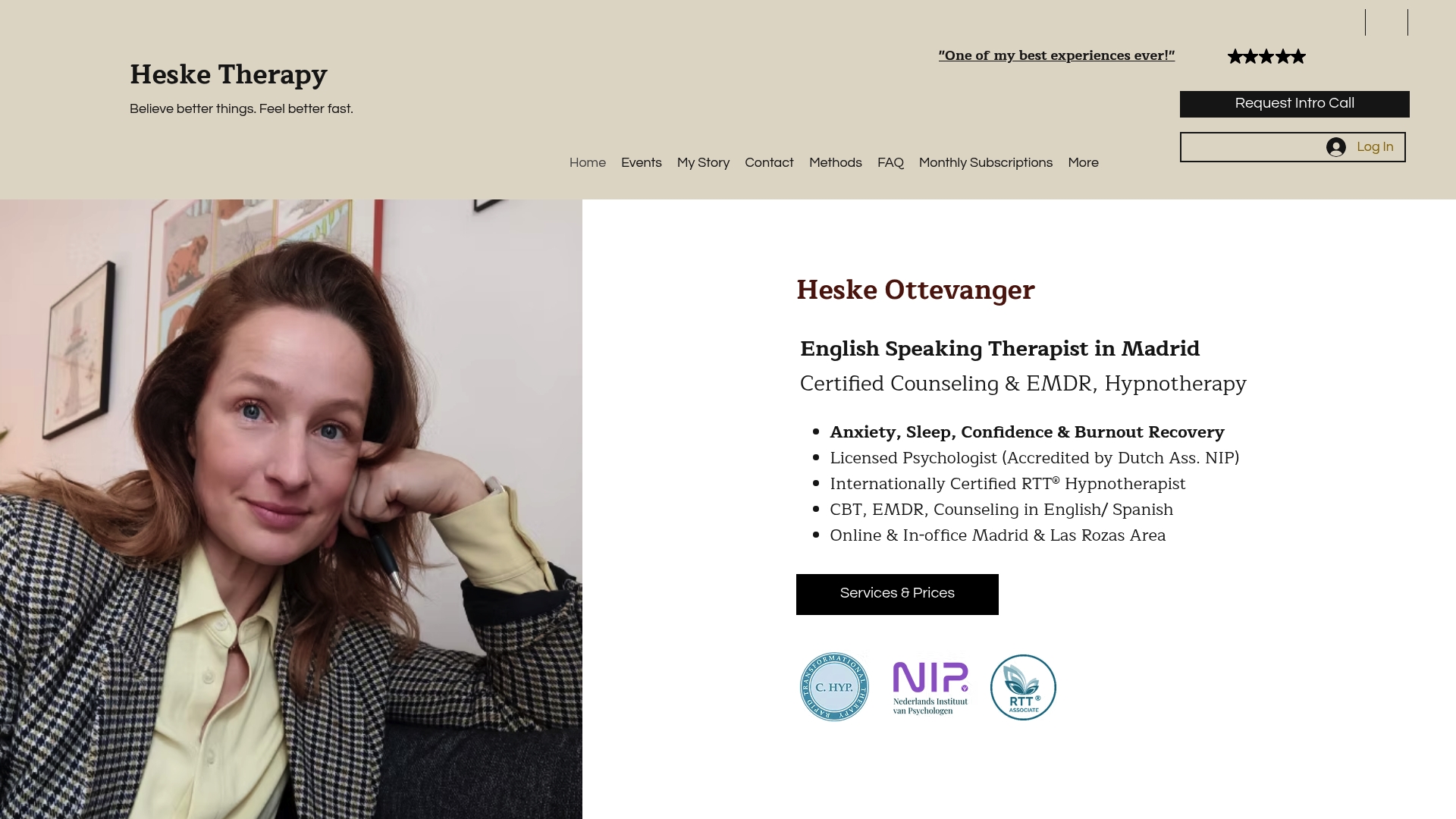
Take control of your anxiety now by exploring expert hypnotherapy integrated with proven therapies designed for expatriates. Visit Heske Therapy to book your free discovery call and start your personalized treatment journey. Learn more about the therapeutic approaches we use to tailor sessions around your specific needs and experience the difference of therapy designed with your expatriate experience at its core.
Frequently Asked Questions
What is hypnotherapy and how can it help with anxiety?
Hypnotherapy is a scientifically-based therapeutic technique that guides individuals into a state of heightened focus and suggestibility. It helps access subconscious thought patterns, allowing for profound interventions that can reframe negative thoughts and develop emotional resilience, particularly useful for expats dealing with anxiety.
Can hypnotherapy effectively treat anxiety for expatriates?
Yes, research indicates that hypnotherapy is effective in reducing anxiety, especially for individuals undergoing significant life transitions, such as expatriates. It addresses the root psychological causes of anxiety, leading to enduring emotional healing and better coping mechanisms.
What techniques are commonly used in hypnotherapy for anxiety?
Common techniques include direct suggestion, guided imagery, regression methods, and relaxation protocols. Each technique is tailored to address individual psychological needs, helping clients reframe negative thought patterns and manage stress more effectively.
What should I consider when choosing a hypnotherapist?
It’s important to select a licensed hypnotherapist with experience in working with expatriates and understanding their unique cultural and emotional challenges. A detailed consultation discussing your specific experiences will help tailor the hypnotherapy approach to effectively address your anxiety.
Recommended
Comments