Psychotherapy Methods Explained: Lasting Change for Expats

Feeling overwhelmed by the unique stress of life abroad can leave even the most adventurous expatriate searching for answers. For English-speaking professionals in Madrid facing anxiety or burnout, finding a therapy method that truly works can seem challenging. This guide breaks down the core concepts and methods of psychotherapy, clarifying practical approaches like Cognitive Behavioral Therapy and highlighting how tailored support can lead to real, lasting growth.
Table of Contents
Key Takeaways
Point | Details |
Therapeutic Relationship | A strong collaborative alliance between therapist and client is essential for effective psychotherapy. |
Tailored Approaches | Selecting a therapy type should align with individual psychological needs and personal experiences. |
Culturally Sensitive Methods | Expatriates benefit from therapists who understand and respect their diverse cultural backgrounds. |
Evidence-Based Techniques | Opt for methods that are backed by scientific research to ensure effectiveness and reduce risks during treatment. |
Defining Psychotherapy Methods and Core Concepts
Psychotherapy represents a structured, professional approach to mental health treatment that helps individuals understand and transform their emotional experiences. At its core, psychotherapy involves therapeutic interactions between a trained professional and a client, designed to address psychological challenges, promote emotional healing, and facilitate personal growth.
Understanding psychotherapy requires recognizing its foundational components, which researchers have systematically analyzed across various dimensions. These components encompass several critical elements:
Therapist Skills: Professional techniques and competencies used to facilitate healing
Client Engagement: Active participation and willingness to explore personal experiences
Therapeutic Relationship: The collaborative alliance between therapist and client
Methodological Approaches: Specific intervention strategies tailored to individual needs
Psychotherapy methods draw from diverse theoretical frameworks, each offering unique perspectives on human behavior and emotional processing. From psychodynamic approaches exploring unconscious processes to cognitive-behavioral techniques addressing thought patterns, these methods share a fundamental goal: helping individuals develop more adaptive emotional responses and behavioral strategies.
Researchers have identified that effective psychotherapy transcends singular techniques, emphasizing the intricate interplay between conscious and unconscious psychological mechanisms. This holistic understanding recognizes that emotional healing involves more than symptom management—it requires comprehensive personal transformation.
Pro tip: When exploring psychotherapy, prioritize finding a practitioner whose methodology resonates with your personal experiences and therapeutic goals.
Major Psychotherapy Types and Key Differences
Psychotherapy encompasses multiple therapeutic approaches, each designed to address mental health challenges through distinct methodological frameworks. Psychotherapy approaches vary significantly in their theoretical foundations, offering specialized strategies for emotional healing and personal transformation.
The primary psychotherapy types include:
Psychodynamic Therapy: Explores unconscious motivations and childhood experiences
Cognitive Behavioral Therapy (CBT): Focuses on changing negative thought patterns and behaviors
Humanistic Therapy: Emphasizes personal growth and self-actualization
Behavioral Therapy: Concentrates on modifying problematic behaviors through learning principles
Integrative Therapy: Combines multiple approaches to create personalized treatment strategies
Each therapeutic approach offers unique benefits tailored to different psychological needs. Individual, group, and family therapy formats provide flexible options for addressing mental health challenges, allowing practitioners to customize interventions based on specific client requirements.
Here’s a quick comparison of major psychotherapy types and their typical focus areas:
Therapy Type | Primary Focus | Ideal For |
Psychodynamic | Unconscious motivations | Long-standing issues |
Cognitive Behavioral (CBT) | Thoughts and behaviors | Anxiety, depression |
Humanistic | Personal growth, self-acceptance | Life transitions |
Behavioral | Observable behaviors | Phobias, habit change |
Integrative | Combining multiple techniques | Complex, varied needs |
Understanding these therapeutic approaches helps expatriates select the most appropriate method for their individual emotional landscape. The goal remains consistent across methodologies: facilitating meaningful psychological transformation and supporting individuals in developing more adaptive emotional responses.
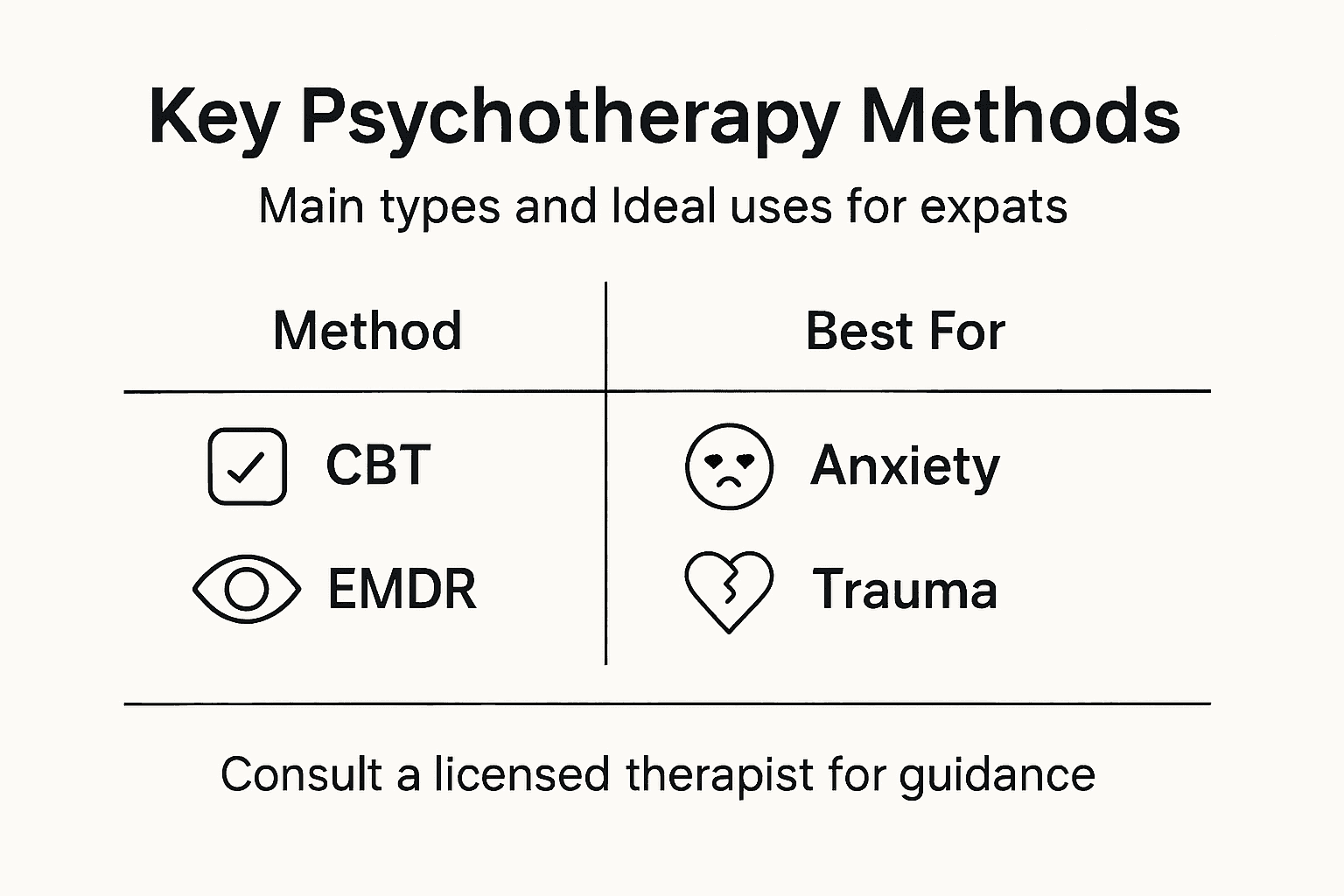
Pro tip: Consider scheduling initial consultations with multiple therapists to explore which therapeutic approach feels most comfortable and aligned with your personal healing journey.
How Popular Methods Like CBT, EMDR, and RTT Work
Psychotherapy offers diverse approaches to mental health treatment, each with unique mechanisms for facilitating emotional healing and personal growth. Cognitive Behavioral Therapy (CBT) represents a structured, goal-oriented approach designed to transform negative thought patterns and behaviors.
The primary therapeutic methods include:
Cognitive Behavioral Therapy (CBT): Focuses on identifying and restructuring negative thought patterns
EMDR (Eye Movement Desensitization and Reprocessing): Targets trauma by processing disturbing memories
Rapid Transformational Therapy (RTT): Combines hypnotherapy with cognitive techniques for rapid change
Psychodynamic Therapy: Explores unconscious patterns and childhood experiences
Humanistic Therapy: Emphasizes personal growth and self-actualization
Evidence-based techniques in CBT involve teaching patients to challenge and reframe maladaptive thinking, enabling more adaptive emotional and behavioral responses. Each method offers a unique pathway to psychological transformation, addressing specific mental health challenges through targeted interventions.

For expatriates navigating complex emotional landscapes, understanding these therapeutic approaches provides a roadmap for selecting the most appropriate method. The goal remains consistent: empowering individuals to develop healthier coping mechanisms and achieve meaningful personal growth.
Pro tip: Research each therapy method’s specific approach and discuss your unique needs with a professional to find the most suitable therapeutic strategy.
Integrative and Culturally Sensitive Approaches for Expats
Expats navigate complex emotional landscapes that demand nuanced, culturally informed therapeutic approaches. Culturally sensitive psychotherapy represents a critical framework for addressing the unique mental health challenges experienced by international professionals and their families.
Key components of integrative, culturally sensitive therapy include:
Cultural Self-Awareness: Therapists recognizing their own cultural biases and potential blind spots
Linguistic Flexibility: Ability to communicate across language and cultural barriers
Identity Exploration: Understanding intersectional identities and their psychological impacts
Adaptive Communication: Modifying therapeutic approaches to respect cultural expectations
Contextual Understanding: Recognizing how global transitions affect mental health
Culturally diverse clients require therapeutic strategies that acknowledge their complex, intersecting identities, including factors like race, ethnicity, gender, socioeconomic background, and migration experience. This approach goes beyond traditional therapy by creating a more responsive, empathetic healing environment that validates the expatriate’s unique emotional journey.
For expats, integrative therapy means finding a approach that respects individual complexity while providing practical, effective mental health support. The goal is creating a therapeutic experience that feels genuinely supportive, understanding, and transformative.
Pro tip: During initial consultations, discuss your cultural background and specific expatriate experiences to ensure your therapist can provide truly personalized, culturally informed support.
Comparing Psychotherapy to Other Mental Health Options
Mental health treatment offers multiple pathways for addressing emotional and psychological challenges, with psychotherapy representing a comprehensive approach to healing that goes beyond symptom management. Unlike other interventions, psychotherapy focuses on understanding root causes and developing long-term coping strategies.
Key differences between mental health treatment options include:
Psychotherapy: Addresses underlying emotional patterns and thought processes
Medication: Targets biochemical imbalances and symptom reduction
Support Groups: Provides peer-based emotional support and shared experiences
Lifestyle Interventions: Focuses on holistic wellness through diet, exercise, and stress management
Alternative Therapies: Explores complementary approaches like meditation and acupuncture
Comparative studies suggest interpersonal psychotherapy can be as effective as medication for treating conditions like depression, highlighting its potential as a primary or complementary treatment method. The most effective approach often involves a personalized combination of these strategies.
For expatriates navigating complex emotional landscapes, understanding these options enables more informed decisions about mental health care. Each approach offers unique benefits, and the most successful treatment plan typically integrates multiple strategies tailored to individual needs.
Pro tip: Consult with mental health professionals who can provide a comprehensive assessment and recommend a personalized treatment approach combining multiple strategies.
Risks, Effectiveness, and Choosing the Right Method
Psychotherapy outcomes depend critically on selecting the most appropriate approach for individual needs. Research synthesizes complex factors influencing therapeutic effectiveness, highlighting the nuanced process of matching treatment methods to specific client characteristics and psychological challenges.
Key considerations when evaluating psychotherapy methods include:
Individual Psychological Profile: Understanding personal history and specific mental health needs
Therapist Expertise: Assessing practitioner’s specialized training and experience
Treatment Goals: Clarifying specific outcomes desired from therapy
Potential Risks: Evaluating possible emotional challenges during treatment
Evidence-Based Approaches: Prioritizing methods with documented scientific effectiveness
Expert perspectives emphasize the critical importance of regulated, ethical care delivery that minimizes potential psychological risks while maximizing therapeutic benefits. The most successful interventions involve collaborative decision-making between client and therapist, ensuring a personalized approach that respects individual vulnerability and potential emotional complexity.
Consider these factors when choosing a therapy approach:
Factor | Why It Matters | What to Check |
Therapist’s training | Ensures specialized expertise | Ask about certifications |
Personal goals | Guides success measurement | Clarify desired outcomes |
Cultural understanding | Supports diverse backgrounds | Request experience with expats |
Approach flexibility | Adapts to changing needs | Inquire about treatment options |
Expats face unique challenges that require particularly nuanced therapeutic approaches. Effectiveness relies not just on technical skill, but on a therapist’s ability to understand cross-cultural psychological dynamics and create a safe, adaptive healing environment.
Pro tip: Request detailed information about a therapist’s specific training, approach, and experience working with expatriate populations before committing to treatment.
Discover Psychotherapy Solutions Designed for Expats Facing Emotional Challenges
The article highlights the complex emotional journeys expatriates face, including anxiety, trauma, and cultural adjustment. If you are struggling with emotional blocks, burnout, or symptoms like IBS and migraines linked to stress, finding the right psychotherapy method is essential. Approaches like Rapid Transformational Therapy (RTT), EMDR, and CBT are proven to help rewrite negative patterns and create lasting change. Heske Therapy specializes in these integrative methods delivered in English, Spanish, and Dutch to support expatriates navigating unique cultural and psychological challenges.
Why choose a personalized, culturally sensitive approach?
Tailored treatment plans based on your individual emotional needs
Therapy that respects your cultural background and language preferences
Experienced therapists focused on rapid and lasting results
Start your healing journey today with the experts at Heske Therapy. Take advantage of a free discovery call to explore treatment options customized for your situation and goals. Visit Heske Therapy to learn more about their proven methods like Rapid Transformational Therapy (RTT) and EMDR that empower you to overcome anxiety, burnout, and trauma.
Don’t wait to reclaim emotional balance and personal growth. Contact Heske Therapy now and find the psychotherapy solution that truly fits your expatriate experience.
Frequently Asked Questions
What are the main types of psychotherapy?
Psychotherapy encompasses several primary types, including Psychodynamic Therapy, Cognitive Behavioral Therapy (CBT), Humanistic Therapy, Behavioral Therapy, and Integrative Therapy. Each approach targets different aspects of mental health and personal growth.
How does Cognitive Behavioral Therapy (CBT) work?
CBT focuses on identifying and restructuring negative thought patterns and behaviors. It teaches patients to challenge maladaptive thinking, which helps in developing healthier emotional responses and coping strategies.
Why is culturally sensitive psychotherapy important for expats?
Culturally sensitive psychotherapy recognizes that expatriates face unique mental health challenges due to cultural differences and identity complexities. This approach ensures that therapy is tailored to respect and address these diverse backgrounds, promoting better emotional support.
What factors should I consider when choosing a psychotherapy method?
Consider your individual psychological profile, the therapist’s expertise, your treatment goals, potential emotional risks, and whether the methods used are evidence-based. A collaborative approach between you and your therapist is crucial for effective outcomes.
Recommended
Comments