Step by Step Hypnotherapy for Stress Relief Success

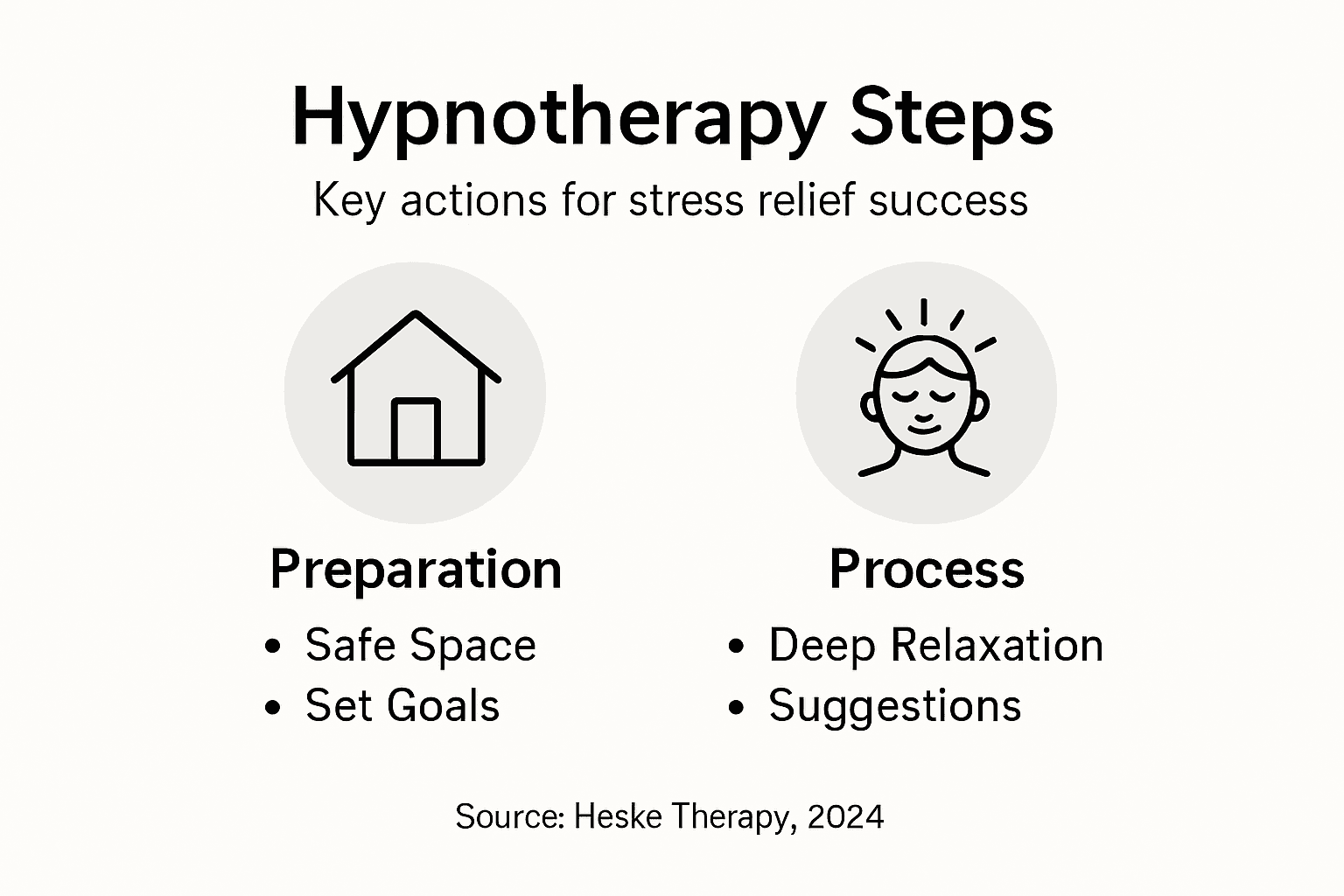
Feeling overwhelmed in Madrid can leave even the most resilient expatriates searching for quick relief from stress and anxiety. The right hypnotherapy approach begins with a comfortable and emotionally safe environment, laying the foundation for genuine healing. By prioritizing relaxation, personal goals, and deep mental focus, you can open doors to lasting emotional balance and stress management tailored to your needs as an expatriate.
Table of Contents
Quick Summary
Key Point | Explanation |
1. Create a Comfortable Space | Design a therapy environment that promotes relaxation and emotional safety for clients to enhance their receptivity to hypnotherapy. |
2. Set Clear Personal Goals | Establish specific and measurable goals tailored to individual emotional and behavioral challenges to guide the therapeutic process. |
3. Induce Deep Relaxation | Use techniques like controlled breathing and progressive muscle relaxation to achieve a focused, calm state conducive to suggestion. |
4. Deliver Targeted Suggestions | Craft custom suggestions that resonate with the client’s unique experiences to effectively address and modify subconscious behaviors. |
5. Evaluate and Reinforce Progress | Continuously assess emotional shifts and celebrate incremental progress to maintain motivation and ensure lasting change. |
Step 1: Establish a Comfortable and Safe Environment
Creating the right therapeutic environment is crucial for successful hypnotherapy, especially for stressed expatriates seeking emotional relief. Your physical space plays a significant role in helping clients feel secure, relaxed, and open to transformation.
To design an ideal hypnotherapy setting, focus on key elements that promote psychological safety and comfort. Professional therapy environment guidelines recommend several critical considerations:
Lighting control: Soft, adjustable lighting that can be dimmed
Seating arrangement: Comfortable chairs with good support
Sound management: Minimal external noise disruptions
Spatial layout: Clear pathways and easy exit routes
Professional aesthetics: Clean, uncluttered space reflecting expertise
Consider the sensory experience of your clients. Choose neutral colors that feel calming without being sterile. Incorporate subtle elements like soft textures or minimalist artwork that create a sense of tranquility. The goal is to make your clients feel emotionally safe and physically comfortable.
A well-designed therapeutic space communicates professionalism and care before a single word is spoken.
Position furniture to create an open, welcoming atmosphere. Ensure chairs are arranged to facilitate easy conversation and provide a sense of personal space. Avoid cramped or overwhelming layouts that might increase anxiety.
Pro Tip: Test your therapy space by sitting in the client’s chair and experiencing the environment from their perspective to identify potential improvements.
Step 2: Define Personalized Hypnotherapy Goals
Defining clear and personalized goals is the cornerstone of an effective hypnotherapy journey, transforming a generic approach into a targeted, powerful healing experience. Your specific objectives will guide the entire therapeutic process, ensuring that each session moves you closer to meaningful personal transformation.
Clinical hypnosis research reveals that personalized goal setting is crucial for successful therapeutic outcomes. This process involves identifying precise behavioral or emotional targets that align with your unique needs and challenges:
Emotional regulation: Address specific feelings like anxiety or low self-esteem
Behavioral change: Target habits or patterns you want to modify
Performance enhancement: Improve confidence or overcome mental blocks
Stress management: Develop coping mechanisms tailored to your lifestyle
Personal growth: Set intentions for psychological healing and transformation
The key is to be specific and measurable in your goal setting. Instead of a vague desire like “reduce stress,” articulate a clear objective such as “decrease work-related anxiety by 60% and improve sleep quality within three months.”
Effective hypnotherapy goals are precise, personal, and directly connected to your lived experience.
Consider your goals from multiple perspectives. What emotional barriers are holding you back? What specific behaviors or thought patterns would you like to change? Hypnotic states enable deeper behavioral modification by accessing your unconscious mind and reshaping internal narratives.

Pro Tip: Write down your hypnotherapy goals in a journal, creating a detailed and honest roadmap that captures both your conscious desires and underlying emotional needs.
Step 3: Induce Deep Relaxation for Receptivity
Deep relaxation is the gateway to transformative hypnotherapy, creating a powerful mental state where therapeutic suggestions can profoundly impact your subconscious mind. This step is about transitioning from your everyday state of alertness to a focused, calm, and receptive mental landscape.
Neurophysiological research on hypnotic relaxation demonstrates that achieving a deep relaxation state involves specific techniques that modulate your nervous system’s response. These techniques aim to reduce peripheral awareness and enhance your ability to receive therapeutic suggestions:
Controlled breathing: Slow, rhythmic breaths that signal safety to your nervous system
Progressive muscle relaxation: Systematically releasing tension from each muscle group
Visualization techniques: Creating calming mental imagery
Body scanning: Developing awareness of physical sensations
Mental focusing: Directing attention away from external distractions
The goal is to reach a state of focused calm where your conscious mind becomes less active, allowing deeper neurological pathways to become more accessible. Hypnotic relaxation techniques specifically target brain regions associated with stress and anxiety, creating a neurological environment conducive to healing.
Deep relaxation is not about emptying your mind, but about creating a receptive, focused internal space for transformation.
Practice these techniques with patience. Some individuals reach deep relaxation quickly, while others might require more time and repeated practice. Pay attention to your body’s signals and allow the process to unfold naturally.
Pro Tip: Practice your relaxation techniques daily, even outside therapy sessions, to build neurological muscle memory and make the process more intuitive during actual hypnotherapy.
Compare popular deep relaxation techniques in hypnotherapy:
Technique | How It Works | Ideal Use Case |
Controlled breathing | Slows heart rate and calms nerves | Starting any session |
Progressive muscle relaxation | Releases tension sequentially | Reducing physical stress |
Visualization | Creates soothing mental imagery | Enhancing focus and calm |
Body scanning | Increases body awareness | Identifying tension spots |
Mental focusing | Narrows attention inward | Deepening trance states |
Step 4: Guide the Mind Through Targeted Suggestions
Targeted suggestions are the strategic heart of hypnotherapy, transforming your subconscious landscape by precisely addressing your specific emotional and behavioral challenges. This step is about crafting and delivering powerful mental instructions that can reshape your inner narrative and trigger meaningful personal change.
Hypnotherapy suggestion techniques are sophisticated tools designed to communicate directly with your unconscious mind. These carefully constructed suggestions work by engaging specific cognitive and neural mechanisms:
Direct suggestions: Clear, straightforward instructions for behavioral change
Cognitive suggestions: Reframing thought patterns and belief systems
Ideomotor suggestions: Influencing unconscious physical responses
Perceptual suggestions: Modifying sensory experiences and interpretations
Metaphorical suggestions: Using symbolic language to create psychological shifts
The art of suggestion lies in its precise customization. Hypnotic suggestion mechanisms demonstrate that individual responsiveness depends on personal motivation and inherent hypnotizability.
Effective suggestions are like keys that unlock hidden psychological doors, revealing pathways to transformation.
Your hypnotherapist will craft suggestions that resonate with your unique psychological landscape. These aren’t generic statements but carefully tailored mental instructions designed to speak directly to your subconscious mind, bypassing conscious resistance.
Pro Tip: Approach hypnotic suggestions with an open and curious mindset, understanding that your level of engagement and willingness significantly enhances their effectiveness.
Step 5: Evaluate Emotional Shifts and Reinforce Success
As you progress through hypnotherapy, tracking and reinforcing your emotional transformation becomes crucial for sustainable personal growth. This step is about understanding the subtle yet profound changes occurring in your psychological landscape and intentionally embedding those positive shifts.
Emotional well-being research highlights the importance of systematically assessing psychological improvements throughout your therapeutic journey. Your emotional evaluation will focus on several key dimensions:
Emotional baseline: Measuring initial emotional states
Subjective experience: Tracking personal perceptions of change
Behavioral modifications: Observing real-world shifts in responses
Stress resilience: Assessing improvements in coping mechanisms
Neurological markers: Understanding underlying psychological transformations
Successful reinforcement involves celebrating incremental progress and integrating new emotional patterns. Clinical hypnotherapy studies demonstrate that sustained suggestion and cognitive restructuring can significantly amplify therapeutic gains.
Emotional healing is not a destination but a continuous journey of self-discovery and intentional transformation.
Your hypnotherapist will guide you through reflective conversations, helping you recognize and validate the emotional shifts you’re experiencing. These discussions are crucial for solidifying your newfound psychological insights and preventing regression into old patterns.
Pro Tip: Maintain a personal journal documenting your emotional journey, noting subtle changes and insights to create a tangible record of your transformative process.
Here is a summary of how each hypnotherapy step supports emotional well-being:
Step | Main Focus | Key Benefit |
1 | Safe environment | Promotes relaxation and trust |
2 | Personalized goals | Ensures relevant progress |
3 | Deep relaxation | Increases responsiveness |
4 | Targeted suggestions | Drives behavioral change |
5 | Evaluation & reinforcement | Sustains lasting results |
Overcome Stress with Personalized Hypnotherapy at Heske Therapy
If you have been following the “Step by Step Hypnotherapy for Stress Relief Success” guide, you already understand how important a safe environment and personalized goals are in reducing anxiety and emotional blocks. At Heske Therapy, we specialize in helping English-speaking expatriates in Madrid manage stress, burnout, and sleeplessness through integrative hypnotherapy techniques that promote deep relaxation and lasting emotional shifts. Our approach is tailored to your unique needs so you can break free from limiting beliefs and rebuild confidence in a compassionate clinical setting.
Experience rapid and lasting results by addressing your specific challenges with customized therapeutic suggestions and ongoing emotional reinforcement. Discover how our multicultural team combines Rapid Transformational Therapy (RTT), CBT, and EMDR to complement hypnotherapy for a holistic solution to stress and emotional well-being.
Ready to transform your stress into strength? Start your journey today with a free discovery call. Visit Heske Therapy to learn more about how our specialized hypnotherapy sessions can help you achieve measurable improvements in anxiety and emotional resilience. Take control of your mental health now by exploring our therapy services and setting personalized goals that truly reflect your lived experience.
Frequently Asked Questions
What are the key steps in hypnotherapy for stress relief?
The key steps in hypnotherapy for stress relief include establishing a comfortable environment, defining personalized goals, inducing deep relaxation, guiding the mind through targeted suggestions, and evaluating emotional shifts. Follow these steps systematically to enhance your therapeutic experience and achieve lasting emotional relief.
How can I create a comfortable environment for hypnotherapy?
To create a comfortable environment, control the lighting, choose supportive seating, minimize external noise, and ensure a professional aesthetic. Aim for a clean and calming space that allows your clients to feel secure and relaxed.
What types of personalized goals should I set for hypnotherapy?
Personalized goals should focus on specific emotional or behavioral changes, such as reducing anxiety by 60% or improving sleep quality within three months. Clearly define these goals to align your therapy sessions with your personal needs.
How do I achieve deep relaxation during hypnotherapy?
To achieve deep relaxation, practice controlled breathing, progressive muscle relaxation, and visualization techniques. Aim to incorporate these practices daily, making them more intuitive during your hypnotherapy sessions.
How do targeted suggestions work in hypnotherapy?
Targeted suggestions work by addressing specific emotional challenges and reshaping your internal narratives. Collaborate with your hypnotherapist to create customized suggestions that resonate deeply with your personal experiences and goals.
How can I track my emotional progress during hypnotherapy?
Track your emotional progress by maintaining a personal journal to document your feelings, changes in behavior, and overall stress resilience. Regularly reviewing this journal can help you recognize growth and reinforce positive transformations in your emotional state.
Recommended
Comments