The Subconscious Mind's Role in Healing and Recovery


Your subconscious mind is running the show, even when you think you’re in control. It governs your nervous system, regulates immune activity, manages hormonal balance, and holds every belief, fear, and emotional memory you’ve ever formed. When healing stalls, whether from trauma, chronic anxiety, burnout, or physical symptoms like migraines or IBS, the subconscious is almost always part of the picture.
The subconscious mind role in healing is not a fringe concept. It’s grounded in neuroscience, psychoneuroimmunology, and decades of clinical evidence. Here’s what that means in practice:
The subconscious regulates nervous system states, shifting the body between stress and safety, and only in safety states can genuine physiological repair occur.
Unresolved trauma and suppressed emotions stored subconsciously contribute to chronic inflammation, immune dysregulation, and persistent psychological distress.
Therapies like Rapid Transformational Therapy (RTT) and Eye Movement Desensitization and Reprocessing (EMDR) work precisely because they access and reprocess subconscious material, not just conscious thought.
Placebo research consistently shows that belief alone, operating through subconscious expectation, can produce measurable biological healing responses.
Beliefs and emotional patterns stored below conscious awareness shape how your body responds to illness, stress, and recovery, often more powerfully than any conscious intention.
Understanding this isn’t just reassuring. It’s the first step toward doing something about it.
Table of Contents
What science says about the subconscious mind and healing
The relationship between the subconscious mind and the body is one of the most underappreciated areas in modern medicine. Clinical psychologists now describe the subconscious as the “driver of attention,” shaping how patients perceive their reality and mobilizing healing responses, or blocking them.
The field of psychoneuroimmunology (PNI) has built a compelling case for how subconscious stress patterns directly alter immune function. Subconscious processing of threat cues activates the hypothalamic-pituitary-adrenal (HPA) axis and the sympathetic nervous system, triggering cortisol release and pro-inflammatory cytokine production. Over time, this chronic activation underlies conditions ranging from autoimmune disease to poor vaccine response. Childhood trauma, repressed grief, and unresolved emotional conflicts, often inaccessible to conscious recall, can manifest as low-grade inflammation in adulthood.
A systematic review published in Frontiers in Systems Neuroscience found a significant association between psychoneuroimmunoendocrine (PINE) system dysregulation and alterations in stress-adaptive behaviors under implicit conditions, with epigenetic mechanisms identified as core biological substrates for unconscious regulatory processes. This is not theoretical. The nervous system, endocrine system, and immune system communicate bidirectionally, and the subconscious orchestrates much of that conversation.
Healing rituals, therapeutic encounters, and even placebo treatments recruit subconscious mechanisms to prioritize recovery-oriented autonomic responses. The meaning you attach to a healing experience shapes how your body responds at a biological level. A randomized clinical trial comparing Ericksonian Hypnotherapy with trauma-focused cognitive behavioral therapy found that both produced large, significant reductions in PTSD symptoms, with hypnotherapy showing slightly greater improvement in intrusion, hyperarousal, and somatic anxiety, demonstrating that subconscious-targeted approaches can match or exceed standard clinical benchmarks.
Physiological System | Subconscious Influence | Healing Relevance |
Autonomic nervous system | Regulates stress vs. safety states | Safety state enables tissue repair and immune function |
HPA axis | Controls cortisol and stress hormones | Chronic activation suppresses immunity and prolongs illness |
Immune system | Modulated by emotional and psychological states | Subconscious stress drives inflammation and immune dysregulation |
Endocrine system | Hormonal balance governed subconsciously | Hormonal dysregulation linked to mood, pain, and recovery speed |
Epigenetic regulation | Experience shapes gene expression outside awareness | Trauma and stress can alter biological set-points long-term |
Pro Tip: When working with a therapist, ask specifically about nervous system regulation. A therapist who understands the window of tolerance, the range of arousal in which your nervous system can process difficult material without shutting down or flooding, will pace your sessions to keep you in that zone, which is where real subconscious integration happens.
Practical methods to access and heal the subconscious mind
Knowing the subconscious influences healing is one thing. Knowing how to engage it is another. The good news is that several well-researched methods can help you access subconscious patterns safely and begin shifting them.

Hypnosis and clinical hypnotherapy work by guiding the mind into a relaxed, focused state where the critical conscious filter lowers and subconscious material becomes more accessible. A network meta-analysis found that cognitive-behavioral hypnosis outperforms other hypnosis types specifically for PTSD symptom reduction, while traditional hypnosis shows strong benefits for anxiety and relationship quality. For daily practice, even a 10-minute self-hypnosis session using a recorded audio guide can reinforce subconscious messages around safety, self-worth, and recovery.
EMDR (Eye Movement Desensitization and Reprocessing) uses bilateral stimulation, typically guided eye movements, to help the brain reprocess traumatic memories stored in the subconscious. Unlike talk therapy, EMDR doesn’t require you to narrate your trauma in detail. It works at the level where the memory is stored, allowing the nervous system to complete interrupted stress responses and integrate the experience without re-traumatization.
Meditation and mindfulness create the conditions for subconscious material to surface gently. Regular practice lowers baseline cortisol, shifts the autonomic nervous system toward parasympathetic dominance, and builds the capacity to observe emotional patterns without being overwhelmed by them. This is foundational work that makes other subconscious healing techniques more effective.
Affirmations and visualization, when practiced consistently and in a relaxed state, communicate directly with the subconscious. The key is specificity and emotional engagement. A vague affirmation repeated mechanically has little effect. A vivid, emotionally resonant image of yourself healthy, calm, and capable, held in a state of genuine belief, is a different matter entirely.
Integrating top-down and bottom-up approaches produces the most thorough results for entrenched trauma. Top-down methods like cognitive reframing and hypnotic suggestion address identity and belief. Bottom-up methods like somatic experiencing and breathwork address the physical storage of trauma in the body. Combining both addresses the full spectrum of where trauma lives.
Common subconscious healing tools worth knowing:
Clinical hypnotherapy and self-hypnosis audio recordings
EMDR with a trained, licensed therapist
Rapid Transformational Therapy (RTT) for belief-level reprogramming
Mindfulness-based stress reduction (MBSR)
Somatic experiencing and body-based trauma release
Guided imagery and visualization practices
Neurolinguistic programming (NLP) techniques for pattern interruption
Cognitive-behavioral therapy (CBT) combined with somatic work
You can also explore emotional healing workflows that sequence these techniques for structured recovery.
Pro Tip: Don’t choose between top-down and bottom-up. The most durable healing comes from working both angles, using cognitive and hypnotic methods to reframe beliefs while using somatic practices to release what the body is holding. A therapist trained in integrative approaches can guide you through both within the same treatment plan.
Why subconscious healing matters for lasting recovery
Symptom management is not the same as healing. You can reduce anxiety with medication, manage pain with analgesics, or suppress intrusive thoughts with willpower, and still carry the subconscious patterns that generated those symptoms in the first place. Without addressing what’s stored below conscious awareness, symptoms tend to return, shift form, or deepen over time.
Mind-body integration research consistently shows that subconscious stress patterns drive chronic inflammation and immune dysregulation underlying a wide spectrum of illnesses. The subconscious doesn’t just influence mood. It shapes the biological environment in which your cells operate. When the nervous system is locked in a chronic stress state, the body prioritizes survival over repair. Digestion slows, immune surveillance drops, and tissue regeneration takes a back seat.

The subconscious also maintains identity stability. The beliefs you hold about yourself, your safety, your worth, and your capacity to recover are largely subconscious. If those beliefs are rooted in early experiences of helplessness, abandonment, or danger, they will quietly undermine every conscious effort you make toward wellness. Rebuilding resilience requires updating those beliefs at the level where they actually live.
Ignoring subconscious patterns carries real risks. Unprocessed trauma can resurface as physical symptoms, relationship difficulties, or psychological crises, sometimes years after the original event. Re-traumatization is a genuine concern when emotional material is released without proper support and integration.
Benefits of engaging subconscious healing for long-term outcomes:
Reduced chronic inflammation and improved immune regulation
Lasting relief from anxiety, depression, and PTSD symptoms rather than temporary suppression
Greater emotional resilience and capacity to tolerate stress without dysregulation
Resolution of physical symptoms linked to psychosomatic patterns, such as IBS, migraines, and chronic fatigue
Stronger sense of identity and self-worth, rebuilt from the inside out
Reduced risk of symptom relapse by addressing root causes rather than surface presentations
Improved sleep, hormonal balance, and overall physiological functioning
The connection between therapy and physical symptoms is well-documented, and it runs directly through subconscious processing.
When and how to seek subconscious healing support
Not every difficult emotion requires professional intervention. But certain patterns are clear signals that the subconscious needs structured support, not just self-care.
Seek professional subconscious healing work when you notice:
Trauma symptoms that persist despite time, including flashbacks, hypervigilance, emotional numbness, or avoidance
Chronic physical symptoms with no clear medical explanation, such as persistent headaches, digestive issues, or fatigue
Anxiety or depression that doesn’t respond adequately to standard treatments
Patterns of self-sabotage, relationship difficulties, or low self-worth that feel automatic and hard to shift
A sense of being emotionally stuck, even when circumstances have changed
Finding the right therapist matters enormously. Look for someone licensed in trauma-informed care who is trained in at least one evidence-based subconscious modality, whether that’s EMDR, clinical hypnotherapy, RTT, or somatic experiencing. Ask directly about their approach to the window of tolerance and how they handle emotional flooding in sessions. A qualified therapist will have clear protocols for pacing and containment.
Preparing for therapy sessions also improves outcomes. Arrive rested, avoid scheduling sessions immediately before high-stress commitments, and give yourself time afterward to integrate what surfaces. Journaling, gentle movement, and breathwork between sessions support the subconscious processing that continues outside the therapy room.
Self-care practices that complement professional work:
Daily mindfulness or meditation, even 10 minutes, to build nervous system flexibility
Regular physical movement to support somatic processing and cortisol regulation
Sleep hygiene, since the subconscious consolidates emotional material during REM sleep
Limiting alcohol and stimulants, which disrupt the nervous system’s capacity to regulate
Connecting with safe, supportive relationships that provide co-regulation
Hypnotherapy for trauma relief can be particularly effective when combined with these daily practices, creating a consistent environment for subconscious healing between sessions.
Pro Tip: Learn to recognize your own window of tolerance. When you feel mildly activated but still present and grounded, you’re in it. When you feel flooded, dissociated, or completely shut down, you’ve left it. Effective subconscious healing happens inside that window. If a session pushes you outside it, tell your therapist immediately. That’s not failure; it’s useful information.
How Rapid Transformational Therapy (RTT) facilitates subconscious healing
Rapid Transformational Therapy is one of the most direct methods available for accessing and reprogramming subconscious beliefs. Developed by Marisa Peer, RTT combines clinical hypnotherapy, cognitive behavioral techniques, and elements of neuro-linguistic programming into a structured, session-based protocol that targets the root causes of psychological and physical symptoms.
The process works by guiding you into a hypnotic state and then using regression techniques to revisit formative memories, often from childhood, where core beliefs about safety, worth, and identity were first formed. These aren’t necessarily dramatic events. Sometimes a single misinterpreted moment, a parent’s offhand comment, a moment of public embarrassment, became the subconscious template for how you see yourself and what you believe you deserve. RTT surfaces that moment, allows you to examine it with adult perspective, and then systematically replaces the limiting belief with one that supports recovery and growth.
What distinguishes RTT from standard hypnotherapy is the emphasis on understanding. You don’t just receive positive suggestions; you understand why the pattern formed, which makes the reprogramming far more durable. The RTT inner child work that follows regression is particularly powerful for trauma rooted in early attachment experiences.
Key features and benefits of RTT:
Accesses subconscious root causes rather than managing surface symptoms
Combines regression, reframing, and suggestion for layered, lasting change
Typically requires significantly fewer sessions than traditional talk therapy
Addresses both psychological patterns and their physical manifestations
Produces a personalized audio recording for continued subconscious reinforcement between sessions
Effective for anxiety, trauma, burnout, low self-worth, sleep issues, and psychosomatic symptoms
Effective trauma therapy also requires regulated emotional release combined with ego strengthening for stable long-term recovery. RTT builds this in structurally: the regression phase releases suppressed emotional intensity, while the transformation phase rebuilds a coherent, empowered sense of self.
RTT’s session efficiency: RTT allows regression to formative moments to reframe resilience and empower recovery, reducing session counts by 70% compared to traditional therapy. For people who have spent years in talk therapy without resolution, that difference is significant.
For a detailed comparison of how RTT stacks up against CBT for trauma, the CBT vs. RTT breakdown covers the clinical distinctions clearly.
Hesketherapy: professional subconscious healing for English-speaking adults
If you’ve read this far, you’re likely past the stage of wondering whether subconscious healing is real. You’re asking what to do next.
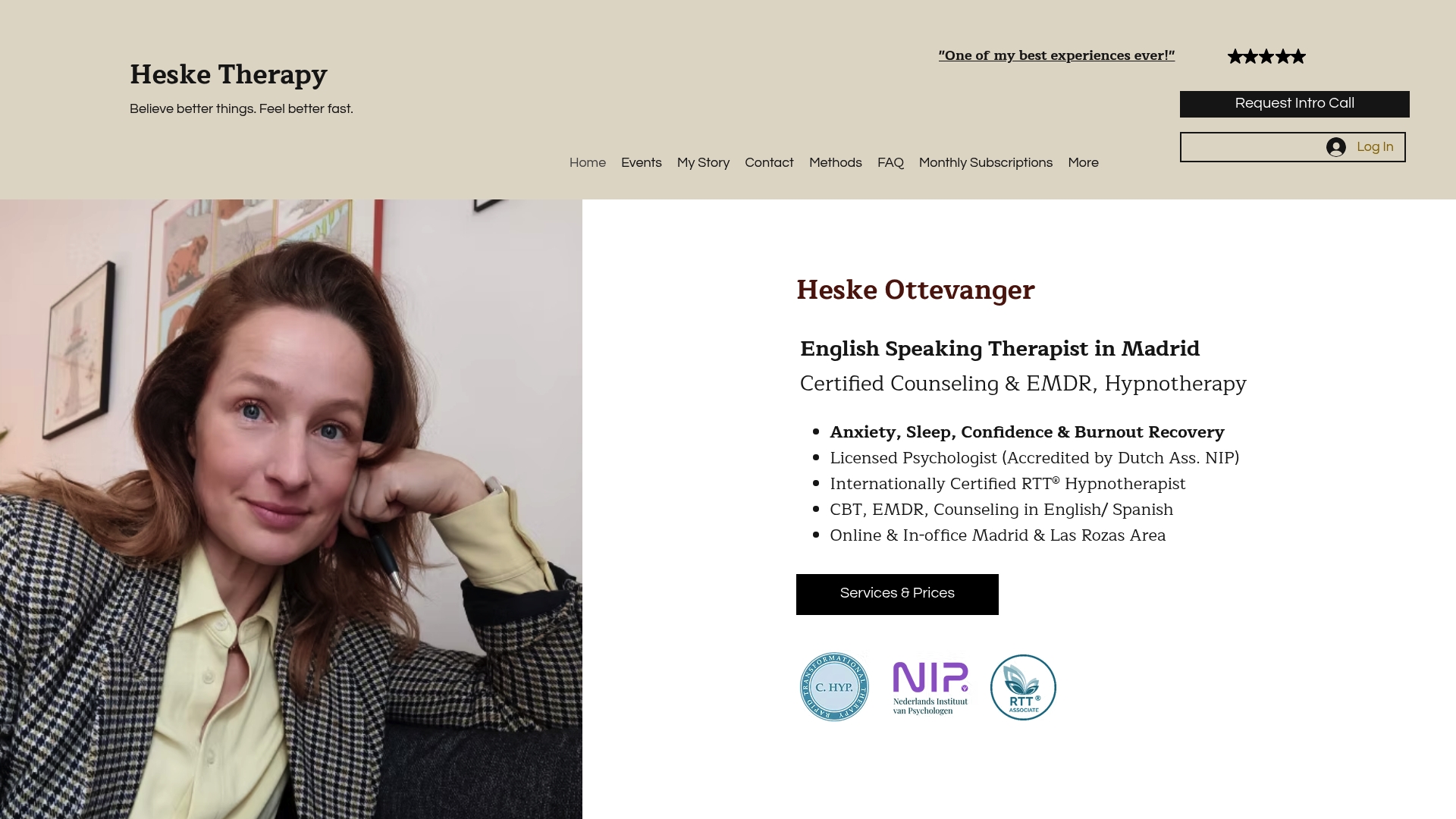
Hesketherapy offers exactly the kind of integrative, subconscious-focused care this article describes, without the years-long waiting lists or the one-size-fits-all approach that leaves so many people feeling stuck. The practice specializes in anxiety, burnout, trauma, sleep issues, and the physical symptoms that often accompany unresolved emotional patterns, serving English-speaking adults in Madrid and internationally via online sessions.
What sets Hesketherapy apart is the combination of methods under one roof: RTT, EMDR, clinical hypnotherapy, CBT, and counseling, all delivered within a personalized treatment plan. You’re not handed a protocol. You’re met where you are, and the approach is built around your specific subconscious patterns and recovery goals. Sessions are available in English, Spanish, and Dutch, which matters when you’re navigating emotional work in a language that isn’t your first.
The three-month engagement model exists for a reason. Subconscious healing is not a single session fix, but it also doesn’t have to take years. RTT alone reduces session counts dramatically compared to traditional therapy, and the structured timeline keeps progress moving rather than drifting.
Ready to stop managing symptoms and start addressing what’s underneath them? Book a free discovery call with Hesketherapy and find out whether RTT, EMDR, or an integrative approach is the right fit for where you are right now.
Key Takeaways
The subconscious mind governs the physiological and emotional systems that make healing possible, and engaging it directly through evidence-based methods produces more durable recovery than symptom management alone.
Point | Details |
Subconscious governs healing biology | The subconscious regulates nervous system, immune, and hormonal systems, creating the safety states where physical and psychological repair occurs. |
Chronic stress blocks recovery | Subconscious stress patterns drive chronic inflammation and immune dysregulation, underlying a wide spectrum of persistent health conditions. |
RTT typically requires significantly fewer sessions than traditional therapy | RTT accesses formative subconscious memories to reframe beliefs and empower recovery, reducing sessions by 70% compared to traditional therapy. |
Combine top-down and bottom-up methods | Integrating cognitive-hypnotic approaches with somatic therapies addresses both belief-level patterns and the physical storage of trauma for thorough healing. |
Hesketherapy offers integrative care | Hesketherapy combines RTT, EMDR, hypnotherapy, and CBT in personalized plans for English-speaking adults seeking lasting subconscious healing. |
Recommended
Comments