Effective Workflow for Emotional Healing: A Step-by-Step Guide

Settling into Madrid as an English-speaking expatriate can bring excitement and stress, especially when anxiety and emotional blocks linger beneath the surface. Understanding and addressing your emotional triggers is not a weakness, but a signal for growth and healing. This guide offers clear steps for identifying these patterns, building a safe space for emotional work, and exploring rapid therapies like RTT and hypnotherapy, so you can reconnect with yourself and thrive in your Spanish home.
Table of Contents
Quick Summary
Key Point | Explanation |
1. Identify emotional triggers | Recognizing triggers helps increase self-awareness and understanding of past traumas influencing current behaviors. |
2. Create a safe environment | A nurturing space fosters emotional openness and supports the healing process without judgment. |
3. Utilize integrative therapy techniques | Combining various therapeutic approaches creates a personalized strategy tailored to individual emotional needs. |
4. Reflect and adapt your strategies | Regular self-evaluation enables you to monitor progress and adjust healing methods as necessary. |
5. Maintain consistent wellness practices | Implementing continuous self-care practices builds emotional resilience and supports long-term psychological balance. |
Step 1: Identify and Acknowledge Emotional Triggers
Emotional healing begins with recognizing the subtle yet powerful signals your mind and body use to communicate unresolved experiences. Identifying emotional triggers is a critical first step in understanding how past traumas continue to influence your present reactions and behaviors.
To effectively identify emotional triggers, start by developing a self-awareness practice. Emotional triggers emerge from complex neurological responses connected to past experiences stored in your memory. These triggers are not weaknesses, but protective mechanisms your brain uses to signal potential psychological threats.
Here are practical strategies for identifying your emotional triggers:
Pay close attention to intense emotional reactions that seem disproportionate to the current situation
Notice physical sensations that accompany strong emotional responses
Track patterns in your emotional reactions across different contexts
Maintain a journal documenting specific situations that provoke strong feelings
Recognizing emotional triggers requires patience and compassionate self-observation. The goal is not to eliminate these responses but to understand their origins and develop healthier coping mechanisms.
Emotional triggers are signals for healing, not signs of personal failure.
Pro tip: Create a trigger tracking worksheet where you document emotional reactions, their potential origins, and your bodily responses to gain deeper insights into your psychological patterns.
Step 2: Establish a Safe and Supportive Space
Emotional healing requires a nurturing environment where vulnerability can emerge without judgment. This step focuses on creating a physical and psychological space that supports your journey toward self-discovery and emotional recovery.

Safe spaces play a critical role in facilitating emotional healing by reducing stress responses and promoting authentic emotional expression. Designing this space involves both external and internal elements that contribute to a sense of security and comfort.
Consider these strategies for establishing a supportive healing environment:
Select a private, quiet area where you feel completely secure
Incorporate soft, calming colors that promote relaxation
Use natural lighting or warm, gentle artificial lighting
Include sensory elements like soft textures, soothing scents, or gentle music
Remove potential distractions like electronic devices
The goal is to create a sanctuary for emotional exploration that feels both physically and emotionally safe. This means setting clear personal boundaries, practicing self-compassion, and allowing yourself to be fully present in the moment.
A safe space is not just a location, but a state of emotional openness and protection.
Pro tip: Personalize your healing space with meaningful objects that represent comfort, growth, and emotional resilience, creating a visual reminder of your healing journey.
Step 3: Apply Integrative Therapeutic Techniques
Emotional healing is not a one-size-fits-all journey. This step introduces integrative therapeutic techniques that combine multiple approaches to create a personalized healing strategy tailored to your unique emotional landscape.
Integrative psychotherapy offers flexible treatment approaches designed to address individual mental health needs comprehensively. By combining different therapeutic models, you can access a more holistic path to emotional recovery that considers your specific psychological and physiological requirements.
Consider incorporating these integrative techniques:
Mindfulness meditation for emotional regulation
Somatic experiencing to process stored trauma
Cognitive behavioral strategies for thought pattern restructuring
Body-centered therapies like yoga or breath work
Narrative therapy to reframe personal experiences
Successful integration requires working closely with a trained therapist who can help you navigate multiple therapeutic approaches. The goal is not to overwhelm you with techniques, but to find a harmonious combination that resonates with your healing journey.
Healing is a personalized path, not a predetermined destination.
Pro tip: Document your responses to different therapeutic techniques in a journal, helping your therapist refine and customize your treatment plan more effectively.
The table below highlights how different therapeutic approaches complement each other:
Technique | Main Benefit | Best For |
Mindfulness meditation | Emotional regulation | Managing stress responses |
Somatic experiencing | Releasing stored trauma | Trauma recovery |
Cognitive behavioral therapy | Thought restructuring | Negative thinking patterns |
Body-centered therapies | Physical-mental harmony | Chronic tension relief |
Narrative therapy | Reframing self-story | Building self-understanding |
Step 4: Reflect on Progress and Adjust Strategies
Emotional healing is a dynamic journey that requires consistent self-awareness and adaptability. This step focuses on developing a reflective practice that helps you track your progress, understand your growth, and make intentional adjustments to your healing approach.
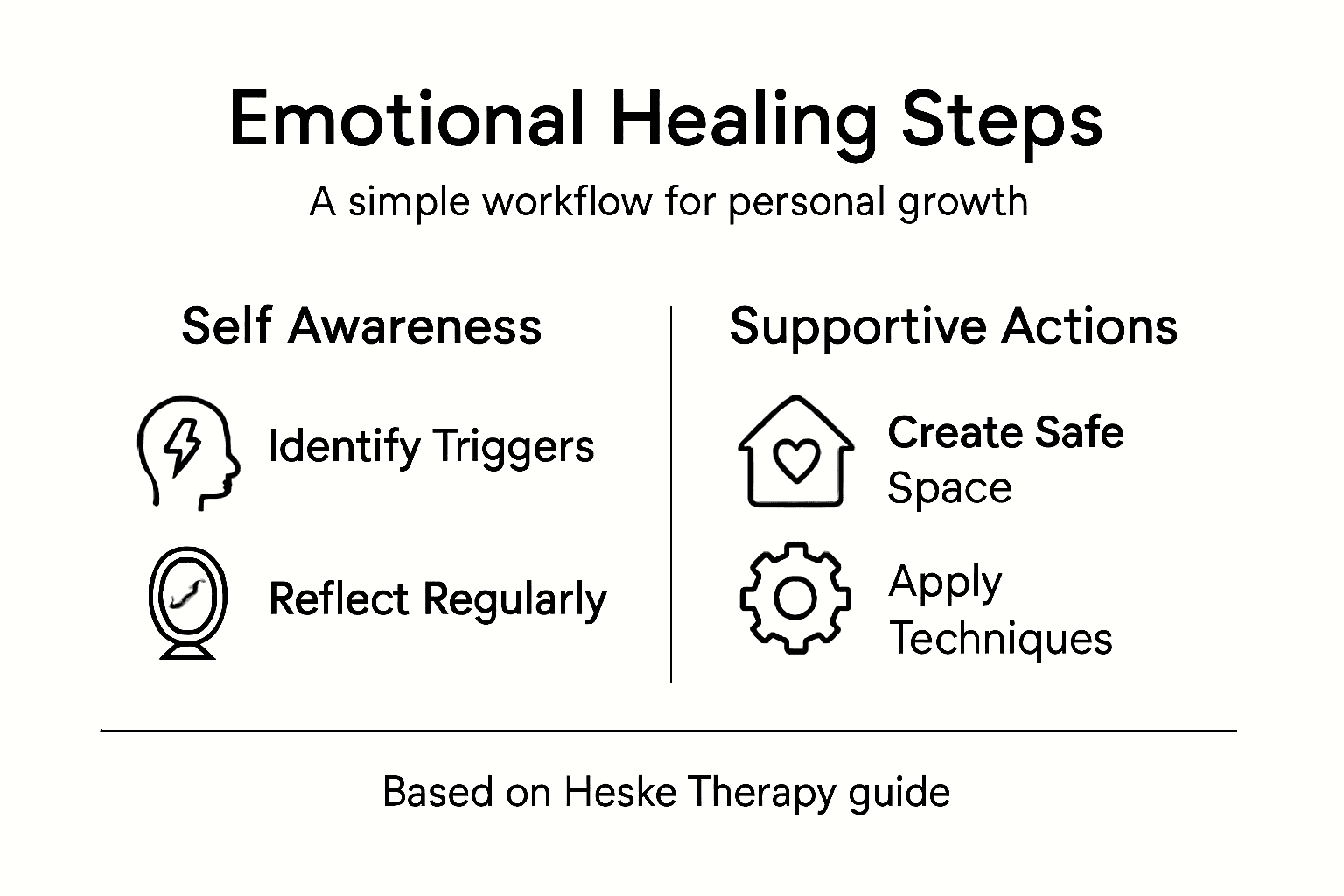
Progress feedback enhances therapeutic outcomes by providing a structured method to monitor and evaluate your emotional healing process. Regular reflection allows you to identify what strategies are working, which areas need more attention, and how your emotional landscape is evolving.
Implement these reflection strategies:
Schedule monthly self-evaluation sessions
Track emotional patterns and triggers in a dedicated journal
Note physical and psychological changes
Discuss progress openly with your therapist
Celebrate small victories and milestones
Remember that healing is not linear. Some weeks will feel more challenging than others, and that’s completely normal. The key is to maintain a compassionate and curious mindset toward your own growth.
Healing is an ongoing conversation with yourself, not a destination to be reached.
Pro tip: Create a visual progress tracker using colors or symbols that represent your emotional states, making your healing journey more tangible and encouraging.
Step 5: Maintain Emotional Wellness Practices
Emotional wellness is not a destination but a continuous journey of personal growth and self-care. This step focuses on developing sustainable practices that support your mental and emotional resilience, helping you navigate life’s challenges with greater ease and confidence.
Emotional resilience can be enhanced through continuous learning and intentional skill-building. By cultivating a proactive approach to emotional well-being, you create a strong foundation for handling stress, managing complex emotions, and maintaining psychological balance.
Incorporate these wellness practices into your routine:
Practice daily mindfulness meditation
Develop a consistent sleep schedule
Engage in regular physical exercise
Cultivate meaningful social connections
Set clear personal boundaries
The key to maintaining emotional wellness is consistency and self-compassion. Some days will be more challenging than others, but your commitment to these practices will gradually build psychological strength and emotional intelligence.
Wellness is not a state of being, but a continuous process of becoming.
Pro tip: Create a personalized wellness toolkit with resources, coping strategies, and motivational reminders that you can easily access during emotionally challenging moments.
Here’s a quick summary of each step in the emotional healing process:
Step | Primary Focus | Key Outcome |
1 | Identifying emotional triggers | Greater self-awareness |
2 | Creating a safe space | Emotional security |
3 | Integrative therapy | Personalized healing tools |
4 | Reflecting on progress | Adaptive growth |
5 | Maintaining wellness | Lasting resilience |
Take Control of Your Emotional Healing Journey Today
If you find yourself overwhelmed by emotional triggers or stuck trying to create a safe space for healing, you are not alone. The step-by-step guide you just read highlights challenges like identifying emotional patterns, managing trauma with integrative therapies, and maintaining emotional wellness. These key pain points often feel complex but are critical steps toward lasting recovery.
At Heske Therapy, we specialize in working with expatriates facing anxiety, burnout, trauma, and emotional blocks through proven approaches like Rapid Transformational Therapy, EMDR, and Cognitive Behavioral Therapy. Our personalized treatment plans focus on delivering rapid and effective results while providing a compassionate, culturally sensitive environment designed to support your unique healing process.
Discover how professional support can make this emotional journey smoother and more empowering.
Ready to move beyond emotional obstacles and start healing with expert guidance? Visit Heske Therapy now to schedule a free discovery call and explore integrative therapeutic options tailored just for you. Take the first step toward lasting emotional wellness and resilience today.
Frequently Asked Questions
What are emotional triggers, and why are they important for emotional healing?
Emotional triggers are strong emotional responses tied to past experiences. Understanding these triggers is crucial because they help you recognize how unresolved emotions influence your current reactions. Start by observing intense feelings during everyday situations and journaling about them to gain insight.
How can I create a safe and supportive space for emotional healing?
To establish a supportive space, choose a quiet, private area that feels secure. Incorporate calming colors, soft textures, and soothing scents, which can help foster comfort and openness. Dedicate specific times during the week to spend in this space for reflection and emotional exploration.
What integrative therapeutic techniques can I use in my emotional healing journey?
Integrative therapeutic techniques include mindfulness meditation, somatic experiencing, and cognitive behavioral strategies, among others. Start by exploring one or two techniques to see which resonates most, and keep a journal tracking your experiences and feelings connected to each method.
How do I reflect on my progress during the emotional healing process?
You can reflect on your progress by scheduling regular self-evaluation sessions, such as once a month. This allows you to track emotional patterns and changes, helping you identify areas of growth and adjust your healing strategies accordingly.
What practices should I maintain for long-term emotional wellness?
To promote long-term emotional wellness, incorporate practices like daily mindfulness meditation, regular exercise, and establishing clear personal boundaries. Aim to set aside time each day for these activities; even 10-15 minutes can foster resilience over time.
How do I personalize my emotional healing strategy?
Personalizing your emotional healing strategy involves identifying your unique triggers and responses, experimenting with various therapeutic techniques, and adjusting your approach based on what feels right for you. Keep a journal to document what works best, and communicate these insights with a therapist to enhance your healing journey.
Recommended
Comments