Trauma Therapy: How It Heals Emotional Wounds

Most American and English-speaking expatriates in Madrid face emotional challenges that often go unspoken, yet nearly 1 in 5 adults worldwide develop trauma-related symptoms each year. Being far from familiar support networks can make navigating these feelings even tougher. If you are seeking rapid, proven methods like RTT and EMDR along with culturally sensitive care, understanding how trauma therapy works and who it truly helps can open the door to real healing and renewed confidence.
Table of Contents
Key Takeaways
Point | Details |
Trauma Therapy Purpose | Trauma therapy is designed to help individuals process and heal from distressing experiences, promoting emotional resilience in a safe environment. |
Types of Trauma | Trauma can be acute, chronic, or complex, each requiring different treatment approaches tailored to specific emotional needs. |
Effective Techniques | Methods like EMDR, Cognitive Processing Therapy, and Prolonged Exposure are effective for managing trauma symptoms and facilitating healing. |
Cultural Sensitivity in Therapy | Choosing a culturally sensitive therapist is crucial for expatriates, ensuring that their unique experiences and challenges are understood and respected. |
What Trauma Therapy Means and Who It Helps
Trauma therapy represents a specialized psychological approach designed to help individuals process and heal from deeply distressing or overwhelming experiences that have profound emotional impacts. By creating a safe, supportive environment, trauma therapy enables people to confront and integrate painful memories without becoming retraumatized, using evidence-based techniques that promote psychological resilience.
Specifically, trauma therapy addresses a wide range of experiences, including interpersonal violence, childhood abuse, combat exposure, serious accidents, natural disasters, and chronic emotional neglect. Psychological trauma affects millions worldwide with varying symptom presentations, ranging from acute stress reactions to complex, long-term emotional disruptions. The primary goal is not just symptom management but comprehensive healing that restores a sense of personal safety, control, and emotional equilibrium.
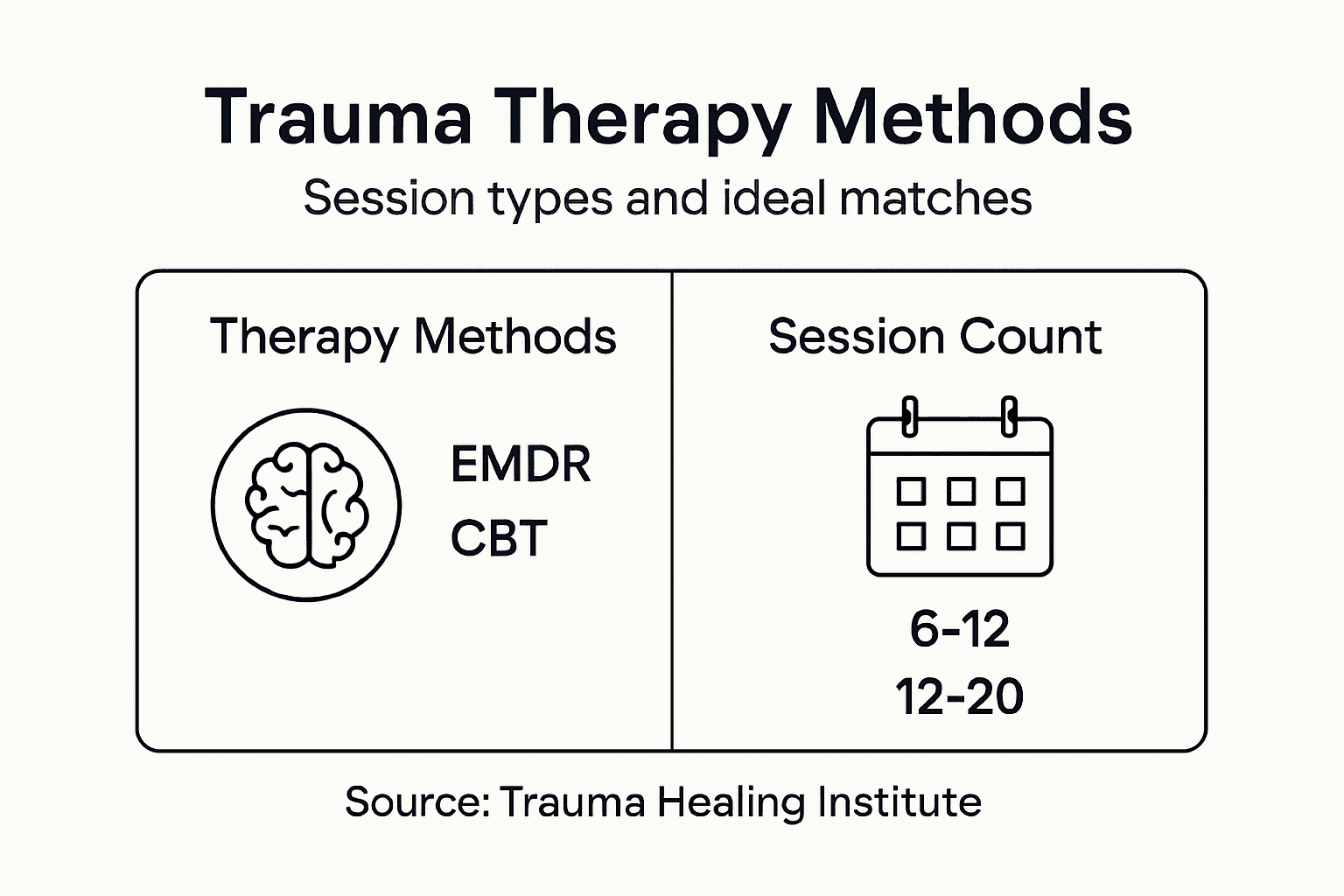
Effective trauma therapy typically involves specialized approaches like Eye Movement Desensitization and Reprocessing (EMDR), Cognitive Processing Therapy, and Prolonged Exposure. PTSD treatment approaches are carefully tailored to individual preferences and experiences, usually requiring 8-16 sessions that help individuals safely process traumatic memories, reduce related symptoms, and develop healthier coping mechanisms.
Here is a comparison of common trauma therapy methods and their main characteristics:
Method | Core Technique | Typical Session Count | Ideal For |
EMDR | Eye movements during recall | 8-12 sessions | PTSD and acute trauma |
Cognitive Processing Therapy | Cognitive restructuring tasks | 10-16 sessions | Military, sexual assault trauma |
Prolonged Exposure | Gradual memory exposure | 8-16 sessions | Phobias, chronic PTSD |
RTT | Hypnotherapy and CBT blend | 1-3 sessions | Deep-rooted beliefs, rapid change |
Pro tip: When seeking trauma therapy, prioritize finding a therapist specifically trained in trauma-informed approaches who creates a sense of safety and collaboration throughout the healing process.
Types of Trauma and Treatment Approaches
Trauma manifests in numerous complex forms, each with unique psychological implications and treatment requirements. Traumatic experiences range widely from military combat and sexual assault to childhood abuse, natural disasters, and interpersonal violence. Understanding these diverse trauma types is crucial for developing targeted, effective therapeutic interventions that address specific emotional and psychological wounds.

The primary categories of trauma include acute trauma (single-event experiences), chronic trauma (prolonged, repeated experiences), and complex trauma (multiple, varied traumatic events often occurring during developmental years). Each category requires nuanced treatment approaches. Acute trauma might respond well to brief, focused interventions, while complex trauma typically demands longer-term, comprehensive therapeutic strategies that rebuild emotional regulation, safety perception, and interpersonal trust.
Below is a summary of trauma types and recommended treatment approaches:
Trauma Type | Description | Suggested Treatment |
Acute Trauma | Single distressing event | Brief, focused therapy |
Chronic Trauma | Long-term repeated events | Extended, integrative methods |
Complex Trauma | Multiple varied incidents | Multi-phase, tailored therapy |
Modern trauma treatment approaches incorporate evidence-based methodologies like Eye Movement Desensitization and Reprocessing (EMDR), Cognitive Processing Therapy, and Prolonged Exposure Therapy. These techniques help individuals reprocess traumatic memories, reduce associated symptoms, and develop healthier coping mechanisms. Importantly, treatment is always personalized, considering the individual’s specific trauma history, cultural background, and unique psychological resilience.
Pro tip: When exploring trauma therapy, seek professionals who specialize in trauma-informed care and offer a collaborative, compassionate approach tailored to your specific healing journey.
How Trauma Therapy Sessions Work
Trauma therapy sessions are carefully structured, methodical processes designed to help individuals navigate and heal from profound emotional wounds. Therapy sessions follow specific healing stages that prioritize the client’s emotional safety, psychological readiness, and individual healing trajectory. These stages typically include comprehensive assessment, stabilization, trauma processing, and integration, with each phase tailored to the unique needs and resilience of the individual.
The initial assessment phase involves building a strong therapeutic alliance, where the therapist creates a safe, non-judgmental environment to understand the client’s trauma history, current symptoms, and treatment goals. Stabilization techniques help clients develop emotional regulation skills, grounding strategies, and coping mechanisms before directly addressing traumatic memories. This preparatory work is crucial in preventing retraumatization and ensuring the client feels empowered and supported throughout the healing process.
During the trauma processing stage, therapists employ evidence-based techniques like Eye Movement Desensitization and Reprocessing (EMDR), Cognitive Processing Therapy, or somatic experiencing. These modalities help clients reprocess traumatic memories, reduce associated emotional intensity, and develop new, healthier neural pathways. The integration phase focuses on consolidating therapeutic gains, rebuilding personal narratives, and supporting clients in reconnecting with themselves and their relationships in more meaningful, resilient ways.
Pro tip: Be patient with yourself during trauma therapy and communicate openly with your therapist about your comfort levels and progress, recognizing that healing is a collaborative and deeply personal journey.
Benefits of EMDR, RTT, and Integrative Methods
Eye Movement Desensitization and Reprocessing (EMDR) represents a groundbreaking approach to trauma healing, offering profound psychological transformation. EMDR facilitates comprehensive trauma reprocessing by targeting the neurological roots of traumatic memories. This innovative therapy goes beyond traditional talk therapy, enabling clients to process deeply embedded emotional wounds through a structured, scientifically validated protocol that rewires maladaptive neural patterns.
Rapid Transformational Therapy (RTT) complements EMDR by providing a holistic approach to emotional healing. Unlike traditional therapeutic methods, RTT combines hypnotherapy, cognitive behavioral techniques, and neurolinguistic programming to rapidly identify and transform limiting beliefs. These integrative methods work synergistically to address the complex layers of psychological trauma, helping individuals not just manage symptoms but fundamentally redesign their emotional landscapes and core narratives.
The most significant benefit of these integrative methods lies in their ability to create lasting neurological and psychological change. By engaging multiple therapeutic modalities, these approaches target trauma from different angles - cognitive, emotional, and somatic. Clients often experience reduced anxiety, improved emotional regulation, enhanced self-understanding, and a renewed sense of personal empowerment. The therapy goes beyond symptom management, focusing on comprehensive healing that restores individuals’ capacity for resilience, connection, and authentic emotional expression.
Pro tip: Choose a trauma therapist who demonstrates flexibility in using multiple therapeutic approaches, ensuring a personalized treatment strategy that adapts to your unique healing journey.
Choosing a Culturally Sensitive Therapist in Madrid
Navigating the expatriate experience in Madrid requires finding a therapist who understands the unique emotional landscape of international living. Culturally sensitive therapy involves deep respect for individual background, migration experiences, and the complex emotional challenges of living abroad. For English-speaking expatriates, this means finding a mental health professional who not only speaks your language fluently but also comprehends the nuanced psychological impacts of cultural transition, displacement, and identity reconstruction.
In Madrid’s multicultural environment, a truly culturally sensitive therapist goes beyond language proficiency. They demonstrate awareness of cross-cultural dynamics, validate your specific expatriate experiences, and recognize how cultural differences influence psychological processing. This includes understanding the stress of navigating a new healthcare system, dealing with bureaucratic challenges, managing professional expectations, and processing the emotional complexities of being an outsider while simultaneously attempting to integrate into Spanish society.
When selecting a therapist, prioritize professionals who explicitly demonstrate multicultural competence. Look for credentials indicating international training, multilingual capabilities, and documented experience working with expatriate populations. Pay attention to their approach during initial consultations - a culturally sensitive therapist will ask thoughtful questions about your background, listen actively without making assumptions, and create a safe space that respects your unique cultural narrative and emotional journey.
Pro tip: Trust your intuition during initial consultations and don’t hesitate to have conversations about cultural understanding before committing to long-term therapy.
Healing Trauma with Personalized Therapy in Madrid
If you are struggling with the deep emotional wounds caused by trauma, finding the right support is critical to your healing journey. This article highlights the importance of trauma-informed care methods like EMDR, RTT, and integrative therapies that focus on emotional safety and lasting recovery. At Heske Therapy, we specialize in these advanced approaches, offering tailored treatment plans designed to help you process traumatic memories, rebuild emotional resilience, and regain control over your life.
Our practice understands the unique challenges faced by English-speaking expatriates in Madrid, providing culturally sensitive therapy that respects your background and individual story. Whether you need rapid transformational therapy, cognitive behavioral techniques, or a compassionate space to explore your experiences, Heske Therapy is here to help you on your path to emotional healing.
Start your journey toward lasting relief and renewed strength today. Discover how our expert therapists combine proven trauma therapy methods with intercultural understanding by visiting Heske Therapy for more information.
Looking for trauma therapy that truly understands you? Get personalized healing tailored to your needs.
Begin your recovery now by scheduling a free discovery call at Heske Therapy to explore the best trauma treatment options for your unique healing process. Visit https://hesketherapy.com to take the first step.
Frequently Asked Questions
What is trauma therapy?
Trauma therapy is a specialized psychological approach that helps individuals process and heal from deeply distressing experiences by creating a safe environment to confront and integrate painful memories.
What are the common types of trauma treated in therapy?
Common types of trauma include acute trauma (single events), chronic trauma (repeated experiences), and complex trauma (multiple varying incidents), each requiring tailored treatment approaches.
How do trauma therapy sessions typically work?
Trauma therapy sessions involve structured stages including assessment, stabilization, trauma processing, and integration, which prioritize the client’s emotional safety and readiness to confront traumatic memories.
What are the benefits of EMDR and other integrative therapy methods?
EMDR and integrative methods facilitate lasting psychological change by targeting trauma from cognitive, emotional, and somatic perspectives, leading to reduced anxiety, improved emotional regulation, and enhanced personal empowerment.
Recommended
Using RTT Hypnotherapy to recover from trauma| Heske Therapy
Grief - Loss of what was, and the 5 stages towards acceptance & hope| Heske Therapy
ONLINE Masterclass: The Vagus Nerve: Its’ crucial role in healing from Trauma | Heske Therapy
What makes RTT Hypnotherapy different from talking therapy?| Heske Therapy
Comments