Effective Workflow for Burnout Recovery: Step-by-Step Guide

Feeling emotionally drained in Madrid can hit hard, especially for any American or English-speaking expatriate trying to thrive abroad. Studies reveal that over 60 percent of professionals living overseas report serious burnout symptoms, with recovery often feeling out of reach. Identifying what triggers your stress and measuring its true intensity is the first step toward rapid improvement and lasting emotional health. This guide uncovers tailored strategies that make innovation and therapy your allies.
Table of Contents
Quick Summary
Key Point | Explanation |
1. Assess Burnout Severity | Use validated assessments to understand emotional exhaustion and personal triggers of burnout. |
2. Set Personalized Recovery Goals | Establish specific, achievable goals to target emotional and professional challenges. |
3. Integrate Evidence-Based Therapies | Combine multiple therapeutic approaches to enhance emotional resilience and recovery. |
4. Monitor Progress Continuously | Regularly evaluate emotional well-being and adjust recovery strategies based on tracked data. |
5. Validate Outcomes for Resilience | Conduct assessments to ensure lasting emotional gains and develop strategies for long-term wellness. |
Step 1: Assess burnout severity and triggers
Understanding your burnout requires a systematic and honest self-evaluation of your emotional and psychological state. The goal in this step is to identify specific triggers and gauge the intensity of your burnout using validated assessment techniques.
Start by completing a comprehensive burnout diagnostic assessment that examines three primary dimensions: emotional exhaustion, depersonalization, and reduced personal accomplishment. This approach allows you to quantify your burnout experience beyond just feeling overwhelmed. Look for specific signs like persistent fatigue, decreased motivation, increasing cynicism towards work, and a sense of detachment from your professional responsibilities.
Track your emotional patterns by maintaining a detailed journal documenting your daily energy levels, stress responses, and moments of emotional depletion. Pay special attention to recurring situations that trigger heightened stress or feelings of burnout. These might include specific work interactions, time management challenges, or personal relationship dynamics. The burnout manual recommends creating a comprehensive inventory of these triggers to develop targeted intervention strategies.
Pro tip: Consider using a structured burnout assessment tool like the Maslach Burnout Inventory to provide an objective measurement of your current emotional state and help create a targeted recovery plan.
Here’s a comparison of common burnout assessment tools and their unique benefits:
Assessment Tool | Measures | Unique Benefit |
Maslach Burnout Inventory | Emotional exhaustion, cynicism | Widely validated, actionable |
Copenhagen Burnout Inventory | Personal, work, client burnout | Differentiates burnout sources |
Oldenburg Burnout Inventory | Exhaustion, disengagement | Simple, easy to administer |
Professional Quality of Life | Compassion fatigue, satisfaction | Targets helping professions |
Step 2: Establish personalized recovery goals
Creating effective burnout recovery goals requires a strategic and introspective approach that addresses your unique emotional and professional challenges. In this step, you will develop a targeted plan that goes beyond generic advice and focuses on your specific needs and circumstances.

Begin by conducting a comprehensive self assessment that identifies workplace burnout triggers specific to your professional environment. This involves critically examining the root causes of your emotional exhaustion such as work responsibilities, interpersonal dynamics, and personal expectations. Break down your goals into measurable and achievable components that target different dimensions of burnout recovery. For instance, you might establish goals around restoring work life balance, rebuilding professional motivation, and developing healthier stress management techniques.
Draft a detailed recovery roadmap that includes both short term and long term objectives. Focus on creating strategies to combat faculty burnout by establishing clear milestones that track your emotional and professional reengagement. These goals should be specific realistic and adaptable allowing you to adjust your approach as you progress through your recovery journey.
Pro tip: Create a visual recovery tracker that allows you to monitor progress and celebrate small victories in your burnout recovery process.
Step 3: Integrate evidence-based therapy methods
Successfully overcoming burnout requires a strategic approach that combines multiple therapeutic techniques tailored to your unique emotional landscape. This step focuses on selecting and integrating scientifically validated interventions that address the multidimensional nature of burnout.
Begin by exploring comprehensive therapy interventions for stress reduction that combine cognitive behavioral approaches with innovative healing modalities. Research suggests that a holistic methodology incorporating mindfulness practices cognitive restructuring and creative therapeutic techniques can significantly improve emotional resilience. Consider integrating methods like mindfulness meditation cognitive behavioral therapy and art therapy techniques that provide both emotional processing and skill building opportunities.
Consult with a professional therapist who can help you design a personalized intervention strategy that matches your specific burnout symptoms. This might involve combining digital applications traditional counseling and creative therapeutic approaches to create a comprehensive recovery workflow. The key is flexibility and ongoing assessment ensuring that your therapeutic methods evolve as you progress through your recovery journey.
Pro tip: Document your therapeutic experiences and emotional responses to help your therapist fine tune your recovery strategy and track meaningful progress.
The following table summarizes evidence-based therapies for burnout and their primary advantages:
Therapy Method | Main Focus | Notable Advantage |
Mindfulness Meditation | Stress reduction | Enhances present-moment awareness |
Cognitive Behavioral | Thought patterns | Restructures negative thinking |
Art Therapy | Emotional expression | Provides non-verbal processing |
Digital Applications | Self-paced support | Offers flexibility and privacy |
Step 4: Monitor progress and adjust workflows
Successfully recovering from burnout requires continuous self reflection and strategic adaptation. This step focuses on developing a dynamic monitoring system that allows you to track your emotional progress and make informed adjustments to your recovery strategy.
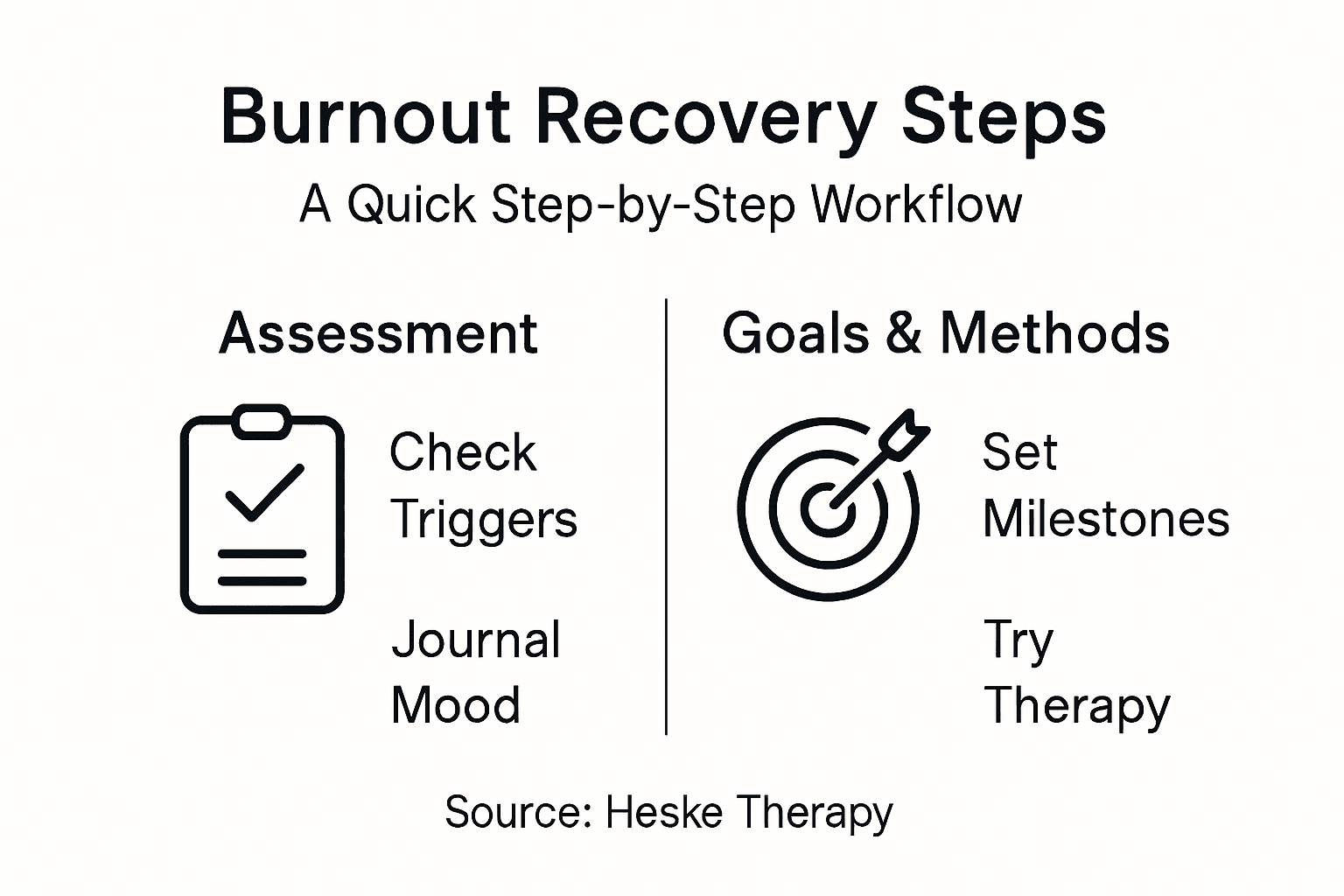
Implement systematic burnout assessment techniques that provide objective insights into your recovery journey. Regular self evaluation using validated tools helps you understand the nuanced changes in your emotional resilience. Develop a consistent tracking method that includes weekly or biweekly check ins where you document your energy levels stress responses and overall emotional well being. These structured self assessments and recovery surveys will enable you to identify patterns recognize improvements and quickly address potential setbacks.
Work closely with your therapist to analyze your tracking data and collaboratively design workflow modifications. This might involve adjusting therapeutic approaches modifying stress management techniques or realigning personal and professional boundaries based on your observed progress. The key is maintaining flexibility and viewing your recovery as an evolving process that requires ongoing attention and strategic refinement.
Pro tip: Create a digital or physical recovery journal that allows for easy tracking and provides a visual representation of your emotional and mental health progression.
Step 5: Validate recovery outcomes and maintain resilience
The final stage of your burnout recovery journey focuses on solidifying your emotional gains and developing sustainable strategies for long-term psychological well being. This critical step transforms your temporary healing into a permanent lifestyle of resilience and self awareness.
Conduct comprehensive resilience assessment techniques that objectively measure your emotional and psychological transformation. These evaluations go beyond surface level improvements by examining deeper cognitive emotional and behavioral shifts. Professional resilience research suggests tracking specific indicators such as stress response patterns emotional regulation capabilities and professional engagement levels to ensure meaningful recovery.
Engage in periodic consultations with your therapist to review your resilience metrics and develop proactive strategies for maintaining your mental health. This might involve creating a personalized maintenance plan that includes regular self care practices ongoing skill development and strategic stress management techniques. Remember that resilience is not a destination but a continuous journey of growth adaptation and self understanding.
Pro tip: Schedule quarterly resilience check ins with yourself or a professional to recalibrate your emotional wellness strategies and prevent potential burnout relapse.
Take Control of Your Burnout Recovery with Expert Support
Burnout can leave you feeling exhausted, disconnected, and uncertain about the path forward. This article’s step-by-step guide highlights key challenges like emotional exhaustion, identifying triggers, and integrating therapy strategies that rebuild resilience. If you find yourself struggling with persistent fatigue or emotional overwhelm despite your best efforts, specialized help can make all the difference. Heske Therapy in Madrid offers personalized treatment plans that align with the recovery goals discussed here, utilizing proven methods such as CBT, EMDR, and Rapid Transformational Therapy to accelerate your healing journey. Their expertise in working with expatriates ensures culturally sensitive care that understands the unique pressures you face.
Explore how a professional therapist can help you establish measurable recovery goals and adapt evidence-based therapies tailored to your needs. Heske Therapy combines compassionate clinical practice with flexible options both online and in-office, making burnout recovery accessible and effective. Don’t wait for burnout to dictate your life. Take the first step toward lasting emotional wellbeing today.
Ready for a customized burnout recovery plan designed for your unique challenges?
Visit Heske Therapy to schedule your free discovery call now. Discover how expert psychotherapy can transform your recovery process and restore your emotional balance. Act today to regain control and build durable resilience for tomorrow.
Frequently Asked Questions
How can I assess the severity of my burnout?
To assess the severity of your burnout, complete a comprehensive burnout diagnostic assessment that evaluates emotional exhaustion, depersonalization, and reduced personal accomplishment. Track your emotional patterns in a journal, noting triggers and symptoms to better understand your specific experiences within 1-2 weeks.
What steps should I take to establish personalized recovery goals?
Begin by conducting a thorough self-assessment to identify your unique burnout triggers related to work and personal life. Break down your recovery goals into measurable components that focus on restoring work-life balance and rebuilding motivation within 30 days.
How can I integrate therapy methods into my burnout recovery process?
To integrate effective therapy methods, explore evidence-based interventions like mindfulness meditation and cognitive behavioral therapy tailored to your emotional needs. Consult with a therapist to design a personalized strategy, starting your plan within the first two weeks of recovery.
What methods should I use to monitor my progress in burnout recovery?
Develop a consistent tracking method to monitor your emotional progress, such as weekly check-ins where you document your energy levels and stress responses. Adjust your recovery strategies based on your tracking data at least every two weeks for optimal results.
How can I ensure my recovery from burnout is sustainable long-term?
To maintain your recovery, conduct periodic resilience assessments and engage in regular check-ins with a therapist to measure your progress. Create a personalized maintenance plan that includes ongoing self-care practices, updating this plan every 3-6 months to prevent relapse.
Recommended
Comments