Counseling for Burnout: Rapid Relief for Expats

More than one in three American professionals living abroad report feeling intense emotional exhaustion within their first year of relocation. Burnout among English-speaking expatriates in Madrid is not just about long hours or daily stress, but a complex challenge shaped by unfamiliar work cultures, constant adaptation, and social isolation. This guide offers practical insight into the specific types of burnout facing American and other international professionals, highlighting how targeted counseling can restore balance and support your unique expatriate experience.
Table of Contents
Key Takeaways
Point | Details |
Understanding Burnout | Burnout among expatriates encompasses emotional exhaustion, professional disengagement, and interpersonal disconnection, significantly affecting overall well-being. |
Counseling Services | Targeted counseling for expatriates provides personalized strategies to combat burnout and restore emotional balance in high-stress environments. |
Types of Expatriate Burnout | Expatriates may experience Professional Adaptation, Cultural Transition, and Interpersonal Disconnection Burnout, each presenting unique challenges. |
Proactive Approach | Regularly assessing stress and seeking counseling can help mitigate burnout before it escalates, enhancing both personal and professional outcomes. |
Defining Burnout and Counseling Services
Burnout is a complex psychological phenomenon affecting professionals worldwide, particularly those working in high-stress international environments like expatriate communities. Institutional research reveals burnout manifests through emotional exhaustion, depersonalization, and diminished personal accomplishment.
For expatriate professionals in Madrid, burnout represents more than simple workplace stress. It emerges from prolonged emotional and interpersonal challenges that systematically erode professional resilience and personal well-being. Emotional exhaustion signals the initial stage, characterized by feeling overwhelmed, mentally drained, and disconnected from work responsibilities. This condition progressively undermines an individual’s capacity to perform effectively and maintain psychological equilibrium.
Counseling services specifically designed for expatriates address burnout through targeted interventions. Professional counselors analyze the unique stressors confronting international professionals, developing personalized strategies to restore emotional balance and professional functionality. These services recognize burnout as a multifaceted experience involving psychological, professional, and cultural dimensions that require nuanced, compassionate treatment.
Pro Tip: Schedule a comprehensive initial consultation to map your specific burnout triggers and develop a personalized recovery strategy tailored to your professional and cultural context.
Types of Burnout Facing Expatriates
Expatriate burnout research reveals multiple complex dimensions affecting professionals working outside their home countries. The unique challenges of international relocation create distinct burnout variations that extend beyond traditional workplace stress, presenting nuanced psychological challenges specific to global professionals.
Three primary burnout types emerge among expatriates in Madrid: Professional Adaptation Burnout, Cultural Transition Burnout, and Interpersonal Disconnection Burnout. Professional Adaptation Burnout manifests through persistent feelings of inadequacy navigating unfamiliar work systems, language barriers, and different organizational expectations. Professionals experience mounting pressure as they struggle to maintain performance standards while simultaneously learning complex new professional communication protocols.
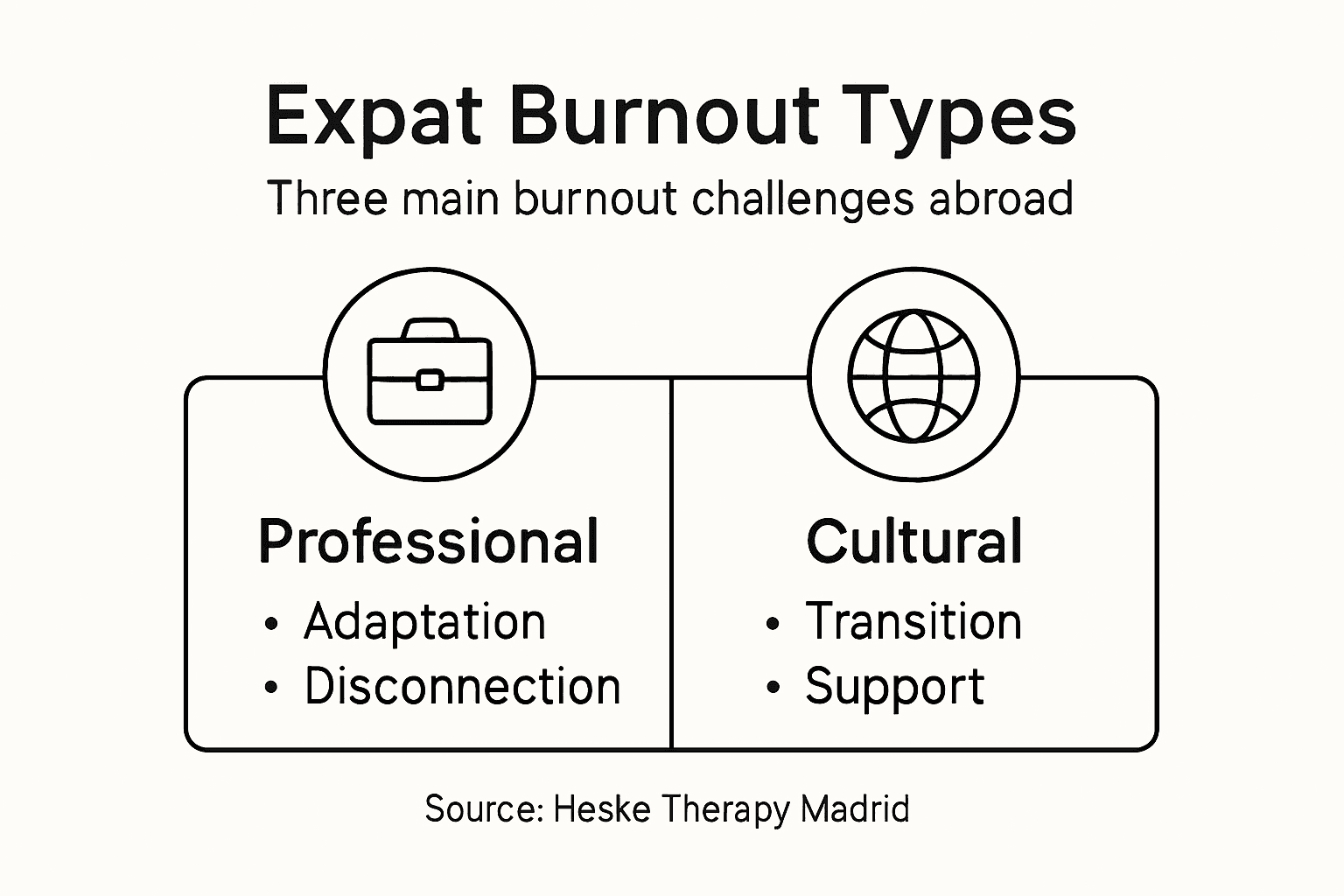
Cultural Transition Burnout represents a deeper psychological challenge involving emotional exhaustion from constant cultural navigation. This type emerges from continuous code-switching, managing different social expectations, and experiencing recurring microfrustrations that gradually erode psychological resilience. Expatriates find themselves emotionally depleted from maintaining multiple cultural identities simultaneously, which demands extraordinary mental and emotional energy.
Interpersonal Disconnection Burnout stems from isolation and limited social support networks. Despite being physically surrounded by people, expatriates often experience profound loneliness, struggling to form meaningful connections in their new environment. This burnout type is particularly insidious, slowly undermining an individual’s sense of belonging and psychological safety.

Here’s a summary of the main burnout types expatriates may face and their unique challenges:
Burnout Type | Primary Cause | Key Challenge | Impact on Well-being |
Professional Adaptation Burnout | Unfamiliar work systems | Maintaining performance | Increased self-doubt |
Cultural Transition Burnout | Constant cultural navigation | Code-switching fatigue | Eroded resilience |
Interpersonal Disconnection | Isolation, limited networks | Building support systems | Diminished sense of belonging |
Pro Tip: Create a structured social integration plan within your first three months of relocation, intentionally building both professional and personal support networks to mitigate interpersonal disconnection.
How Counseling Addresses Burnout Symptoms
Psychological interventions play a critical role in systematically addressing the complex symptoms of burnout among expatriate professionals. Counseling provides a structured approach to unraveling the multifaceted emotional and psychological challenges that emerge during international transitions, targeting the core components of emotional exhaustion, professional disengagement, and reduced personal effectiveness.
The counseling process begins with comprehensive psychological assessment, identifying specific burnout manifestations unique to each individual’s expatriate experience. Therapists employ specialized techniques like cognitive restructuring, which helps professionals reframe negative thought patterns that contribute to feelings of inadequacy and emotional depletion. Therapeutic strategies focus on developing personalized coping mechanisms that address both professional performance challenges and emotional resilience.
Group and individual counseling interventions offer complementary approaches to burnout recovery. Group sessions provide collective support and normalize the expatriate experience, while individual counseling allows for deep, personalized exploration of personal triggers and emotional barriers. These approaches integrate psychoeducation, mindfulness techniques, boundary setting, and social support strategies to help professionals rebuild psychological strength and regain professional confidence.
Below is a comparison of group and individual counseling approaches for expatriate burnout recovery:
Approach | Main Benefit | Typical Setting | Applicability for Expatriates |
Group Counseling | Normalizes shared experience | Peer support sessions | Useful for loneliness & transition |
Individual Counseling | Deep personal focus | One-on-one sessions | Tailored to unique burnout triggers |
Key therapeutic techniques include stress management training, emotional regulation skills, professional boundary establishment, and systematic development of adaptive coping strategies. By addressing burnout holistically, counseling helps expatriate professionals not just survive, but thrive in challenging international work environments.
Pro Tip: Schedule a comprehensive initial assessment that maps your specific burnout landscape, enabling a targeted and personalized therapeutic approach.
Integrative Therapy Approaches and Their Impact
Integrative psychotherapy techniques represent a sophisticated approach to mental health treatment, particularly powerful for expatriates navigating complex emotional landscapes. By synthesizing multiple therapeutic modalities, this approach offers a flexible, personalized pathway to addressing burnout that transcends traditional single-method interventions.
The core strength of integrative therapy lies in its adaptive methodology. Therapeutic customization allows clinicians to blend cognitive-behavioral strategies, psychodynamic insights, and systemic approaches tailored precisely to an individual’s unique expatriate experience. Holistic healing methods enable therapists to address not just symptoms, but underlying psychological, emotional, and social factors contributing to professional exhaustion and cultural adjustment challenges.
Specific integrative approaches for expatriate burnout might include combining Rapid Transformational Therapy (RTT) with cognitive restructuring, mindfulness techniques, and targeted stress management interventions. This multidimensional strategy allows professionals to simultaneously process emotional experiences, develop resilience skills, and reframe negative thought patterns that emerge during international transitions. The approach recognizes that burnout is rarely a singular, linear experience but a complex interplay of personal history, professional pressures, and cultural adaptation challenges.
By embracing a comprehensive, individualized therapeutic framework, integrative approaches provide expatriate professionals with a nuanced roadmap for psychological recovery. The methodology goes beyond symptom management, fostering deep personal insight, emotional regulation, and sustainable well-being strategies that support long-term professional and personal transformation.
Pro Tip: Request a comprehensive therapeutic assessment that explores your unique burnout profile, ensuring a truly personalized integrative treatment approach.
Risks of Untreated Burnout and Cost Factors
Economic consequences of burnout extend far beyond individual psychological suffering, representing a significant systemic challenge for organizations and professionals alike. Untreated burnout creates a cascading effect of productivity losses, increased healthcare expenses, and long-term career disruptions that can fundamentally alter an expatriate’s professional trajectory.
The psychological deterioration associated with prolonged burnout manifests through multiple interconnected domains. Professional performance declines dramatically, with reduced cognitive functioning, decreased motivation, and heightened susceptibility to errors. Institutional research demonstrates that burnout triggers a complex cycle of psychological distress, characterized by chronic exhaustion, emotional detachment, and progressively diminishing professional competence.
Financial implications of untreated burnout are profound and multifaceted. Expatriate professionals may experience substantial direct and indirect costs, including potential job loss, reduced earning potential, extended medical leaves, and increased healthcare interventions. The cumulative economic impact encompasses not just individual expenses, but broader organizational costs related to recruitment, training replacement personnel, and managing productivity disruptions.
Moreover, untreated burnout can precipitate severe long-term mental health challenges, including depression, anxiety disorders, and potential complete professional disengagement. These risks underscore the critical importance of proactive mental health interventions, particularly for professionals navigating complex international work environments with heightened psychological demands.
Pro Tip: Conduct a quarterly personal stress audit to identify and address emerging burnout indicators before they escalate into more significant professional and personal challenges.
Find Rapid Relief for Expat Burnout with Expert Counseling
Burnout among expatriates in Madrid is more than just stress. It involves emotional exhaustion, cultural navigation challenges, and isolation that can deeply affect your well-being and professional performance. If you feel overwhelmed by navigating unfamiliar work systems or worn down by constant cultural transitions, specialized therapy can help you regain control and rebuild resilience. Heske Therapy offers personalized integrative psychotherapy that blends Rapid Transformational Therapy, CBT, and hypnotherapy to address the unique emotional and psychological demands expats face.
Whether you struggle with professional adaptation burnout or interpersonal disconnection, our compassionate therapists understand the complexity of your experience. We tailor treatment plans to help you rapidly reduce burnout symptoms and restore confidence. Discover how Heske Therapy supports English-speaking expatriates with flexible online or in-office sessions designed for fast, lasting transformation.
Take the first step toward recovery and renewed well-being today.
Looking for targeted support to overcome burnout and reclaim your life?
Schedule your free discovery call now at Heske Therapy to receive a comprehensive assessment and start your personalized healing journey. Don’t wait until burnout worsens. Act now and experience the effective, culturally sensitive care that expatriates trust in Madrid.
Frequently Asked Questions
What is burnout, and how does it affect expatriates?
Burnout is a psychological condition marked by emotional exhaustion, depersonalization, and diminished personal accomplishment, particularly prevalent among expatriates who face unique stressors during international assignments.
How can counseling help manage burnout symptoms for expatriates?
Counseling provides targeted strategies to address burnout symptoms by focusing on emotional regulation, coping mechanisms, and personalized therapeutic approaches that facilitate recovery and boost professional performance.
What are the different types of burnout that expatriates may experience?
Expatriates may face Professional Adaptation Burnout, Cultural Transition Burnout, and Interpersonal Disconnection Burnout, each characterized by specific challenges in navigating work and cultural environments.
Why is it important to seek treatment for untreated burnout?
Untreated burnout can lead to serious psychological issues such as chronic exhaustion, anxiety, and depression, alongside significant professional consequences like decreased productivity and career disruption.
Recommended
Comments