Guide to rapid therapy methods for anxiety and trauma relief


Living abroad can be exhilarating, but it often brings unexpected mental health challenges. Many expatriates in Madrid face mounting anxiety, burnout, and unresolved trauma from career pressures, cultural adjustment, and isolation from support networks. Traditional therapy can take months or years to show results, which doesn’t fit the fast pace of international life. Rapid therapy methods like Rapid Transformational Therapy and hypnotherapy offer a compelling alternative: measurable relief in just one to three sessions. This guide explains how these evidence-based approaches work, what to expect during treatment, and how to choose the right method for your specific mental health needs.
Table of Contents
How hypnotherapy supports rapid relief from anxiety, burnout, and trauma
Preparing for your rapid therapy sessions: what to expect and how to maximize results
Comparing rapid therapy methods: RTT vs hypnotherapy for fast mental health relief
Explore counseling and rapid therapy services at Heske Therapy Madrid
Key Takeaways
Point | Details |
Root cause focus | RTT targets subconscious beliefs driving anxiety and burnout using hypnosis and cognitive reframing in a short one to three sessions format. |
Fast measurable results | Most clients experience relief in one to three sessions with ongoing support through a personalized audio recording. |
Audio reinforcement | A daily custom audio after each session reinforces new neural pathways and strengthens change through neuroplasticity. |
Not suitable for psychosis | RTT is not appropriate for psychosis and outcomes depend on client motivation and openness. |
Understanding rapid transformational therapy (RTT)
Rapid Transformational Therapy represents a breakthrough in mental health treatment for busy professionals who need results quickly. RTT combines hypnotherapy, NLP, CBT, psychotherapy, and neuroscience principles to identify and resolve the root causes of anxiety, burnout, and trauma in just one to three sessions. Unlike traditional talk therapy that can stretch over months, RTT zeroes in on the subconscious beliefs driving your symptoms.
A typical RTT session lasts 90 to 120 minutes. Your therapist guides you into a relaxed hypnotic state where your conscious mind steps aside, allowing access to memories and beliefs formed during childhood or significant life events. This regression process isn’t about reliving trauma but rather understanding how past experiences created limiting beliefs that fuel current anxiety or burnout. Once these beliefs surface, your therapist helps you reframe them with empowering alternatives.
The session structure follows a clear path: intake and goal setting, hypnosis-induced regression to identify root causes, cognitive reframing of negative beliefs, and creation of a personalized audio recording. You’ll listen to this recording daily for 21 days, which reinforces new neural pathways and cements the positive changes. This audio component is crucial because it leverages neuroplasticity, the brain’s ability to rewire itself through consistent repetition.
RTT particularly suits international clients in Madrid who juggle demanding careers, family responsibilities, and cultural adaptation. The condensed timeline means you can achieve significant anxiety relief without committing to weekly sessions for months. Many expats report feeling lighter and more capable after just one session, though complex trauma may require two or three appointments.
The method works for various issues beyond anxiety and burnout. Clients seek RTT for sleep problems, low self-esteem, relationship patterns, physical symptoms like IBS or migraines, and emotional blocks that prevent career advancement. Because RTT addresses root causes rather than surface symptoms, the changes tend to last long after therapy ends.
Pro Tip: Choose a certified RTT therapist from reputable directories to ensure quality. Certification standards vary, so verify your therapist completed training with recognized institutions and maintains ongoing professional development.
Key benefits of RTT include:
Addresses subconscious root causes rather than surface symptoms
Delivers measurable results in one to three sessions
Provides ongoing support through personalized audio recordings
Combines evidence-based techniques for comprehensive treatment
Fits busy schedules without requiring months of weekly appointments
For expatriates managing the unique stressors of international life, RTT offers a practical path to rapid transformational therapy success without disrupting work or family commitments.
How hypnotherapy supports rapid relief from anxiety, burnout, and trauma
Hypnotherapy provides the foundation for rapid mental health improvement by accessing parts of your mind that resist change during normal waking consciousness. When you enter a hypnotic state, your brain waves shift from beta (active thinking) to alpha and theta (relaxed, receptive). This shift allows your therapist to communicate directly with your subconscious, where automatic responses to stress and anxiety originate.
The physiological changes during hypnotherapy are measurable and significant. Hypnotherapy activates the parasympathetic nervous system, which counteracts the fight-or-flight response that keeps anxiety sufferers in a constant state of alert. Heart rate variability increases, cortisol levels drop, and executive function improves. These aren’t just temporary relaxation effects but actual neurological changes that persist after the session ends.

Research backing for hypnotherapy is robust and growing. Multiple randomized controlled trials demonstrate large effects on mood states, anxiety symptoms, and coping mechanisms for burnout. One study found that participants receiving hypnotherapy showed significant reductions in somatic anxiety symptoms, with effects maintained at follow-up assessments weeks later. For PTSD and trauma, hypnotherapy helps clients process distressing memories without overwhelming emotional flooding.
What makes hypnotherapy particularly effective for rapid relief is its ability to bypass cognitive defenses. You might consciously know that your anxiety is irrational, but that knowledge alone doesn’t stop the panic attacks. Hypnotherapy reaches the subconscious programming that triggers those attacks, allowing you to update old survival responses that no longer serve you.
The integration of hypnotherapy with other modalities amplifies its effectiveness. When combined with CBT techniques, you get both the deep subconscious work and practical coping strategies for daily life. This comprehensive approach explains why types of rapid therapy that incorporate hypnotherapy consistently outperform single-method treatments.
Pro Tip: Consistent practice of hypnosis audio sessions maximizes benefits. Your brain needs repetition to solidify new neural pathways, so listening daily for the full 21 days isn’t optional if you want lasting results.
Hypnotherapy addresses multiple anxiety and trauma symptoms:
Intrusive thoughts and rumination patterns
Physical tension and stress-related pain
Sleep disturbances and nightmares
Emotional reactivity and mood swings
Avoidance behaviors and phobias
“Effective hypnotherapy reduces anxiety somatic symptoms significantly (p<0.05) in clinical trials, with improvements in heart rate variability and stress hormone regulation persisting weeks after treatment.”
For expatriates dealing with burnout, hypnotherapy offers a reset button for an overloaded nervous system. The deep relaxation achieved during sessions gives your body permission to rest in ways that normal sleep or vacation time can’t match. This is why clients often report feeling more refreshed after one hypnotherapy session than after a week off work. The RTT effectiveness overview shows that combining hypnotherapy with targeted regression work produces faster, more durable results than either approach alone.
Preparing for your rapid therapy sessions: what to expect and how to maximize results
Successful rapid therapy begins before you ever sit down with your therapist. Mental preparation matters because your openness and willingness to engage with subconscious material directly influence outcomes. Approach your first session with curiosity rather than skepticism. You don’t need to believe hypnotherapy will work, but you do need to participate fully in the process.
Understanding the typical session flow reduces anxiety about the unknown. Here’s what happens during a standard RTT appointment:
Intake and goal clarification where you discuss current symptoms and desired outcomes
Relaxation induction using guided imagery and progressive muscle relaxation
Hypnotic deepening to access subconscious memories and beliefs
Regression to identify when and how limiting beliefs formed
Reframing work to install new, empowering beliefs
Recording of personalized audio for 21-day reinforcement period
Return to normal consciousness and integration discussion
Most clients remain aware throughout the session. You won’t lose control or reveal secrets you want to keep private. Hypnosis feels like deep relaxation or meditation, not unconsciousness. You’ll remember the session afterward, though some details may feel dreamlike.
Not everyone is a suitable candidate for rapid therapy. Contraindications include psychosis, epilepsy, and schizophrenia because hypnotic states can destabilize these conditions. If you’re currently in crisis or experiencing active suicidal ideation, stabilization through other methods should come first. Rapid therapy works best for functional individuals dealing with specific issues rather than acute psychiatric emergencies.
Client factors that enhance therapy effectiveness:
Genuine motivation to change, not just pressure from others
Willingness to listen to audio recordings daily for 21 days
Openness to exploring uncomfortable emotions or memories
Realistic expectations about the pace and nature of change
Stable living situation without active substance abuse
Pro Tip: Engage fully with the 21-day audio recordings to cement neural changes. Set a consistent time each day, use headphones for better focus, and create a quiet environment free from distractions.
The table below shows typical symptom reduction patterns based on session number and issue complexity:
Session Number | Simple Issues (phobias, habits) | Moderate Issues (anxiety, confidence) | Complex Issues (trauma, burnout) |
After Session 1 | 70-80% improvement | 40-60% improvement | 20-40% improvement |
After Session 2 | 90-100% resolution | 70-85% improvement | 50-70% improvement |
After Session 3 | Maintenance only | 85-95% resolution | 75-90% improvement |
These percentages represent typical client reports, not guaranteed outcomes. Your individual results depend on factors like issue complexity, personal history, and commitment to the process. Some people experience dramatic shifts after one session, while others need the full three-session protocol to achieve lasting change.
For expatriates managing burnout recovery, rapid therapy provides a foundation that other lifestyle changes can build upon. The therapy won’t magically fix an unsustainable work schedule or toxic relationships, but it will shift your internal responses so you can make necessary external changes without overwhelming anxiety.
Comparing rapid therapy methods: RTT vs hypnotherapy for fast mental health relief
While RTT incorporates hypnotherapy as a core component, the two approaches differ in scope, structure, and evidence base. Understanding these distinctions helps you choose the method that best fits your needs and preferences.
RTT represents a comprehensive, structured protocol that combines hypnotherapy with elements from multiple therapeutic traditions. It follows a specific sequence designed to identify root causes through regression, then reframe beliefs and reinforce changes through audio recordings. Standard hypnotherapy, by contrast, offers more flexibility in approach and may focus on symptom management through suggestion and relaxation without necessarily pursuing root cause resolution.
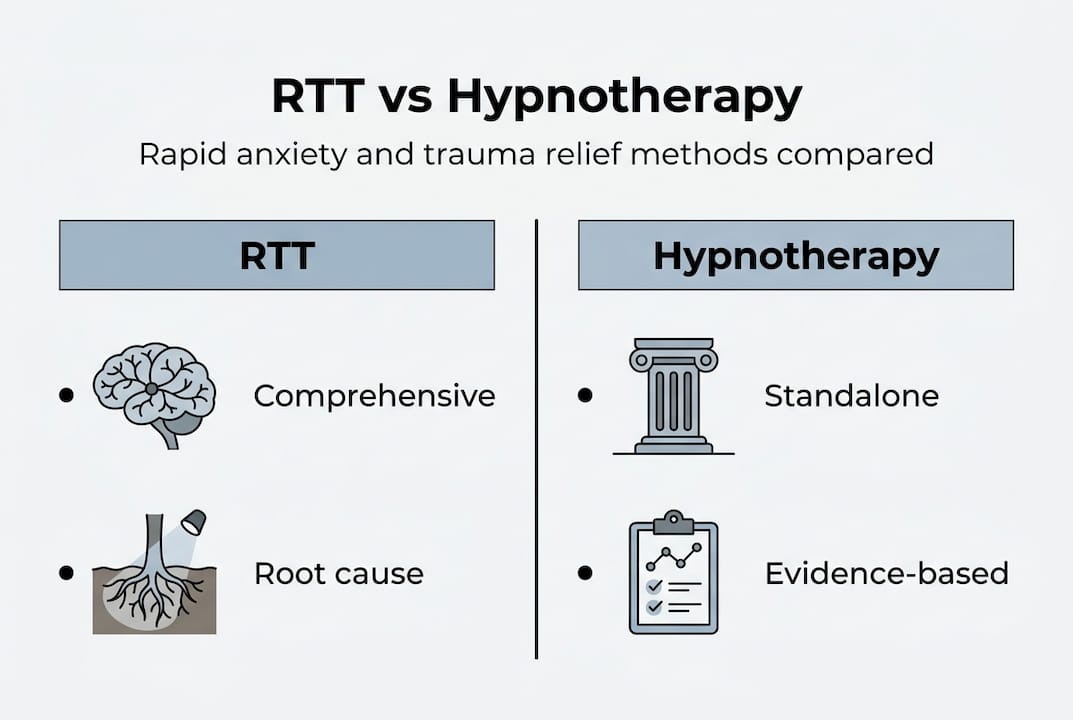
The evidence supporting each method varies in quality and quantity. Hypnotherapy has stronger randomized controlled trial backing, with decades of research demonstrating efficacy for anxiety, pain management, and trauma symptoms. RTT relies more heavily on case studies and client testimonials, though preliminary research shows promising results. This doesn’t mean RTT is ineffective, just that the scientific validation process is still catching up to clinical practice.
Comparison Factor | RTT | Traditional Hypnotherapy |
Session length | 90-120 minutes | 50-90 minutes |
Typical session count | 1-3 sessions | 4-8+ sessions |
Primary mechanism | Root cause regression and reframing | Suggestion and subconscious reprogramming |
Evidence base | Case studies, client reports | Randomized controlled trials, meta-analyses |
Post-session support | Personalized 21-day audio | Varies by practitioner |
Best suited for | Time-pressed clients seeking rapid resolution | Clients preferring gradual, flexible approach |
Both methods require similar client characteristics for success:
Moderate to high hypnotizability (ability to enter focused states)
Absence of psychotic disorders or active substance abuse
Motivation to change driven by internal desire, not external pressure
Willingness to engage with uncomfortable emotions or memories
Commitment to any homework or audio listening assignments
The role of RTT in anxiety treatment is particularly strong because anxiety often stems from specific past experiences that created fear responses. RTT’s regression component allows you to revisit those formative moments and update your interpretation of what happened. Traditional hypnotherapy might address anxiety through relaxation training and positive suggestion without necessarily uncovering the original trigger.
For complex trauma, the choice between methods depends on your stability and resources. RTT’s intensive approach can produce faster results but may feel overwhelming if you’re not adequately prepared. Traditional hypnotherapy’s gentler pace allows for more gradual processing, which some trauma survivors prefer. The RTT efficacy debate centers partly on this question of appropriate pacing for different client needs.
Cost considerations also differ. RTT sessions typically cost more per session due to their length and comprehensive nature, but the total investment may be lower because fewer sessions are needed. Traditional hypnotherapy charges less per session but requires more appointments to achieve similar results. Calculate total expected costs rather than per-session prices when comparing options.
Ultimately, the best method is the one that resonates with your preferences and fits your circumstances. If you’re a busy expatriate who needs results quickly and can commit to intensive work, RTT offers compelling advantages. If you prefer a more gradual approach or want treatment backed by extensive research, traditional hypnotherapy provides a solid foundation.
Explore counseling and rapid therapy services at Heske Therapy Madrid
If you’re ready to experience the transformative power of rapid therapy methods, professional support makes all the difference. Heske Therapy specializes in helping English-speaking expatriates in Madrid overcome anxiety, burnout, and trauma through evidence-based approaches tailored to international lifestyles. The practice offers both online booking convenience and in-person sessions, giving you flexibility to choose what works best.
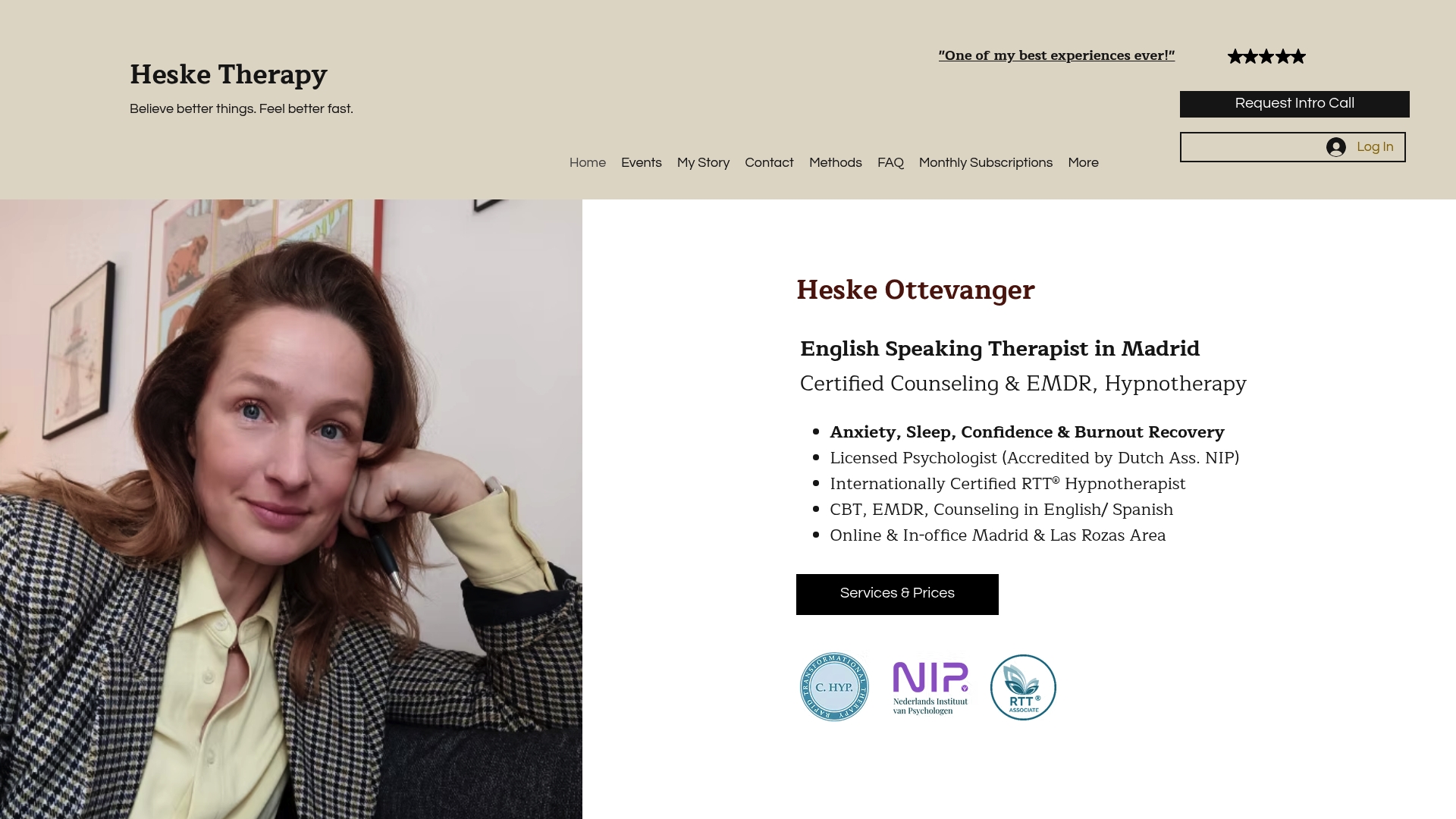
The comprehensive therapy options include specialized RTT protocols designed specifically for the unique challenges expatriates face. Whether you’re struggling with work stress, cultural adjustment, relationship issues, or unresolved trauma, the practice provides personalized treatment plans that respect your time constraints and cultural background. For clients seeking accelerated results, the 21-day RTT package combines intensive session work with structured follow-up support to maximize lasting change.
Pro Tip: Schedule a free initial consultation to see if RTT suits your needs. This no-pressure conversation helps you understand the process, ask questions, and determine whether rapid therapy aligns with your goals and preferences before making a financial commitment.
FAQ
What is rapid transformational therapy (RTT) and how does it work?
RTT uses hypnosis to discover and reframe negative subconscious beliefs that drive anxiety, burnout, and trauma symptoms, often achieving significant results in just one to three sessions. It combines techniques like NLP, CBT, and psychotherapy to create lasting change by accessing the root causes stored in your subconscious mind. The therapy includes personalized audio recordings you listen to daily for 21 days to reinforce new neural pathways. RTT explained in detail shows how this integration produces faster results than single-method approaches.
Is hypnotherapy a scientifically proven treatment for anxiety and trauma?
Yes, multiple randomized controlled trials confirm hypnotherapy’s efficacy for anxiety and PTSD symptom relief, with effect sizes comparable to or exceeding standard treatments. Research demonstrates that hypnotherapy improves stress response and executive function by accessing the subconscious mind and activating the parasympathetic nervous system. Meta-analyses show significant reductions in both psychological and somatic anxiety symptoms that persist weeks after treatment ends. The evidence base for hypnotherapy is stronger than for many conventional anxiety treatments, making it a credible first-line option rather than an alternative therapy. Types of rapid therapy that incorporate hypnotherapy consistently demonstrate superior outcomes in clinical studies.
How many sessions of rapid therapy are typically needed for lasting benefits?
RTT typically involves one to three sessions, with most clients achieving noticeable results within that timeframe depending on issue complexity. Simple issues like specific phobias or habits may resolve completely after a single session, while moderate anxiety or confidence issues usually require two sessions. Complex trauma or deep-rooted burnout might need the full three-session protocol for optimal results. Client motivation and hypnotizability significantly influence both session number and outcomes, so your active participation matters as much as the therapist’s skill. Follow the therapy session guidance to maximize your results regardless of how many sessions you ultimately need.
Recommended
Comments