Step by step CBT techniques to manage anxiety and burnout

Living as an expatriate in Madrid brings exciting opportunities, but it also introduces unique stressors that can trigger anxiety, burnout, and emotional exhaustion. The transition to a new culture, language barriers, and professional pressures often leave you feeling overwhelmed and disconnected. Cognitive Behavioral Therapy offers practical, evidence-based techniques you can apply immediately to regain control over your mental wellbeing. This guide walks you through accessible CBT methods specifically designed to help expatriates recognize negative patterns, challenge unhelpful thoughts, and build resilience in your daily life.
Table of Contents
Key takeaways
Point | Details |
CBT disrupts negative cycles | This therapy targets the thought and behavior patterns that maintain anxiety and burnout |
Core techniques proven effective | Exposure and cognitive restructuring reduce symptoms across anxiety disorders |
Tailored approaches matter | Different conditions like panic, GAD, and PTSD respond best to specific CBT interventions |
Consistent practice yields results | Regular application of techniques leads to measurable symptom reduction within weeks |
Professional guidance enhances safety | Therapist involvement ensures exposure exercises remain effective and appropriate |
Understanding CBT and preparing for practice
Cognitive Behavioral Therapy operates on a simple but powerful principle: your thoughts, feelings, and behaviors continuously influence each other. When you experience anxiety or burnout, negative thought patterns create a self-reinforcing cycle that maintains distress. For example, thinking “I can’t handle this presentation” triggers physical anxiety symptoms, which then confirms your belief that you’re incapable, leading to avoidance behaviors that prevent you from building confidence.
The therapy focuses on identifying these patterns and systematically replacing them with healthier alternatives. CBT is a structured, skills-based therapy that emphasizes practical techniques over abstract exploration. You learn concrete skills to challenge distorted thinking, face feared situations gradually, and modify behaviors that perpetuate problems. This approach helps individuals understand how their thoughts affect their actions and adopt healthier patterns through deliberate practice.
Before diving into specific techniques, you need to establish a foundation for effective practice. Commitment matters more than perfection. Set aside 15 to 20 minutes daily to work on exercises, even when motivation feels low. Create a dedicated space where you can focus without distractions, whether that’s a quiet corner of your apartment or a peaceful spot in Retiro Park.
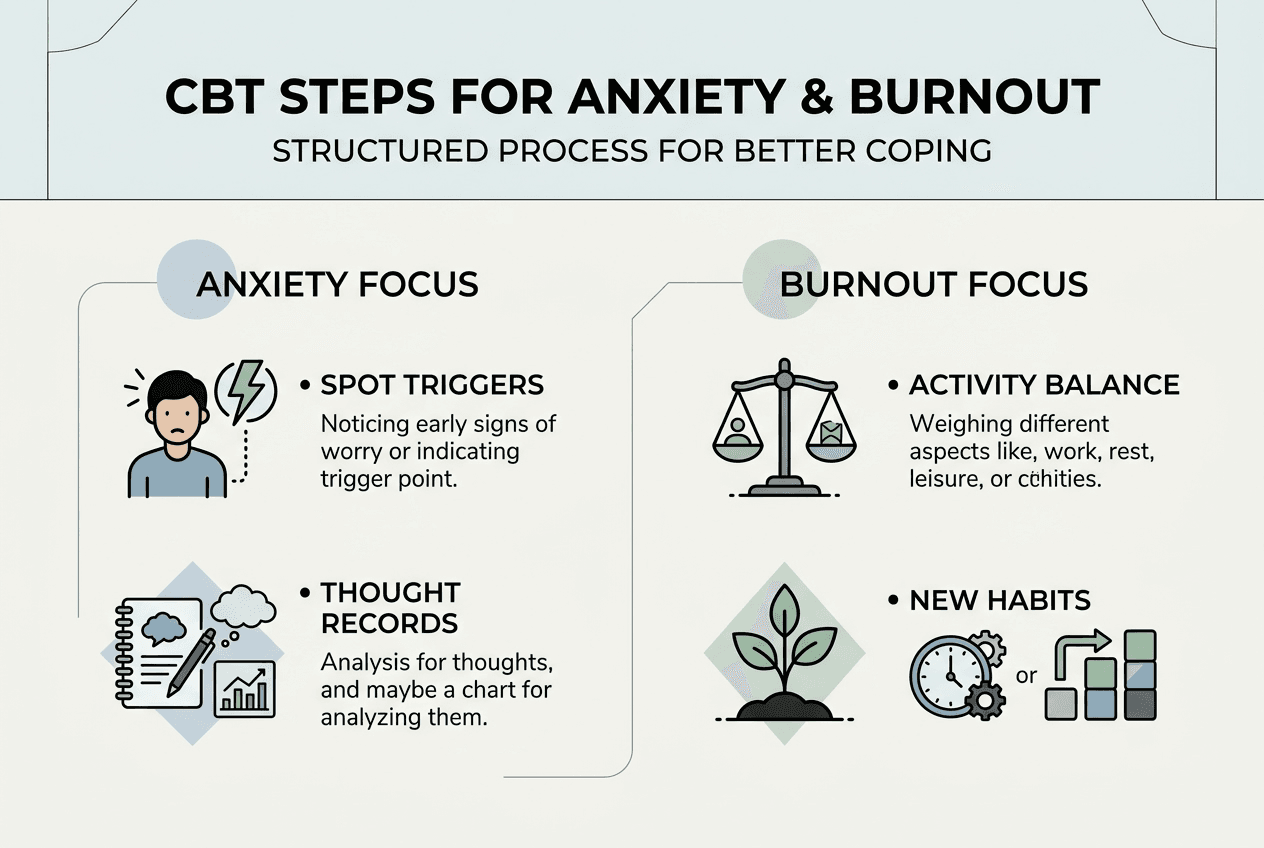
Record keeping forms the backbone of CBT work. You’ll track thoughts, emotions, physical sensations, and behavioral responses to identify patterns over time. Use a simple notebook or a smartphone app designed for CBT practice. The act of writing forces you to slow down and examine automatic reactions that usually happen too quickly to notice.
Common CBT tools you’ll use include:
Thought records to capture and analyze negative thinking patterns
Exposure hierarchies listing feared situations from least to most anxiety provoking
Behavioral experiments testing the accuracy of your predictions
Activity scheduling to combat avoidance and build positive experiences
Cognitive restructuring worksheets for challenging distorted beliefs
Pro Tip: Track your thoughts and emotions at the same time each day for one week before starting formal techniques. This baseline data reveals your most common triggers and unhelpful thinking patterns, making subsequent interventions more targeted and effective.
Step by step techniques for managing anxiety with CBT
Exposure exercises represent the most powerful CBT intervention for anxiety disorders. The goal isn’t to feel comfortable in feared situations but to learn that anxiety decreases naturally without avoidance or safety behaviors. This distinction matters because seeking comfort reinforces the belief that danger exists, while focusing on learning builds new associations between triggers and safety.
Create your exposure hierarchy using these steps:
List 10 to 15 situations that trigger anxiety, from mildly uncomfortable to extremely distressing
Rate each situation on a 0 to 100 scale based on anticipated anxiety
Identify the lowest rated item you can practice immediately
Plan the exposure in detail, including location, duration, and what you’ll do
Execute the exposure without using safety behaviors like checking your phone or seeking reassurance
Stay in the situation until anxiety decreases by at least 50 percent or for a minimum of 30 minutes
Repeat the same exposure multiple times before moving to the next hierarchy level
Vary contexts to strengthen learning, practicing in different locations and at different times
Cognitive restructuring complements exposure by addressing the thoughts that fuel anxiety. When you notice anxious feelings, pause and identify the specific thought running through your mind. Write it down exactly as it appears, including extreme language like “always” or “never.” Then challenge the thought by asking what evidence supports it, what evidence contradicts it, and what a friend might say about the situation. Finally, create a balanced alternative thought that acknowledges reality without catastrophizing.
Different anxiety disorders require tailored approaches. Match interventions to disorder features for optimal results:
Panic disorder: Practice interoceptive exposure by deliberately inducing physical sensations like rapid breathing or dizziness to learn these sensations aren’t dangerous
Generalized anxiety disorder: Use worry postponement by scheduling a specific 15 minute worry period each day and redirecting anxious thoughts to that time
Social anxiety: Shift attention outward during interactions instead of monitoring your performance, and drop subtle avoidance like rehearsing conversations
OCD: Implement response prevention by resisting compulsions after exposure to obsessional triggers, allowing anxiety to decrease naturally
| Anxiety Type | Primary CBT Technique | Session Focus | Expected Timeline | | — | — | — | | Panic Disorder | Interoceptive exposure | Physical sensation tolerance | 8 to 12 weeks | | Generalized Anxiety | Cognitive restructuring | Worry patterns and beliefs | 10 to 14 weeks | | Social Anxiety | In vivo exposure | Performance situations | 12 to 16 weeks | | Specific Phobia | Graduated exposure | Feared object or situation | 6 to 10 weeks | | OCD | Exposure with response prevention | Obsessions and compulsions | 12 to 20 weeks |
Pro Tip: Vary contexts during exposure to enhance inhibitory learning. If you’re working on social anxiety, practice conversations with different people in various settings rather than repeating the same interaction. This variability strengthens your brain’s ability to generalize safety learning across situations, producing more durable results than repetitive practice in identical conditions.
Applying CBT techniques to burnout and trauma
Burnout manifests as emotional exhaustion, cynicism toward work, and reduced professional efficacy. Unlike temporary stress, burnout develops gradually through chronic workplace demands that exceed your resources. CBT significantly reduces burnout symptoms and improves sleep quality and confidence handling stress by targeting the cognitive patterns that maintain exhaustion.
The CBT workflow for burnout recovery follows these steps:
Identify specific thoughts that contribute to overwork, such as “I must respond to every email immediately” or “Taking breaks means I’m lazy”
Challenge perfectionistic standards by examining costs and benefits of current work patterns
Experiment with boundary setting, starting with small changes like leaving work on time one day per week
Monitor energy levels and productivity to gather evidence about the relationship between rest and performance
Gradually expand healthy boundaries as data confirms that sustainable pacing improves rather than harms outcomes
Address underlying beliefs about self-worth and achievement that drive unsustainable work patterns
Trauma and PTSD require specialized CBT protocols that differ from standard anxiety treatment. Cognitive Processing Therapy is an evidence-based treatment delivered over 12 to 20 sessions that helps you process traumatic memories and modify unhelpful beliefs about safety, trust, control, and self-worth. CPT involves writing a detailed account of the traumatic event and identifying stuck points where your beliefs prevent natural recovery.
The therapy systematically challenges beliefs like “The trauma happened because I’m weak” or “I can’t trust anyone anymore.” You examine evidence for and against these beliefs, considering alternative explanations and the impact of maintaining rigid thinking. As stuck points shift, emotional processing of the trauma naturally follows.

Technique | Standard CBT | Cognitive Processing Therapy |
Primary Focus | Current symptoms and functioning | Trauma memory and related beliefs |
Exposure Method | Gradual hierarchy based approach | Written trauma account processing |
Cognitive Work | Challenge anxious predictions | Modify trauma related stuck points |
Timeline | 8 to 16 sessions typical | 12 to 20 sessions structured |
Homework | Varied exposure and monitoring | Specific worksheets and writing |
Pro Tip: Early identification and consistent CBT practice can accelerate symptom improvement. Research shows meaningful changes often occur within 6 to 8 weeks when you complete assigned homework and attend sessions regularly. Don’t wait for motivation to appear before starting. Action creates motivation, not the other way around. Begin with the smallest possible step, and momentum builds naturally as you experience initial benefits of therapy for burnout.
Monitoring progress and avoiding common CBT pitfalls
Tracking your CBT progress requires systematic data collection beyond subjective impressions. Use thought records to document the frequency and intensity of negative thoughts before and after applying cognitive restructuring. Monitor behavioral changes by recording how often you engage in previously avoided activities. Rate your overall anxiety, depression, or burnout weekly using a 0 to 10 scale to visualize trends over time.
Many people make the mistake of focusing exclusively on symptom relief without addressing underlying core beliefs. You might successfully reduce panic attacks through exposure but still maintain the belief that you’re fundamentally inadequate. Superficial CBT may lead to symptom relapse if underlying beliefs are not modified. Sustainable recovery requires identifying and challenging the deep assumptions that generate surface symptoms.
Watch for these relapse warning signs and take corrective action:
Gradual return to avoidance behaviors: Restart exposure exercises immediately, even if anxiety feels manageable
Increased negative self-talk: Review cognitive restructuring techniques and challenge thoughts before they spiral
Skipping homework assignments: Reconnect with your motivation by reviewing progress data and initial goals
Physical symptoms reappearing: Schedule a check-in with a therapist to assess whether new stressors require adjusted strategies
Isolation from support systems: Deliberately reach out to friends or support groups rather than withdrawing
“CBT significantly reduces symptoms of depression, anxiety, and stress compared to controls, but lasting change requires modifying core beliefs and maintaining practice beyond initial symptom improvement.”
Professional support becomes essential when self-directed practice stalls or symptoms worsen. A therapist helps you identify blind spots in your thinking, ensures exposure exercises remain appropriately challenging, and provides accountability for consistent practice. They can also integrate CBT with complementary approaches when standard protocols need adaptation for complex presentations. Consider seeking professional guidance through a structured workflow for burnout recovery that combines self-practice with expert oversight.
Discover personalized therapy options to enhance your CBT journey
While self-directed CBT practice builds valuable skills, working with a therapist who understands the unique challenges facing expatriates accelerates your progress and prevents common mistakes. Professional guidance ensures techniques are applied correctly and adapted to your specific situation. You’ll benefit from accountability, expert feedback, and the safety of a therapeutic relationship as you work through difficult material.
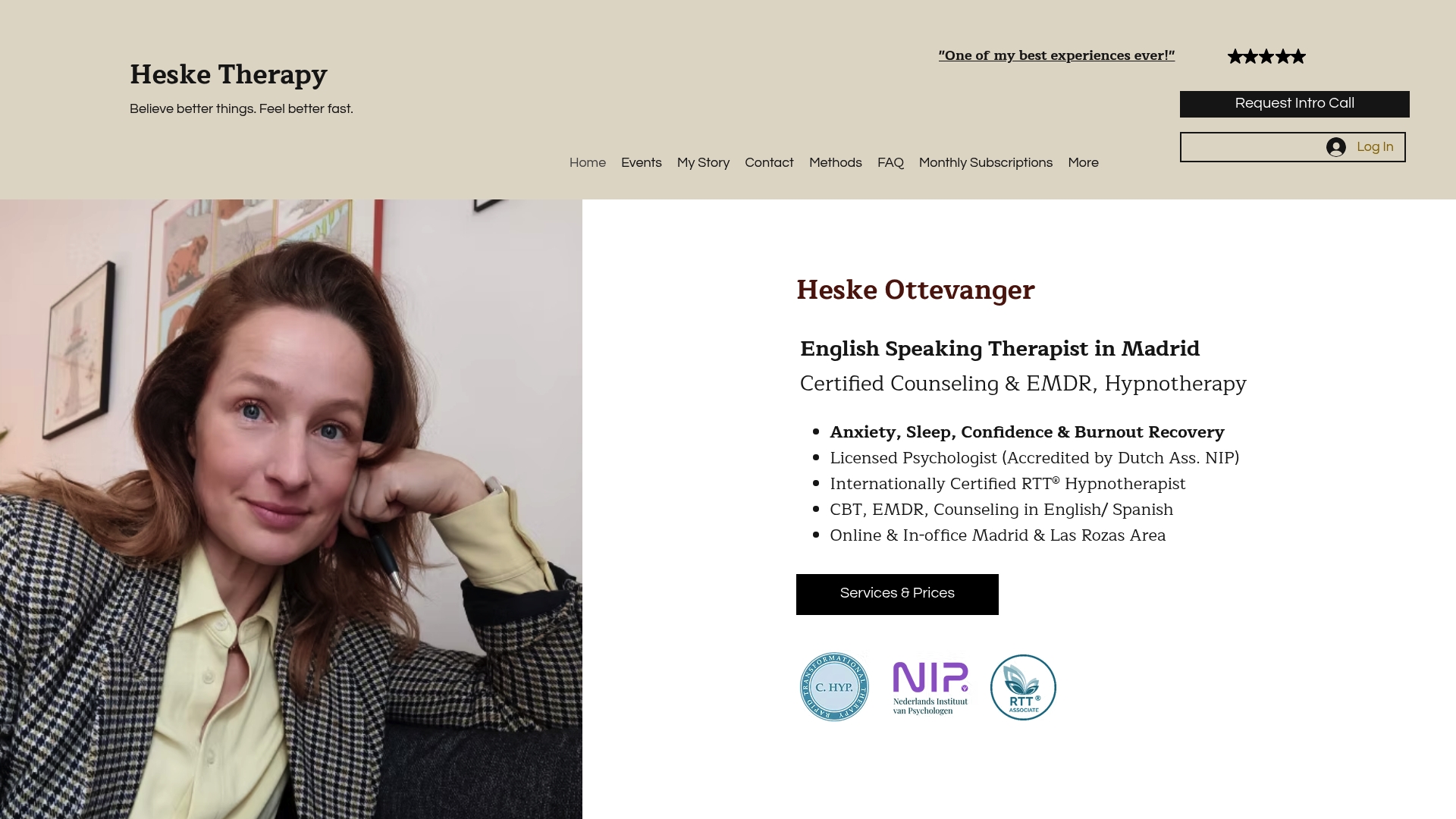
Heske Therapy offers both online counseling sessions and in-office appointments designed specifically for English-speaking expatriates in Madrid. Sessions integrate CBT with complementary approaches like EMDR and hypnotherapy when appropriate. For those seeking rapid transformation, RTT therapy combines cognitive techniques with deeper subconscious work to address root causes efficiently. The practice’s multilingual capacity and cultural sensitivity ensure you feel understood and supported throughout your therapeutic journey.
FAQ
What are the most effective step by step CBT techniques for anxiety?
Graded exposure, cognitive restructuring, and behavioral experiments form the core of effective CBT for anxiety. You systematically face feared situations while learning that anxiety decreases naturally without avoidance. Cognitive work challenges the catastrophic predictions that fuel anxiety, while behavioral experiments test whether your fears match reality.
How soon can I expect to see improvements using CBT for burnout?
Meaningful improvements often occur within 6 to 8 weeks with consistent CBT practice for burnout. Individual timelines vary based on burnout severity, consistency of practice, and whether you’re addressing underlying beliefs alongside surface symptoms. Some people notice energy improvements within the first few weeks, while complete recovery may take several months.
Can I practice CBT techniques on my own, or do I need a therapist?
Basic CBT techniques like thought records and cognitive restructuring can be self-practiced using workbooks and online resources. However, exposure exercises should always be done with a therapist to ensure safety and effectiveness. Complex presentations involving trauma, severe depression, or multiple diagnoses require professional guidance to prevent harm and optimize outcomes.
How does CBT for anxiety differ from CBT for trauma?
CBT for anxiety focuses on current symptom reduction through exposure and cognitive work targeting anxious predictions. Trauma-focused CBT addresses past events and their ongoing impact on beliefs about safety, trust, and self-worth. Trauma protocols involve processing specific memories and modifying stuck points rather than simply reducing present moment anxiety through graduated exposure.
What should I do if CBT techniques aren’t working for me?
First, assess whether you’re applying techniques correctly and consistently. Many people practice exposure without fully eliminating safety behaviors or challenge thoughts superficially without generating genuine belief change. If you’ve given proper CBT a fair trial for 8 to 12 weeks without improvement, consult a therapist to evaluate whether you need a modified approach, additional assessment for complicating factors, or integration with medication or other therapeutic modalities.
Recommended
Comments