What Is EMDR Therapy and How It Heals Trauma

Struggling with anxiety or trauma far from home in Madrid can leave English-speaking expatriates feeling isolated and desperate for real relief. Finding an approach that addresses painful memories quickly is urgent, especially when traditional therapy seems slow or overwhelming. EMDR therapy stands out for its ability to help the brain reprocess trauma through proven techniques like bilateral stimulation, offering a path to immediate emotional relief without endless talk. This article clears up common EMDR myths and shows how this method can support rapid healing for those seeking results.
Table of Contents
Key Takeaways
Point | Details |
EMDR Defined | EMDR is a structured therapy that helps individuals reprocess traumatic memories using bilateral stimulation techniques. |
Debunking Myths | EMDR is not just traditional talk therapy; it requires minimal discussion of traumatic events and is effective for various psychological issues beyond PTSD. |
Treatment Phases | The therapy consists of eight phases that guide patients through healing by processing emotions and modifying harmful beliefs. |
Benefits and Limitations | EMDR can lead to faster recovery with fewer sessions, but its effectiveness varies by individual and requires a trained practitioner. |
Defining EMDR Therapy and Common Myths
EMDR (Eye Movement Desensitization and Reprocessing) therapy is an innovative psychotherapeutic approach designed to help individuals process and heal from traumatic experiences. Developed in 1989, EMDR has evolved significantly from a simple technique for treating Post-Traumatic Stress Disorder (PTSD) into a comprehensive method addressing diverse psychological challenges.
At its core, EMDR operates on a unique principle: traumatic memories can become “stuck” in the brain’s processing system, causing ongoing emotional distress. The therapy uses bilateral stimulation - typically eye movements, but sometimes hand tapping or audio signals - to help the brain reprocess these memories more adaptively. This bilateral stimulation mimics the natural processing that occurs during REM sleep, allowing traumatic memories to be integrated more healthily.
Common myths about EMDR often prevent people from exploring this effective therapy. Let’s debunk some key misconceptions:
Myth 1: EMDR is just another form of traditional talk therapy
Myth 2: The therapy requires repeatedly discussing traumatic events in detail
Myth 3: EMDR is only effective for combat veterans or extreme trauma survivors
Myth 4: The bilateral eye movements are just a gimmick with no scientific basis
In reality, EMDR is a structured, evidence-based approach recognized by organizations like the World Health Organization as an effective treatment for trauma. Unlike traditional talk therapy, EMDR focuses on processing memories without requiring extensive verbal recounting of traumatic experiences.
Here’s a quick reference comparing EMDR therapy to traditional talk therapy approaches:
Aspect | EMDR Therapy | Traditional Talk Therapy |
Memory Processing | Bilateral stimulation for adaptive reprocessing | Conversational exploration of memories |
Verbal Discussion | Minimal, targeted discussion | Extensive verbal recounting |
Session Structure | Eight defined phases | Flexible, varies by therapist |
Treatment Speed | Often shorter duration | Typically longer treatment |
The therapy typically involves eight structured phases:
Patient history and treatment planning
Preparation and establishing safety
Assessment of target memories
Desensitization through bilateral stimulation
Installation of positive beliefs
Body scan to release physical tension
Closure of each session
Re-evaluation in subsequent sessions
Pro tip: When considering EMDR, always consult a licensed therapist specifically trained in this specialized technique to ensure proper implementation and personalized treatment.
How EMDR Works: Key Phases Explained
EMDR therapy is a sophisticated, structured approach that helps individuals process traumatic memories through a carefully designed eight-phase protocol. Bilateral stimulation techniques are central to this therapeutic method, enabling the brain to reprocess and heal from emotional distress.
The eight phases of EMDR therapy are meticulously crafted to create a safe, supportive environment for trauma recovery. Each phase serves a specific purpose in guiding patients toward emotional healing and psychological resilience:
History Taking: Therapist collects comprehensive background information about the patient’s trauma and emotional challenges
Preparation: Establishing trust and teaching coping mechanisms to manage potential emotional distress
Assessment: Identifying specific traumatic memories and associated negative beliefs
Desensitization: Using bilateral stimulation to help the brain reprocess traumatic memories
Installation: Reinforcing positive cognitive beliefs to replace negative thought patterns
Body Scan: Identifying and releasing residual physical tension related to traumatic memories
Closure: Ensuring emotional stability and providing grounding techniques
Reevaluation: Assessing progress and addressing any remaining emotional blockages
Key aspects of bilateral stimulation include:
Horizontal eye movements synchronized with memory processing
Alternating hand tapping
Audio tones that alternate between ears
Subtle physical movements designed to engage both brain hemispheres
The goal of these techniques is to help the brain process traumatic memories more adaptively, reducing their emotional charge and enabling psychological healing. Unlike traditional talk therapy, EMDR focuses on direct memory reprocessing, allowing patients to transform their relationship with past traumas.

Pro tip: During EMDR sessions, remain open and patient with yourself, understanding that healing is a gradual process that requires trust in your therapist and the therapeutic approach.
Types of Issues Treatable With EMDR
EMDR therapy has dramatically expanded beyond its original application for Post-Traumatic Stress Disorder (PTSD), emerging as a versatile treatment for a wide range of psychological and emotional challenges. Comprehensive clinical studies have demonstrated its effectiveness across multiple mental health conditions.
The breadth of issues treatable with EMDR is remarkably extensive, encompassing both acute and chronic psychological conditions:
Trauma-Related Disorders
Post-Traumatic Stress Disorder (PTSD)
Complex trauma
Childhood abuse trauma
Developmental trauma
Anxiety-Based Conditions
Generalized anxiety disorder
Panic attacks
Social anxiety
Performance anxiety
Phobias
Mood Disorders
Depression
Bipolar disorder
Persistent negative thought patterns
Low self-esteem
Behavioral and Psychological Challenges
Eating disorders
Addiction recovery
Grief and loss
Chronic pain management
Sleep disorders
Moreover, recent research highlights EMDR’s adaptability in treating complex psychological conditions, including psychosis and somatic disorders. Unlike traditional therapeutic approaches, EMDR offers a unique neurological intervention that helps patients reprocess traumatic memories and modify deeply ingrained negative belief systems.
The therapy’s versatility stems from its fundamental mechanism of bilateral stimulation, which enables the brain to reframe and integrate challenging emotional experiences more effectively. This approach allows individuals to transform their relationship with past traumas, reducing their emotional impact and promoting psychological resilience.
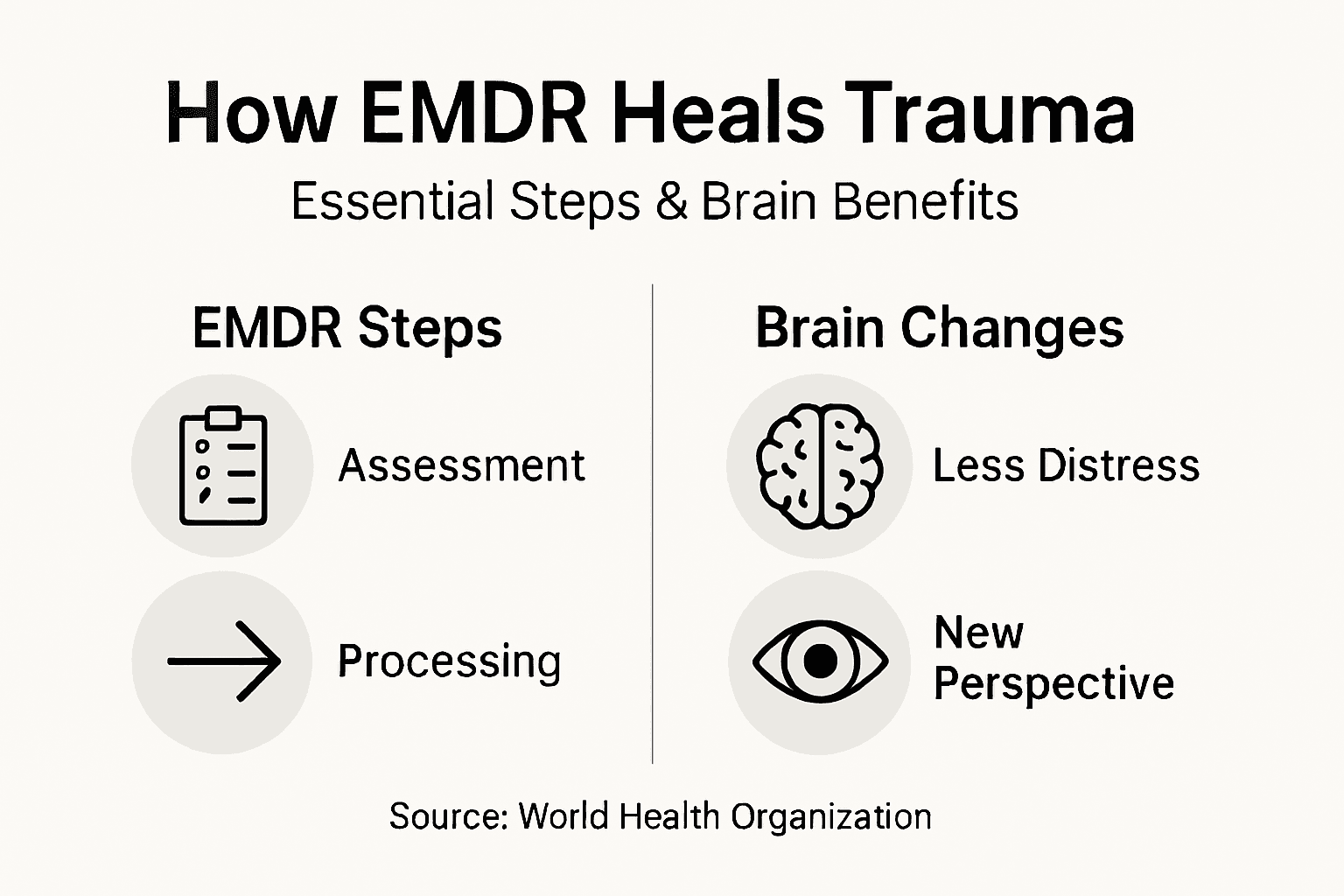
Below is a summary of the types of psychological challenges EMDR can address and how its neurological mechanism provides benefit:
Condition Category | EMDR’s Treatment Focus | Key Neurological Benefit |
Trauma & PTSD | Resolving traumatic memory blocks | Rewires distressing memory networks |
Anxiety & Mood Disorders | Reducing irrational fears and negative beliefs | Decreases brain’s emotional charge |
Addictions & Behavioral | Addressing underlying trauma and triggers | Promotes adaptive emotional regulation |
Complex Psychological Issues | Modifying persistent dysfunctional beliefs | Enables new healthy neural pathways |
Pro tip: When considering EMDR, work closely with a licensed therapist who can accurately assess your specific psychological needs and tailor the treatment accordingly.
Benefits and Limitations for Rapid Recovery
EMDR therapy offers a promising approach to psychological healing, with unique advantages and important considerations for potential patients. Clinical research demonstrates significant potential for rapid symptom reduction compared to traditional therapeutic methods.
Key Benefits of EMDR:
Faster Recovery
Fewer therapy sessions required
Quicker symptom reduction
Direct targeting of traumatic memories
Minimal verbal processing needed
Neurological Advantages
Rewires traumatic memory networks
Reduces emotional charge of memories
Supports natural brain healing mechanisms
Promotes psychological resilience
Psychological Impact
Reduces anxiety and depression symptoms
Improves emotional regulation
Transforms negative belief systems
Enhances overall mental well-being
However, treatment effectiveness varies among patients, with several critical limitations to consider. The therapy requires a skilled practitioner and may not be universally suitable for all individuals or psychological conditions.
Potential Limitations:
Requires highly trained EMDR practitioners
Not effective for all patients equally
May trigger intense emotional responses
Limited research on long-term outcomes
Potential contraindications for certain mental health conditions
EMDR is not a one-size-fits-all solution, but a specialized therapeutic approach requiring personalized professional assessment.
Pro tip: Consult a licensed EMDR therapist for a comprehensive evaluation to determine if this treatment aligns with your specific psychological needs.
What to Expect in an EMDR Session
EMDR therapy is a structured, compassionate approach designed to help patients process traumatic memories through carefully guided therapeutic interventions. Typical sessions involve precise therapeutic techniques that create a safe, supportive environment for emotional healing.
A standard EMDR session typically follows a carefully designed progression:
Initial Consultation
Discussion of treatment goals
Review of personal medical and trauma history
Establishing therapeutic rapport
Explaining the EMDR process
Preparation Phase
Teaching emotional regulation techniques
Developing coping strategies
Establishing a sense of safety
Preparing for potential emotional responses
Memory Processing
Identifying target traumatic memories
Engaging bilateral stimulation techniques
Guiding eye movements or alternative stimulation
Monitoring emotional and physiological responses
Key Components of Bilateral Stimulation:
Horizontal eye movements
Alternating hand tapping
Audio tones switching between ears
Subtle physical movements
EMDR sessions are collaborative, patient-centered experiences where healing occurs through gentle, guided neurological reprocessing.
Clinical protocols emphasize patient comfort throughout the therapeutic journey, ensuring individuals feel supported and in control. Sessions typically last between 60-90 minutes, with patients experiencing varying levels of emotional processing.
Physical and emotional responses during sessions can include:
Temporary emotional intensity
Vivid memory recall
Physical sensations
Unexpected emotional releases
Gradual sense of resolution
Pro tip: Approach your first EMDR session with an open mind, understanding that healing is a personal journey and each experience is unique.
Discover How EMDR Therapy Can Transform Your Trauma Recovery Journey
If you are struggling with unresolved trauma, anxiety, or emotional blocks, understanding the power of EMDR therapy can be life-changing. This therapy helps your brain reprocess painful memories safely and effectively without the need for painful verbal recounting. At Heske Therapy, we specialize in integrating EMDR with other proven methods like Rapid Transformational Therapy (RTT) and CBT to deliver rapid and lasting healing tailored specifically to English-speaking expatriates and international clients living in Madrid.
Why choose us?
Personalized treatment plans focused on your unique challenges
Support for complex issues including trauma, anxiety, and sleep disturbances
Multilingual, culturally sensitive care in a compassionate clinical environment

Take the first step towards reclaiming your emotional well-being. Explore how our expert therapists at Heske Therapy can guide you through transformative EMDR sessions and complementary approaches. Visit Heske Therapy now to schedule your free discovery call and start your journey to healing today.
Learn more about our holistic mental health services here and how EMDR fits into our integrative approach. Your path to overcoming trauma and achieving mental clarity is just a click away.
Frequently Asked Questions
What is EMDR therapy?
EMDR (Eye Movement Desensitization and Reprocessing) therapy is a specialized psychotherapeutic approach designed to help individuals process and heal from traumatic memories using bilateral stimulation techniques.
How does EMDR therapy help heal trauma?
EMDR works by allowing the brain to reprocess traumatic memories through bilateral stimulation, which mimics natural memory processing during REM sleep, thus enabling emotional healing and reducing the distress associated with these memories.
Is EMDR therapy suitable for everyone?
While EMDR can be effective for a wide range of psychological issues, it may not be suitable for all individuals. A licensed therapist will assess your specific needs to determine if EMDR is the right approach for you.
How many sessions of EMDR therapy are typically needed?
EMDR therapy often requires fewer sessions compared to traditional talk therapy, with each session’s duration and frequency varying based on individual needs and treatment goals.
Recommended
Comments