What Is Sleep Therapy and How Does It Work?


TL;DR:
Sleep therapy, particularly CBT-I, uses behavioral and cognitive techniques to treat insomnia by retraining sleep habits and thoughts. It offers durable, long-lasting improvement by addressing underlying patterns rather than providing temporary relief through medication. Most effective with consistent engagement over several weeks, it also benefits mental health conditions like anxiety and depression.
Sleep therapy is a structured, evidence-based treatment designed to improve sleep quality and address specific sleep disorders through behavioral and cognitive methods rather than medication. The most widely used form is cognitive behavioral therapy for insomnia, known as CBT-I, which helps patients relearn sleep routines and dismantle the habits that keep them awake. Sleep therapy also includes approaches like positional therapy for sleep apnea, relaxation training, and sleep hygiene education. For anyone dealing with chronic insomnia or disrupted sleep, understanding what these treatments involve is the first step toward lasting relief.
What is sleep therapy and why does it matter?
Sleep therapy is defined as any structured, non-pharmacologic intervention that targets the behavioral, cognitive, and physiological patterns driving poor sleep. The term covers a range of clinical approaches, but CBT-I stands as the most researched and recommended. Unlike sleeping pills, which address symptoms temporarily, sleep therapy works by changing the underlying conditions that cause the problem.
The role of sleep therapy goes beyond simply getting more hours in bed. It targets the mental and physical habits that have trained your brain to associate the bedroom with wakefulness, anxiety, or frustration. Stanford Medicine research confirms that sleep and mental health share a bidirectional relationship, meaning poor sleep worsens mood disorders and mood disorders worsen sleep. Treating one side of that equation through therapy can shift both.
Sleep therapy is not a single technique. It is a category of treatments that a trained therapist tailors to your specific disorder, history, and lifestyle. Whether you struggle with falling asleep, staying asleep, or waking too early, there is a sleep therapy method designed for your pattern.
What techniques does sleep therapy use?
CBT-I is built from several distinct techniques that work together to retrain your sleep system. Each one targets a specific mechanism that perpetuates insomnia.

Stimulus control breaks the conditioned link between your bed and wakefulness. The rules are concrete: use your bed only for sleep and sex, get out of bed if you cannot sleep within 15 to 20 minutes, maintain a consistent wake time every day, and avoid naps. These rules feel counterintuitive at first, but they systematically dismantle the association between lying down and lying awake.
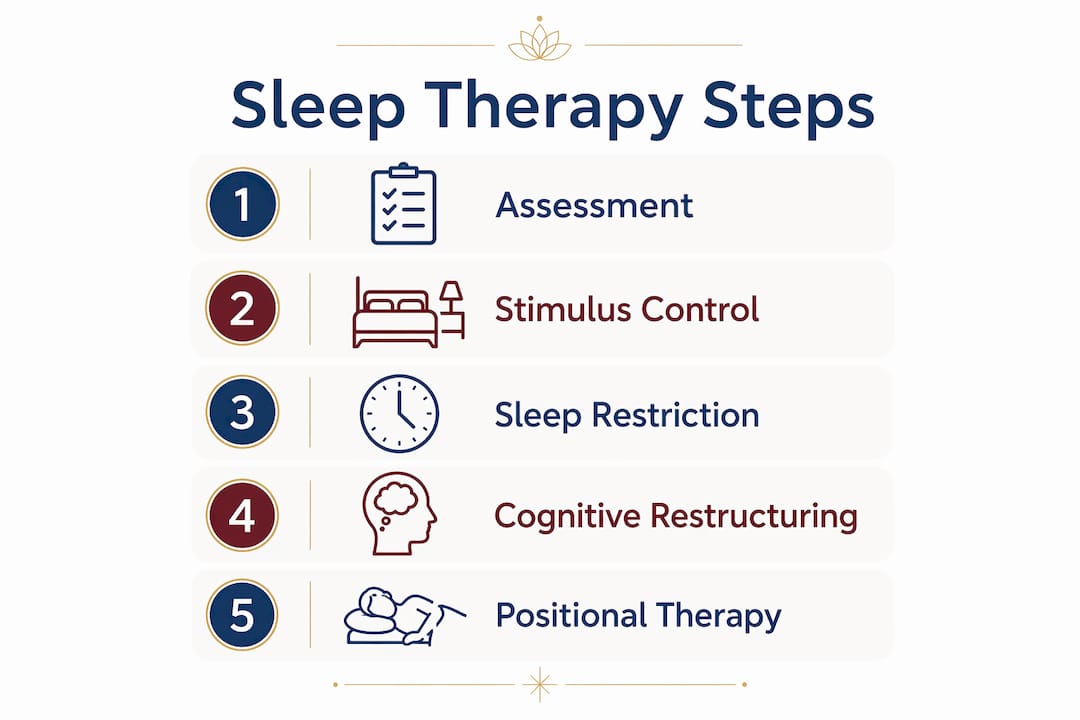
Sleep restriction therapy (SRT) takes an even bolder approach. It limits your time in bed to match your actual sleep time, which temporarily increases sleep pressure and consolidates fragmented sleep into a more solid block. Once sleep efficiency improves, the sleep window is gradually extended. SRT is tightly regulated and personalized, adjusting your sleep window based on weekly measurements rather than applying a one-size-fits-all rule.
Cognitive restructuring addresses the thought patterns that fuel insomnia. Beliefs like “I must get eight hours or tomorrow is ruined” or “I am incapable of sleeping” create performance anxiety that makes sleep harder. A therapist helps you identify and replace these thoughts with accurate, calming alternatives.
Sleep hygiene education rounds out the approach. This includes guidance on:
Limiting caffeine after midday
Keeping the bedroom cool and dark
Avoiding screens in the hour before bed
Exercising regularly but not within three hours of sleep
Positional therapy addresses a different disorder entirely. For patients with positional obstructive sleep apnea, vibrational feedback devices train the body to avoid back sleeping. Research shows that benefits persisted in over two-thirds of patients at six months to one year after stopping therapy, making it a lasting solution that does not depend on wearing a CPAP device every night.
Pro Tip: Adherence to the core rules of CBT-I, especially getting out of bed when you cannot sleep, is the single biggest predictor of success. Skipping this step because it feels uncomfortable is the most common reason people perceive the therapy as ineffective.
Is sleep therapy effective?
The evidence supporting sleep therapy is strong, consistent, and growing. The American Academy of Sleep Medicine (AASM) published its 2026 clinical practice guideline identifying CBT-I as the most efficacious first-line treatment for chronic insomnia. This means it outperforms medication as a standalone treatment, particularly for long-term outcomes.
CBT-I is completed within 4 to 8 sessions, each lasting 30 to 60 minutes, spaced weekly or biweekly. That is roughly one to two months of structured work to produce changes that can last years. Medication, by contrast, often loses effectiveness over time and carries dependency risks.
“CBT-I is a goal-oriented therapy teaching the brain and body to relearn natural sleep patterns, emphasizing behavioral retraining over quick fixes.” — Cleveland Clinic
The AASM guideline also notes that combining CBT-I with medication may benefit some patients, but this should be individualized by clinical goals and patient preference rather than applied universally. For most people with chronic insomnia, CBT-I alone produces sufficient and durable results.
Sleep therapy method | Primary target | Typical duration | Evidence level |
CBT-I | Chronic insomnia | 4 to 8 sessions | Highest (first-line) |
Sleep restriction therapy | Fragmented sleep | Weeks to months | Strong |
Stimulus control | Conditioned wakefulness | Ongoing behavioral practice | Strong |
Positional therapy | Positional sleep apnea | 6 to 12 weeks | Moderate to strong |
Relaxation training | Hyperarousal and anxiety | Variable | Moderate |
The mental health benefits of sleep therapy extend beyond sleep itself. CBT-I has been shown to reduce symptoms of depression and anxiety by targeting both the behavioral and cognitive drivers of poor mood. For anyone dealing with comorbid anxiety or burnout alongside insomnia, this dual effect makes therapy especially worthwhile. You can read more about how CBT addresses mental health conditions in a related overview from Hesketherapy.
Who benefits from sleep therapy and how to access it?
Sleep therapy is recommended for anyone with chronic insomnia, defined as difficulty sleeping at least three nights per week for three or more months. It is also appropriate for people with sleep apnea (particularly the positional type), hyperarousal, and sleep problems linked to anxiety, depression, or burnout. The AASM guidelines specifically support CBT-I for patients with comorbid mental health conditions, not just those with isolated sleep complaints.
Here is what the process typically looks like when you begin sleep therapy:
Initial assessment. A therapist reviews your sleep history, medical background, and any contributing mental health factors. You may complete a sleep diary or questionnaire before your first session.
Psychoeducation. You learn how sleep works, what drives insomnia, and why behavioral change outperforms willpower or medication.
Technique implementation. Stimulus control and sleep restriction begin in the first few sessions. These feel difficult initially because they reduce total sleep time before improving it.
Cognitive work. Around sessions three to five, the focus shifts to identifying and reframing unhelpful beliefs about sleep.
Consolidation and exit planning. The final sessions review progress, adjust the sleep window, and build a maintenance plan to prevent relapse.
Finding a qualified therapist matters. Look for a licensed psychologist, counselor, or therapist with specific training in CBT-I or behavioral sleep medicine. Many therapists now offer online therapy options, which removes geographic barriers and makes consistent weekly sessions easier to maintain. For expats or international clients, working with a therapist who understands your cultural context adds another layer of effectiveness.
Pro Tip: Keep a sleep diary throughout therapy, logging bedtime, wake time, time to fall asleep, and any nighttime awakenings. This data helps your therapist calibrate your sleep restriction window accurately and shows you real progress that subjective memory often misses.
Sleep therapy vs. medication and other approaches
The core difference between sleep therapy and medication is durability. Medications like benzodiazepines or Z-drugs produce faster short-term relief but do not change the underlying behavioral patterns driving insomnia. Sleep therapy takes longer to show results but produces changes that persist after treatment ends.
Here is a direct comparison of the main approaches:
Approach | Speed of effect | Long-term durability | Dependency risk | Best for |
CBT-I | Weeks | High | None | Chronic insomnia |
Sleep medication | Days | Low | Moderate to high | Short-term or acute insomnia |
Sleep hygiene alone | Variable | Moderate | None | Mild or situational sleep issues |
Positional therapy | Weeks | High (post-treatment) | None | Positional sleep apnea |
Combination (CBT-I + meds) | Days to weeks | High | Low if time-limited | Complex or treatment-resistant cases |
Natural sleep hygiene strategies form the foundation of any sleep improvement plan, but they are not sufficient for clinical insomnia on their own. Structured therapy adds the behavioral protocols and cognitive work that hygiene rules alone cannot deliver.
The benefits of sleep therapy over medication are most pronounced for people with chronic insomnia lasting more than three months. For acute insomnia triggered by a specific stressor, short-term medication may be appropriate while behavioral work begins. The AASM guideline supports this nuanced view, recommending that treatment decisions reflect individual patient needs rather than a fixed protocol.
One underappreciated advantage of sleep therapy is its effect on improving sleep quality without the cognitive side effects that some sleep medications produce. Many patients on sleep medication report next-day grogginess, memory issues, or emotional blunting. CBT-I produces none of these. For anyone who needs to function at full capacity, that distinction matters enormously.
Key takeaways
Sleep therapy, led by CBT-I, is the most effective and durable treatment for chronic insomnia, producing lasting behavioral change that medication alone cannot replicate.
Point | Details |
CBT-I is first-line treatment | The AASM identifies CBT-I as the most efficacious treatment for chronic insomnia above medication. |
Therapy works by retraining behavior | Stimulus control and sleep restriction break the conditioned patterns that perpetuate insomnia. |
Results last beyond treatment | CBT-I effects persist long after sessions end; positional therapy benefits hold for over two-thirds of patients at one year. |
Mental health improves alongside sleep | CBT-I reduces symptoms of depression and anxiety by targeting shared cognitive and behavioral drivers. |
Adherence determines outcomes | Full engagement with core rules, especially getting out of bed when awake, is the critical success factor. |
What I have learned from working with sleep and therapy
Most people who come to me with sleep problems have already tried everything they could think of: melatonin, blackout curtains, white noise machines, cutting caffeine. None of it worked long-term. That is not a failure of willpower. It is a sign that the problem is deeper than sleep hygiene can reach.
What I find most striking in clinical practice is how much shame surrounds sleep problems. Clients often describe themselves as broken or wired wrong. The reality is that insomnia is a learned pattern, and learned patterns can be unlearned. CBT-I does exactly that. It is not magic. It is structured, sometimes uncomfortable work that asks you to trust a process before you see results.
The hardest part is the early phase of sleep restriction, when you are deliberately limiting your time in bed and feeling more tired before you feel better. I have seen clients quit at this stage because they interpret the temporary discomfort as proof that therapy does not work. It is the opposite. That fatigue is the therapy working, building the sleep pressure that will consolidate your sleep.
The connection between sleep and mental health also deserves more attention than it gets. Clients who come to me for anxiety or burnout almost always have disrupted sleep as part of the picture. When we address the sleep directly through CBT techniques, the anxiety often softens too. Sleep therapy is rarely just about sleep.
My honest view is that the biggest barrier to sleep therapy is not access or cost. It is the expectation of a quick fix. Therapy asks you to invest six to eight weeks of consistent effort. For most people, that investment pays off in years of better sleep and better mental health.
— Heske
Ready to sleep better? Hesketherapy can help
If you recognize yourself in this article, working with a trained therapist is the most direct path to lasting change. Hesketherapy offers personalized sleep-focused therapy for English-speaking clients in Madrid and online worldwide, combining CBT, Rapid Transformational Therapy (RTT), and hypnotherapy to address both the behavioral and emotional roots of sleep problems.
Whether you are dealing with chronic insomnia, stress-driven sleep disruption, or sleep problems linked to anxiety and burnout, Hesketherapy builds a treatment plan around your specific situation. Sessions are available in English, Spanish, and Dutch, making professional support accessible regardless of where you are in the world. Explore therapy services at Hesketherapy and book a free discovery call to find out which approach fits your needs. You do not have to keep managing this alone.
FAQ
What is sleep therapy in simple terms?
Sleep therapy is a structured, non-medication treatment that uses behavioral and cognitive techniques to improve sleep quality and treat disorders like insomnia. CBT-I is the most common and evidence-supported form.
How long does sleep therapy take to work?
CBT-I is typically completed in 4 to 8 sessions over one to two months, with many patients noticing meaningful improvement in sleep quality within the first three to four weeks of consistent practice.
Is sleep therapy effective for chronic insomnia?
The AASM identifies CBT-I as the most efficacious first-line treatment for chronic insomnia, with effects that outlast medication and persist long after therapy ends.
Can sleep therapy help with anxiety and depression?
CBT-I addresses shared behavioral and cognitive drivers of both insomnia and mood disorders, and research shows it can reduce symptoms of depression and anxiety alongside improving sleep.
What is the difference between sleep therapy and sleep medication?
Sleep medication produces faster short-term relief but carries dependency risks and does not change underlying sleep patterns. Sleep therapy takes longer but produces durable behavioral change with no dependency risk.
Recommended
Comments