Step-by-Step Guide to Overcoming Burnout for Expats

Many English-speaking expats in Madrid find burnout slowly eroding their well-being, leaving them facing exhaustion, emotional numbness, and frustration at work. This transition often brings unique stressors like language barriers, loss of routines, and struggles accessing local healthcare. By learning to recognize early warning signs and embracing rapid, culturally sensitive support such as RTT and CBT, you can reclaim energy and confidence while living abroad.
Table of Contents
Quick Summary
Key Point | Explanation |
1. Recognize early signs of burnout | Monitor for persistent fatigue, irritability, and reduced effectiveness at work to identify burnout before it worsens. |
2. Implement quick stress-reduction techniques | Practice breathing exercises and mindfulness to lower stress levels quickly and regain focus during overwhelming moments. |
3. Establish restorative routines | Schedule consistent self-care activities that genuinely rejuvenate you to combat burnout and enhance overall well-being. |
4. Seek professional therapeutic support | Find a therapist experienced with expats to effectively address burnout symptoms and develop tailored recovery strategies. |
5. Regularly evaluate and adjust strategies | Consistently assess what is and isn’t working in your recovery plan to remain adaptable and maintain motivation over time. |
Step 1: Identify signs and triggers of burnout
Burnout doesn’t announce itself with a loud alarm. It creeps in quietly, changing how you feel, think, and perform at work. The key to overcoming it is recognizing the warning signs early, before exhaustion becomes overwhelming.
Start by noticing your physical state. Chronic fatigue that doesn’t improve with sleep is one of the clearest indicators. You might feel persistent tiredness, headaches, or muscle tension. Many expats in Madrid report sleeping more but feeling less rested. Notice if you’re getting sick more frequently, as stress weakens your immune system.
Next, pay attention to your emotional responses. Burnout often shows up as increased irritability, cynicism, or emotional numbness. You might snap at colleagues over small things or feel disconnected from work you once enjoyed. Some describe it as operating on autopilot, going through the motions without genuine engagement.
Recognizing these early signs gives you the power to act before burnout reaches crisis point.
Watch for changes in your work performance and motivation. Are deadlines piling up because you’re struggling to focus? Has your productivity dropped noticeably? This pattern of reduced effectiveness combined with growing detachment is a critical sign.
Now identify your specific triggers. Common ones for expats include:
Cultural and language barriers making communication exhausting
Loss of familiar routines and social networks from home
Financial pressures from supporting family in multiple countries
Difficulty achieving work-life balance while adapting to a new culture
Feelings of isolation or not truly belonging in Madrid
Examine which situations drain you most. Is it specific projects, certain people, or the constant adaptation to Spanish workplace norms? Chronic emotional exhaustion and depersonalization often stem from ongoing adjustment struggles.
Write down your observations. Create a simple list of physical signs you’ve noticed, emotional shifts, and situations that consistently leave you depleted. This becomes your personal burnout map.
Here’s a summary of major burnout signs and their typical workplace impacts:
Sign of Burnout | How It Feels Internally | Effect on Work Performance |
Persistent fatigue | Always tired, low energy | Reduced focus, frequent mistakes |
Irritability/cynicism | Quick to anger or withdraw | Strained co-worker relationships |
Emotional numbness | Disconnected, unmotivated | Lack of engagement with tasks |
Physical complaints | Headaches, muscle tension | Increased absenteeism, health claims |
Reduced effectiveness | Struggle to meet deadlines | Missed goals, declining productivity |
Pro tip: Track your energy levels for one week using a simple scale (1-10 each evening), noting what drained or energized you that day—this data reveals patterns you might otherwise miss.
Step 2: Implement rapid stress-reduction techniques
You don’t need to wait weeks for relief. Rapid stress-reduction techniques work within minutes, calming your nervous system and giving you immediate tools to manage acute stress moments. These methods are scientifically validated and easily fit into your daily routine.
Start with breathing exercises, one of the fastest ways to activate your body’s relaxation response. When stress hits, your breathing becomes shallow and rapid, signaling danger to your brain. By deliberately slowing your breath, you reverse this signal.
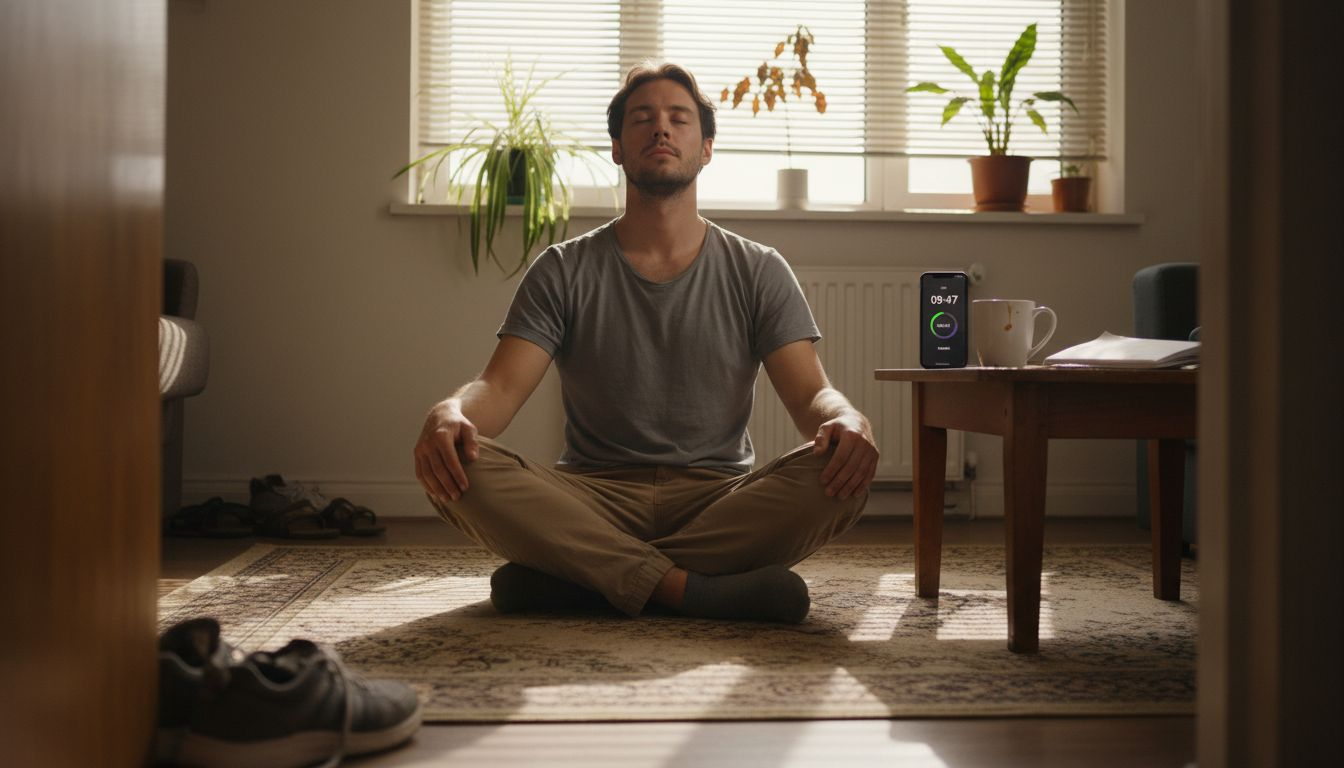
Try the 4-7-8 technique: breathe in for 4 counts, hold for 7, exhale for 8. Do this just three times during a stressful moment. The extended exhale triggers your parasympathetic nervous system, lowering your heart rate and cortisol levels within minutes.
Mindfulness and guided imagery are equally powerful. These practices help reduce physiological stress markers like cortisol and cultivate mental focus. You don’t need meditation experience or hours of practice.
Here’s what works for expats in Madrid:
Body scan relaxation: Sit quietly and mentally scan from your toes to your head, relaxing each muscle group (5 minutes)
Guided imagery: Close your eyes and visualize a calming place from your past (3-5 minutes)
Progressive muscle relaxation: Tense and release muscle groups systematically (10 minutes)
Mindful breathing: Focus entirely on each breath without judgment (5-10 minutes)
Active engagement in these interventions yields better outcomes than passive waiting for stress to pass.
Start implementing these during low-stress moments so you know them when acute stress arrives. Practice one technique daily for a week before using it during crisis mode.
Pair your chosen technique with a specific trigger. When you feel overwhelmed at work, pause for a two-minute breathing exercise. When irritability peaks, do a body scan. Rapid therapy methods like RTT combined with these techniques can accelerate your progress significantly.
Pro tip: Set phone reminders for three daily breathing breaks (morning, midday, evening) until they become automatic—consistency makes these techniques dramatically more effective when stress actually hits.
The table below compares popular rapid stress-reduction methods:
Technique | Time Needed | Best For | Expected Benefit |
4-7-8 Breathing | 1-2 minutes | Acute stress moments | Quick calm, clarity |
Body Scan Relaxation | 5 minutes | Physical tension, anxiety | Releases tightness, grounds mind |
Guided Imagery | 3-5 minutes | Overwhelm, homesickness | Soothes emotions, increases calm |
Progressive Muscle Relax. | 10 minutes | Ongoing stress | Eases chronic tension, relaxes |
Mindful Breathing | 5-10 minutes | Distracting environments | Improves focus, reduces worry |
Step 3: Integrate restorative routines and self-care
Burnout recovery isn’t about pushing harder. It’s about deliberately building practices that restore your energy and anchor you to what matters. Self-care routines create the foundation for sustainable wellbeing as an expat in Madrid.
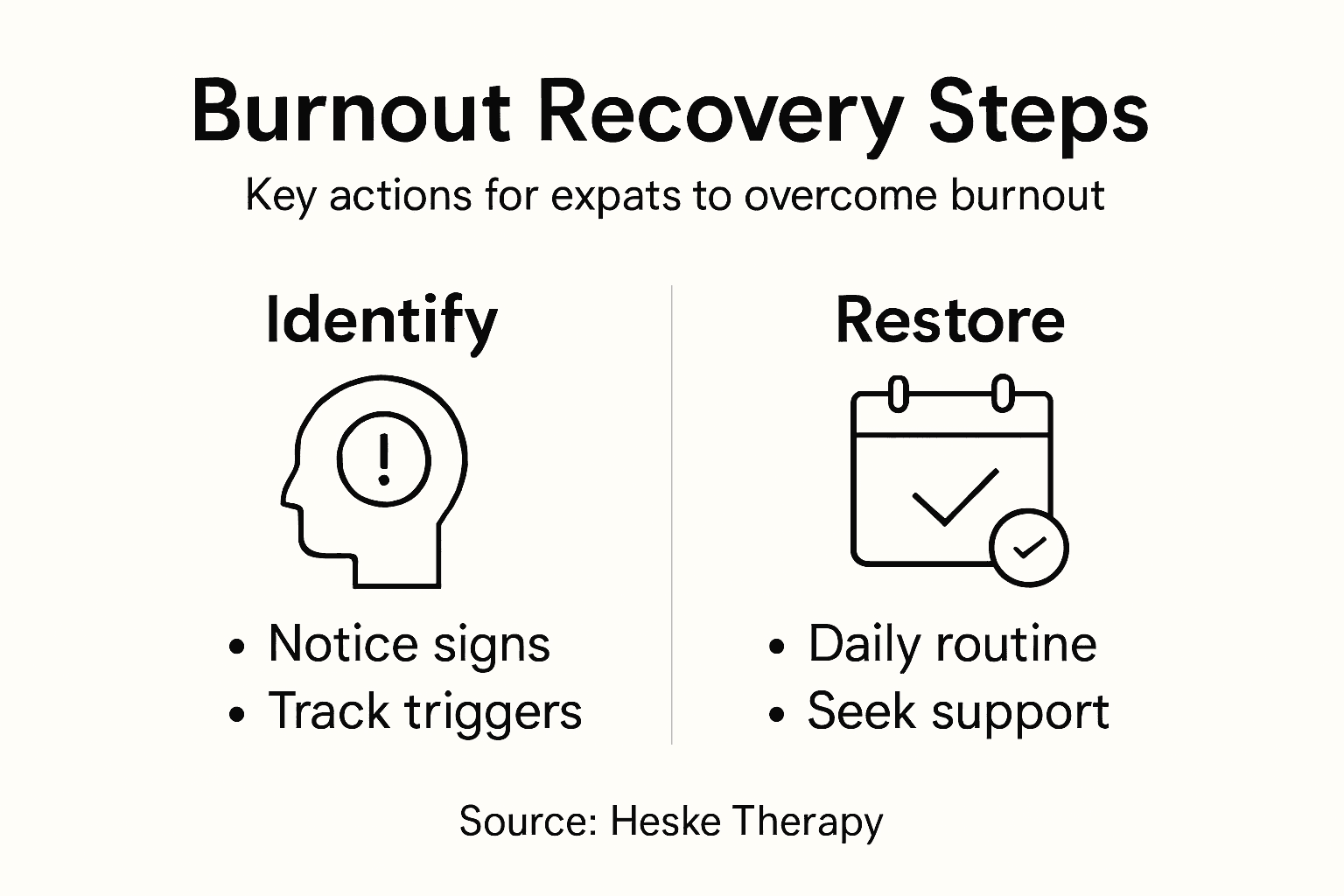
Start by identifying what genuinely restores you, not what you think should. For some, it’s movement. For others, solitude or creative expression. Notice what activities make you lose track of time or leave you feeling lighter, and prioritize those.
Next, schedule restoration like you schedule work meetings. Treat these commitments as non-negotiable. When you know Wednesday evenings are for cooking a favorite meal from home or Saturday mornings are for a long walk through Retiro Park, you protect that time fiercely.
Pause regularly for reflection. Post-stress restorative self-care includes pausing for reflection and reconnecting with your values, helping you align actions with core principles. Weekly, ask yourself: What drained me this week? What recharged me? What do I need more of?
Build your restorative routine around these elements:
Daily practices: 15 minutes of something calming (tea, journaling, stretching)
Weekly rituals: One activity purely for pleasure (hobby, time with friends, exploring Madrid)
Monthly reset: A longer break or experience that feels genuinely restorative
Connection time: Regular contact with family, friends, or community
Your restorative routines are not selfish. They’re the fuel that allows you to show up authentically in all areas of your life.
Maintaining social networks and family support reduces burnout significantly. As an expat, this might mean scheduled video calls home, joining expat groups, or finding your community in Madrid. Don’t isolate when stressed—that’s when connection matters most.
Practice self-compassion throughout this process. Burnout tells you harsh stories about yourself. Counter these with the same kindness you’d offer a friend. When you miss a self-care practice, you’re human, not failing.
Pro tip: Start with just one restorative routine this week—one daily practice, one weekly ritual—rather than overhauling everything at once; small, consistent practices create lasting change far better than ambitious plans you’ll abandon.
Step 4: Leverage personalized therapeutic support
While self-care and stress reduction are powerful, professional support accelerates your burnout recovery significantly. A therapist trained in working with expats understands the unique pressures you face and can help you rebuild resilience faster.
Therapeutic support goes beyond venting. It involves identifying burnout signs, exploring root causes, and crafting personalized recovery strategies tailored to your specific situation. A skilled therapist helps you understand not just what’s draining you, but why those situations trigger such intense responses.
Start by finding a therapist who specializes in working with expats. Look for someone who understands cultural adjustment challenges, isolation, and the unique stressors of living abroad. Heske Therapy offers specialized approaches like Rapid Transformational Therapy and CBT that accelerate results, particularly valuable when you’re struggling to function.
During your first sessions, be honest about what’s happening. Share your burnout signs, your triggers, and how this is affecting your work and relationships. The more specific you are, the more targeted your therapist can make the treatment.
Therapy can take several forms:
Cognitive Behavioral Therapy (CBT): Identifies thought patterns fueling burnout and rewires them
Rapid Transformational Therapy (RTT): Creates rapid shifts in beliefs and behaviors driving exhaustion
EMDR: Processes traumatic or overwhelming work experiences
Counseling: Provides space to process emotions and build coping skills
Professional support isn’t a sign of weakness. It’s an investment in your ability to thrive as an expat.
Expect therapy to involve homework between sessions. Your therapist might ask you to track patterns, practice new responses, or challenge unhelpful beliefs. This active participation is where real transformation happens.
Many expats feel hesitant about therapy due to cost or stigma. Consider it preventative medicine for your mental health. The cost of untreated burnout—lost productivity, damaged relationships, health issues—far exceeds therapy investment. Combining therapy methods accelerates your recovery significantly compared to going it alone.
Schedule a discovery call to discuss your situation and find the right approach for you. A good therapist-client fit matters tremendously, and most offer initial consultations.
Pro tip: Commit to at least 4-6 sessions before evaluating effectiveness; meaningful change requires time to process insights and practice new behaviors consistently.
Step 5: Evaluate progress and adjust strategies
Burnout recovery isn’t linear. You’ll have weeks where everything feels manageable, then suddenly hit a rough patch. Regular evaluation ensures your strategies stay effective as your circumstances change and you grow stronger.
Start by measuring what matters. Track concrete shifts: Are you sleeping better? Feeling less irritable? Getting work done without staying until 9 p.m.? Notice energy levels, mood stability, and how you respond to typical stress triggers. These personal metrics reveal progress that scales don’t capture.
Schedule a monthly reflection check-in. Set aside 30 minutes to honestly assess what’s working and what isn’t. Ask yourself hard questions about your current strategies and support systems.
Review these areas:
Physical wellbeing: Energy, sleep quality, appetite, headaches or tension
Emotional state: Irritability levels, sense of hope, emotional resilience
Work performance: Focus, productivity, engagement with tasks
Relationships: Quality of connections, isolation levels, support availability
Therapy progress: Insights gained, behavioral shifts, breakthrough moments
Progress doesn’t mean perfect. It means noticing you’re slightly better than you were last month.
Evaluating progress involves continuous assessment of support effectiveness, personal resilience, and adaptation to your evolving needs. What helped you survive August might not serve you in December. Flexibility is essential.
Adjust strategies based on what you learn. If your Tuesday breathing practice isn’t happening, switch to mornings. If therapy feels stalled, discuss new approaches with your therapist. If your social routines aren’t reducing isolation, try different activities or communities.
Celebrate specific wins. You attended that networking event despite anxiety. You said no to extra work without guilt. You laughed at something. These matter. Celebrating achievements and modifying strategies to fit your resources sustains your motivation for the long term.
When progress stalls, don’t interpret it as failure. Plateaus are normal and often precede breakthroughs. Adjust rather than abandon.
Pro tip: Use a simple rating system (1-10 scale) for key areas each month and track trends over three months; seeing improvement graphed out provides powerful motivation when motivation dips.
Take Control of Burnout with Personalized Support from Heske Therapy
Burnout can drain your energy, cloud your focus, and make even small tasks feel overwhelming. If you identify with the persistent fatigue, emotional numbness, or work-related stress described in the guide, you are not alone. Heske Therapy understands the unique challenges expatriates face in Madrid—from cultural adjustment and isolation to balancing competing demands—and offers targeted mental health solutions designed to restore your wellbeing quickly and effectively.
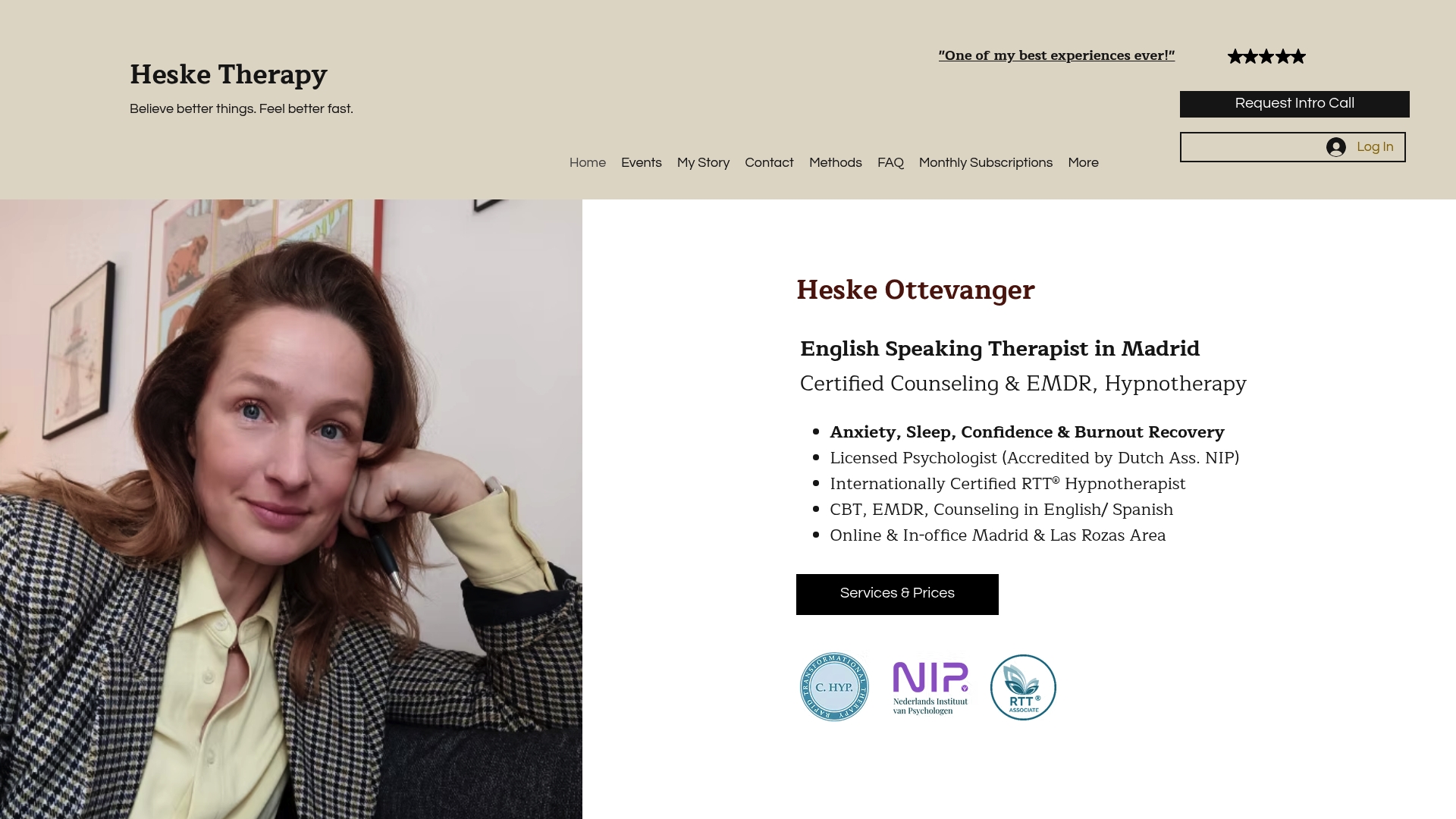
Start your journey toward lasting recovery today with proven methods like Rapid Transformational Therapy (RTT), CBT, and EMDR tailored for expats. Heske Therapy provides compassionate, culturally sensitive care both online and in office, ensuring you can access professional help where and when you need it. Don’t wait for burnout to worsen. Visit Heske Therapy now to schedule a free discovery call. Discover how expert support can turn your burnout signs into breakthroughs and reclaim your energy and joy in Madrid.
Frequently Asked Questions
What are the early signs of burnout for expats?
Burnout may present itself through persistent fatigue, irritability, and reduced work performance. Pay attention to feelings of emotional numbness and frequent headaches, and start keeping a simple list of your physical and emotional symptoms to identify patterns.
How can I quickly reduce stress when I feel overwhelmed?
Utilize rapid stress-reduction techniques like the 4-7-8 breathing exercise. Inhale for four counts, hold for seven, and exhale for eight; repeat this three times to quickly calm your nervous system.
What self-care practices are effective for recovering from burnout?
Identify activities that restore your energy, such as taking daily walks or cooking a favorite meal. Schedule these restorative activities just like work obligations to ensure you prioritize them throughout your week.
How do I find the right therapist for burnout recovery?
Look for a therapist who specializes in working with expats and understands the unique challenges of adapting to a new environment. Contact potential therapists for a brief consultation to gauge their fit for your specific needs.
How can I track my progress while recovering from burnout?
Measure key areas such as sleep quality, emotional well-being, and work performance to track your recovery. Set aside 30 minutes each month to evaluate what strategies are working and adjust your approach based on your observations.
What should I do if my burnout recovery seems to stall?
If you feel stuck, revisit your strategies and consider trying new approaches, like adjusting your self-care routine or changing your therapy focus. Recognize that progress may come in waves, and celebrate small achievements to stay motivated.
Recommended
Comments